

The Psychology of Green: Creating Serenity and Prestige in Hotel Interiors
 Interior design
Interior design is the art and science of enhancing the interior of a building to achieve a healthier and more aesthetically pleasing environment for the people using the space. With a keen eye for detail and a creative flair, an interior designer is...
In the high-stakes world of hospitality design, the atmosphere of a lobby or executive suite is the first silent communicator of brand identity. To select a palette is to curate an emotional response, and few colors possess the profound psychological weight of forest green. Unlike the fleeting energy of brighter hues, deep greens evoke a sense of permanence, stability, and organic luxury. When integrated into a hotel interior, these tones act as a visual anchor, grounding the transient nature of travel with a feeling of sanctuary. This color does not merely decorate; it envelops the guest in a state of quietude, mimicking the restorative hush of an ancient woodland.
For the designer, the strategic use of green is a tool for prestige. It suggests a connection to the natural world—a concept often referred to as biophilia—which has been scientifically linked to reduced stress and increased well-being in human occupants. By utilizing deep, verdant tones, a space can transition from a mere transit point to a destination of contemplation. Whether through subtle accents or commanding focal points, forest green provides a sophisticated foundation that allows other luxury materials, such as brass, marble, or dark walnut, to resonate with greater intensity and depth.
Curating Depth: Selecting Between Impressionist Landscapes and Realistic Forest Studies
 10 Iconic Impressionist Landscapes That Changed Art Forever
Introduction To step into the world of Impressionist landscapes is to abandon the rigid boundaries of reality and embrace the fleeting dance of light and atmosphere. Imagine standing on the banks of the Seine or amidst a sun-drenched meadow in Givern...
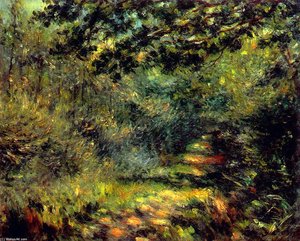
The choice of artistic movement dictates the narrative arc of a room. When a designer leans toward the Impressionist tradition, they are inviting a dance of light and atmosphere into the space. Works inspired by masters like Monet or Pissarro do not seek to document every leaf; instead, they capture the ephemeral flicker of sunlight through a canopy. These paintings, characterized by broken brushstrokes and a luminous palette, are ideal for spaces that require movement and vitality, such as breakfast lounges or sun-drenched atriums. The texture of a hand-painted oil reproduction in this style adds a tactile dimension that digital prints simply cannot replicate.
Conversely, selecting more realistic or Tonalist forest studies offers a different level of gravity. A work reminiscent of the Flemish Baroque or the meticulous realism found in the landscapes of Robert Green provides a sense of structural clarity and historical weight. These pieces often utilize chiaroscuro—the dramatic interplay between deep shadows and soft light—to create an immersive, almost sculptural presence on the wall. For more formal settings, such as executive boardrooms or private dining clubs, these detailed studies offer a window into a realm of profound mystery and quiet strength, grounding the architecture in a sense of timelessness.
Technical Integration: Coordinating Green Artworks with Architectural Color Palettes
 10 Masterpieces Defined by the Richness of Sap Green
Introduction Step into a world where the air feels heavy with the scent of damp earth and the quiet vitality of a forest after rain. To wander through a collection dominated by Sap Green is to experience the very pulse of nature captured in pigment. ...
Integrating large-scale greenery into an existing architectural scheme requires a sophisticated understanding of color theory. A common challenge for procurement managers is ensuring that the chosen artwork complements rather than competes with the surrounding finishes. Forest green serves as a versatile neutral when paired correctly. In spaces featuring warm, earthy tones like terracotta or ochre, green art can provide a cooling, refreshing contrast. However, in more modern, monochromatic environments dominated by greys and charcoals, deep green artworks act as the essential "soul" of the room, preventing the design from feeling sterile.
The technical success of such an integration often lies in the nuances of value and chroma. A designer might utilize a Sap Green palette to bridge the gap between a bright, spring-like interior and a more somber, classical aesthetic. Furthermore, the physical medium of the art plays a role in color perception; our hand-painted oil reproductions on 100% cotton canvas offer a deeper tonal range than standard prints. The visible impasto and the way light interacts with the raised pigment allow the green tones to shift subtly as the time of day changes, ensuring the artwork remains dynamic within the architectural envelope.
Scale and Impact: Utilizing Multi-Panel Group Sets for Grand Lobby Installations
 Forest Landscape
The Forest Landscape painting by Gillis Van Coninxloo is a remarkable artwork that showcases the artist's skill and attention to detail. Created in 1598, this oil on panel painting measures 42 x 61 cm and is housed at the Liechtenstein Museum in Vien...
In the expansive volumes of hotel lobbies and grand staircases, a single, medium-sized frame often fails to command the necessary attention. This is where the "Multi-Panel" trend becomes an essential tool in the designer's repertoire. By splitting a singular forest landscape across three, four, or even five panels, the artwork transforms into an architectural element itself. These group sets allow for a seamless flow of color and composition across wide expansional walls, creating a panoramic experience that guides the eye through the space.
This approach is particularly effective for creating a sense of rhythm and continuity. Our engineers ensure that brushstrokes and color gradients are meticulously aligned across every panel, maintaining the integrity of the original vision while providing the modern, fragmented aesthetic favored in contemporary luxury design. For large-scale projects, this method also offers practical advantages in logistics, as multi-panel sets can be managed and installed with precision, allowing for a cohesive, high-impact installation that defines the very character of the property.
Sourcing and Logistics: Streamlining Large-Scale Art Procurement for Hospitality Projects
 The Source (Bather at the Source)
Gustave Courbet's 'The Source' captures a serene moment by a waterfall, embodying Realism’s focus on nature & everyday life. Explore this iconic painting and Courbet’s revolutionary art.
For the procurement professional, the primary objectives are reliability, scalability, and budget predictability. Managing art for an entire hotel chain requires a supplier that understands the pressures of tight timelines and the necessity of standardized quality. At AllPaintingsStore.com, we specialize in high-volume business needs, providing a streamlined flow from initial digital mockup to final delivery via DHL or FedEx. We recognize that for a project manager, the ability to review a pre-shipment photo for approval is critical to eliminating the risk of costly on-site corrections.
Our service model is built around operational efficiency and transparency. We provide full VAT-compliant documentation and support for international customs, ensuring that large-scale orders move through borders without unexpected delays. Whether you are commissioning a bespoke "remixed" masterpiece—transforming a modern landscape into a 17th-century style oil painting—or ordering standardized reproductions in bulk, our process is designed to be repeatable and robust. With a focus on professionalism, efficiency, and functional reliability, we serve as a dependable partner in the realization of world-class hospitality environments.