Adriaen Hendricksz Verboom: Echoes of Ruysdael in Dutch Landscape
Adriaen Hendricksz Verboom (1627 – 1673) stands as a pivotal figure within the Dutch Golden Age, recognized primarily for his masterful landscapes imbued with the spirit and stylistic nuances of Jacob van Ruysdael. Born in Rotterdam around 1628, he was the elder brother to Willem Hendricksz Verboom, establishing a familial legacy rooted in artistic excellence – a connection that profoundly shaped his own creative trajectory.
Verboom’s formative years were spent honing his draughtsmanship skills under the tutelage of his brother, absorbing influences that would ultimately define his distinctive visual language. Moving to Haarlem in 1650 and subsequently relocating to Amsterdam in 1661, he cultivated a prolific artistic output, producing paintings, etchings, and decorative tiles – demonstrating versatility beyond simply replicating Ruysdael’s aesthetic. This dedication to mastering technique ensured that Verboom's landscapes would resonate with the grandeur of his predecessor's vision.
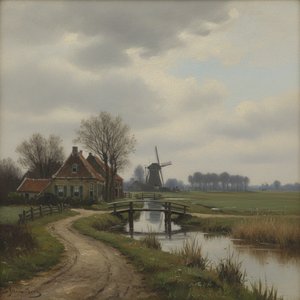
His landscapes are characterized by an Italianate sensibility, meticulously rendered with atmospheric perspective and subtle tonal gradations. Unlike many of his contemporaries who prioritized realism, Verboom deliberately adopted a manner that echoed Ruysdael’s celebrated compositions, prioritizing mood and suggestion over precise detail. This stylistic choice reflects the broader artistic currents of the period, where artists sought to elevate landscape painting beyond mere topographical representation; it was an assertion of emotion and atmosphere rather than literal depiction. He skillfully employed techniques honed under his brother's guidance—a testament to the importance of familial mentorship in shaping artistic talent.
- Notable Works: “Evening Landscape With Travellers On A Path,” “Woods With Travelers On A Path”
- Influences: Jacob van Ruysdael – Verboom’s artistic vision was decisively shaped by Ruysdael's pioneering approach to landscape painting. Ruysdael’s masterful use of light and shadow established a benchmark for Verboom, inspiring him to capture similar dramatic effects in his own canvases.
- Technique: Verboom skillfully employed atmospheric perspective and tonal gradation, creating immersive scenes that capture the essence of Dutch countryside. This meticulous attention to detail—particularly the subtle layering of colors—elevated Verboom’s landscapes beyond mere visual representation, imbuing them with a palpable sense of depth and emotion.
Verboom's career culminated in Amsterdam where his works gained considerable recognition within the city’s artistic circles. Following his wife's untimely death in 1667 he returned to Rotterdam, continuing his artistic pursuits until his passing in 1673. His legacy persists through reproductions of his drawings and etchings housed in institutions like the Rijksmuseum and the Teylers Museum – testament to his enduring contribution to Dutch art history. The Rijksmuseum holds several of Verboom’s drawings and etchings, offering invaluable insight into his artistic process. Furthermore, a book of engravings by Johannes Groensveld based on Verboom's drawings resides in the Teylers Museum—a collaborative effort that underscores the significance of Verboom’s preparatory sketches as sources for artistic innovation. He remains an exemplar of Dutch artistic excellence during the Golden Age.