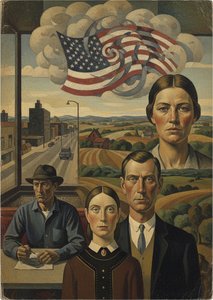
L'Architecte de l'Aisance Américaine
Dans le paysage vibrant et mouvant du début du XXe siècle, peu de noms résonnent avec un pouvoir transformateur aussi grand que celui de Claire McCardell Wiseman. Née à Fort Mill, en Caroline du Sud, son parcours l'a finalement menée au cœur de New York, où elle allait réécrire les règles de la féminité à travers le tissu. Son époque fut celle d'une transition profonde ; alors que le monde traversait les turbulages des années 1940 pour entrer dans l'essor de l'après-guerre, McCardell se tournait vers un avenir qui exigeait bien plus que de simples ornements. Tandis que l'élite de la mode restait enchaînée aux traditions rigides et structurées de Paris, McCardell puisait son inspiration dans les mouvements d'avant-garde du Surréalisme et du Dadaïsme, tout en distillant leur esprit expérimental pour en faire quelque chose de remarquablement ancré dans le réel. Elle ne cherchait pas à choquer par la complexité, mais plutôt à libérer par la simplicité, créant un langage visuel qui parlait de mouvement, d'utilité et d'un sentiment de liberté sans précédent.L'Essence du Sportswear
Le génie de McCardell résidait dans sa capacité à marier l'expérimental avec l'essentiel. Elle avait compris que la femme moderne de l'ère de l'après-guerre n'était plus une figure d'élégance statique, mais une actrice active d'une société en pleine mutation. Ses créations ont porté haut le concept du sportswear américain—un style défini par le confort, la durabilité et une intégration parfaite de la forme et de la fonction. Délaissant les corsets lourds et restrictifs des générations précédentes, elle utilisait des tissus qui respiraient et accompagnaient les mouvements de celle qui les portait. Sa technique était une leçon magistrale de sophistication discrète, mettant souvent en avant des éléments devenus les emblèmes de son époque :- L'esthétique "Tattersalls", caractérisée par des rayures horizontales audacieuses et des accents en laiton méticuleusement placés.
- Des silhouettes innovantes utilisant des tailles élastiquées et des drapés ingénieux pour s'adapter aux modes de vie actifs.
- Des détails fonctionnels, tels que des poches cachées et des bretelles polyvalentes, privilégiant l'autonomie de la femme.
Un Héritage Tissé dans le Temps
Bien que sa vie ait été tragiquement interrompue en 1958 à l'âge de 52 ans, le fil de l'influence de McCardell demeure intact. Son atelier, synonyme de l'énergie chic et juvénile de ses créations, a laissé derrière lui un modèle pour la garde-robe moderne qui continue d'inspirer les designers du monde entier. Elle ne se contentait pas de créer des robes ; elle créait une manière d'être. Qu'il s'agisse d'une robe en vichy de coton blanc et jaune chrome ou d'un maillot de bain fonctionnel de forme combishort, chaque pièce témoignait de sa foi en la beauté du pratique. Sa contribution fut l'établissement d'une identité américaine indépendante dans la mode—une identité qui regardait vers l'intérieur, vers les besoins de son propre peuple, plutôt que vers les diktats européens. Aujourd'hui, nous retrouvons son esprit dans chaque vêtement qui célèbre la force, l'indépendance et la grâce dynamique de la femme moderne.Questions et réponses
Dans quelle ville et quel pays Claire Mccardell Wiseman est-il/elle né(e) ?
Claire Mccardell Wiseman est né à Fort Mill, en États-Unis.
Où trouver les œuvres de Claire Mccardell Wiseman classées par couleur ?
La page Par couleur organise les œuvres de Claire Mccardell Wiseman par couleur.
Où puis-je voir les œuvres de Claire Mccardell Wiseman par ordre chronologique ?
Retrouvez la chronologie des œuvres de Claire Mccardell Wiseman sur sa page Chronologie des œuvres, qui les présente par date de création.