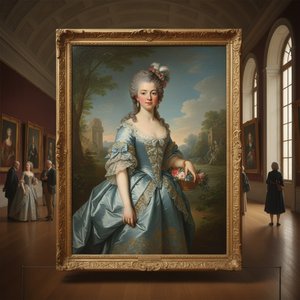
Étienne Louis Advinent (1767–1831): A Master of Delicate Rococo Miniature
Étienne Louis Advinent, born in Lyon on July 12, 1767, and died in Marseille on December 28, 1831, was a French painter, miniaturist painter, and etcher who defied the conventions of formal artistic training. He emerged as an autodidact—a self-taught artist—whose remarkable accomplishments stand testament to his unwavering dedication and innate talent. Despite lacking institutional instruction, Advinent achieved considerable renown for his exquisite portraits and genre scenes executed in the distinctive style of Rococo.
Early Life and Artistic Beginnings
Information regarding Advinent’s formative years remains scarce. However, it is known that he commenced his artistic journey at a young age, demonstrating an early aptitude for visual representation. Unlike many artists of his era who benefited from privileged patronage or academic mentorship, Advinent honed his skills independently, absorbing knowledge and techniques through observation and experimentation. This unconventional path undoubtedly contributed to the singular character of his oeuvre—characterized by unparalleled subtlety and meticulous detail. He moved to Montpellier around 1782, before settling in Grenoble in 1788. His artistic inclinations were nurtured not by formal schooling but by a profound engagement with the visual world—a formative experience that instilled within him an enduring passion for capturing beauty and emotion on canvas.
Artistic Style and Techniques: Rococo’s Delicate Embrace
Advinent's artistic style is firmly rooted in the Rococo movement, a stylistic flowering that celebrated elegance, ornamentation, and illusionistic effects. Influenced by artists such as Jean-Baptiste Greuze and Anne Louise Girodet de Roucy-Trioson, Advinent embraced the Rococo aesthetic’s penchant for pastel hues, soft contours, and delicate brushstrokes—elements meticulously deployed to convey emotion and atmosphere. His mastery of miniature painting is particularly noteworthy; he achieved astonishing levels of precision within diminutive canvases, capturing fleeting expressions and nuanced gestures with breathtaking accuracy. The artist's use of color palettes was carefully considered, prioritizing harmonious blends that evoked a sense of serenity and refinement. He skillfully blended light and shadow to create depth and dimension—a technique emblematic of Rococo’s fascination with illusionistic artistry.
Notable Works: Portraits of Nobility and Scenes of Everyday Life
Advinent’s artistic legacy rests upon a collection of portraits depicting French nobility—individuals rendered with remarkable sensitivity and psychological insight—and genre scenes portraying moments from ordinary life. Among his most celebrated creations is a portrait of Madame Louise-Marie de Bourbon, princess héritière du royaume de Sardaigne, exemplifying the meticulous attention to detail that defined Advinent's miniature technique. Another significant work is “La Famille,” which skillfully captures the complexities of familial relationships through subtle gestures and expressive facial expressions—a testament to Advinent’s ability to transform commonplace subjects into captivating narratives imbued with emotional resonance. These paintings stand as enduring symbols of Rococo artistry—testaments to Advinent’s unwavering commitment to portraying human emotion and capturing scenes of daily life.
Influence and Legacy: A Quiet Pioneer
Étienne Louis Advinent's influence extends beyond his immediate contemporaries, subtly shaping the artistic sensibilities of subsequent generations. His pioneering exploration of miniature painting techniques resonated with artists like François Boucher, who adopted similar approaches in their own works—a demonstration of Advinent’s enduring impact on French art history. Furthermore, Advinent’s unwavering commitment to capturing human emotion and portraying scenes of daily life established a precedent for genre painters seeking to depict authentic experiences—a tradition that continues to inspire artists today. His contribution to French art history is marked by understated brilliance—a quiet testament to the transformative power of self-directed artistic endeavor. He remains remembered as a singular figure in 18th-century painting, whose dedication to craft and emotional expression cemented his place among France’s most accomplished artists.