Nicolaes Gillis (1595 – 1632): The Dawn of Breakfast Still Life
Nicolaes Gillis, born in Antwerp in 1595, emerged as a pivotal figure within the Dutch Golden Age artistic landscape. His formative years were steeped in the intellectual fervor of Antwerp’s renowned art academy, where he honed his skills under the tutelage of masters like Floris van Dyck – an influence that would profoundly shape his distinctive style and compositional sensibilities. This mentorship instilled in him a meticulous approach to observation and a deep appreciation for capturing subtle nuances within the natural world, characteristics that would define his artistic vision throughout his career. Moving to Haarlem around 1610, Gillis established himself as a respected artist, documenting his life there until his untimely death in 1632 – a tragic loss that curtailed his creative potential but cemented his place among the most innovative painters of his era.
Early Influences and Artistic Training
Gillis’s artistic education began at Antwerp’s prestigious art academy, where he studied alongside luminaries such as Floris van Dyck. Van Dyck's mastery of portraiture and dramatic lighting served as a crucial catalyst for Gillis’s stylistic development, fostering an understanding of how to convey emotion and psychological depth through visual representation. This formative experience instilled in him a disciplined technique and a commitment to achieving unparalleled realism – qualities that would become hallmarks of his oeuvre. The academy's emphasis on scientific observation alongside artistic beauty undoubtedly contributed to Gillis’s broader aesthetic sensibilities.
The Birth of the Breakfast Still Life (*Banketje*)
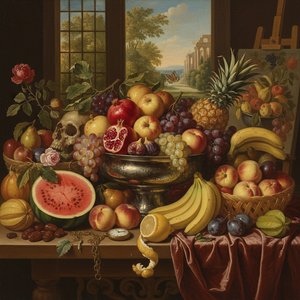
Gillis is celebrated primarily for his pioneering contribution to the genre of “breakfast still life,” or *banketje*. This revolutionary approach distinguished him from his predecessors who predominantly focused on opulent floral arrangements and exotic fruits. Instead, Gillis captured a moment of serene domestic tranquility – a table adorned with delectable delicacies alongside freshly picked blossoms—a scene imbued with an atmosphere of quiet contemplation and capturing the fleeting beauty of everyday life. This innovative decision wasn’t merely decorative; it represented a significant departure from established conventions, signaling a shift toward explorations of psychological complexity and a heightened sensitivity to natural phenomena. He sought not simply to depict beauty but to evoke emotion and convey a profound understanding of human experience.
Technique and Artistic Style
Gillis's technique demonstrated extraordinary precision and meticulous attention to detail. He skillfully employed glazing techniques—particularly thin layers of translucent paint—to achieve luminous effects that captured the vibrancy of color and texture with breathtaking accuracy. This masterful manipulation of light and pigment allowed him to render surfaces with remarkable realism, meticulously depicting the translucence of fruit skins and the delicate folds of petals – feats of artistic virtuosity rarely achieved by his contemporaries. His dedication to replicating natural appearances reflects a broader trend within Dutch painting during this period, where artists endeavored to emulate the meticulous observation championed by scientific thinkers alongside aesthetic excellence. The resulting paintings possess an ethereal quality that transcends mere representation, conveying a palpable sense of atmosphere and inviting viewers into the intimate space of the domestic interior.
Notable Works and Legacy
Gillis’s prolific output yielded approximately 60 paintings, predominantly still lifes featuring fruits—melons, peaches, pears—and flowers—morning glories, tulips, roses—often arranged in harmonious compositions that prioritized balance and visual appeal. Among his most celebrated works are “Laid Table,” a masterful depiction of a breakfast scene capturing the subtle interplay of light and color; "Melons and Morning Glories," showcasing Gillis’s exceptional ability to render textures with astonishing realism; and “The Cut Melon,” demonstrating his unwavering commitment to portraying natural forms with unparalleled accuracy. His influence extended beyond his immediate contemporaries, mentoring younger artists and solidifying the banketje genre as a cornerstone of Dutch Baroque painting. Nicolaes Gillis remains an artist whose work continues to inspire admiration for its technical brilliance and its profound engagement with the human condition—a testament to his enduring legacy within the annals of art history.