


 Előnézet
 Megosztás
 Megosztás
 Részletek
 Útmutató

 Letöltés
 Hasonló darabok
 X-ray felvétel
 Diavetítés
 Statisztika
Female nude holding apple


 Tovább olvasom
Kézzel készített olajfestmény reprodukció
Kézzel festett olajvastú vászon, az Ön által választott méretben és keretben, művészeink készítik meglévőre. ( Váltás nyomtatványra Áttérés digitális képre)




P118B Ft10

P118H Ft10

P118W Ft10

P438Z Ft10

P508JH Ft12

P508YH Ft12

P805H Ft10

P805Z Ft10

P919BZ Ft10

P919G Ft10

P919XJ Ft10

P959ZH Ft10

P968JZ Ft12

W106C Ft8

W218G Ft10

W218JH Ft8

W218Y Ft10

W307PJ Ft10

W316G Ft10

W316PJ Ft8

W316Y Ft10

W398PJ Ft8

W4111J Ft10

W500HY Ft15

W500JH Ft15

W692G Ft12

W849H Ft8

W940BG Ft15

W953PJ Ft8




Válasszon előre meghatározott méreteink közül, amelyek megfelelnek a műalkotás eredeti arányainak.

Írja be a kívánt szélességet és magasságot, hogy illeszkedjen a keretéhez vagy a falához. Mivel ez kézzel festett alkotás, egy eltérő formájú méret esetén a művész akár festhet is valamivel többet a kép körül, vagy korolathat is belőle — az Ön döntésének megfelelően. A festés megkezdése előtt küldünk egy digitális tervezetet jóváhagyásra. Az oldalon látható kép nem tartalmazza a végeredményt — csak a tervezet mutatja meg a valódi eredményt.
A rendelést követően a AllPaintingsStore.com csapata e-mailt küld az ügyfélnek az instrukciókért, és biztosít egy előnézeti képet (mockup).
Világszerte elérhető szállítás () 3-4 hét alatt a szokásos 5 hét helyett. (23 október). A minőség nem kérdőjelezhető.

Ingyenes globális expressz szállítás

Prémium minőségű len vászon

Teljes körű szállítási biztosítás

Vámvisszatérítési Garancia

Tökéletes színarányosság garancia

100 napos visszaküldési garancia (csak gyártási hibás termékek esetén)

100% pénzvisszatérítési garancia

Több darab vásárlásakor kedvezmény
 Az üvegkeretes opció csak 110 cm alatti méretben érhető el

Female nude holding apple
Reprodukciós technika
Reprodukció méretei
-


Összesített ár
Ft 82941
A Vision of Timeless Grace
In the quiet, evocative depths of André Derain’s 1941 masterpiece, Female Nude Holding Apple, we encounter a moment suspended in time, where the raw vitality of life meets the disciplined elegance of classical form. This painting serves as a profound window into the artist's later evolution, moving away from the explosive, fragmented colors of his Fauvist beginnings toward a more serene and structured Neoclassicism. The subject—a solitary female figure standing with an air of quiet confidence—commands the viewer's attention through her sheer presence. As she holds the fruit, there is a palpable sense of weight and substance to her form, rendered with a mastery that celebrates the human silhouette against a somber, atmospheric backdrop.
The composition is a masterclass in balance and contrast. Derain utilizes a dark, almost nocturnal background to push the illuminated contours of the woman's body forward, creating a sculptural depth that feels both intimate and monumental. The soft light that graces her skin does more than just reveal shape; it breathes life into the canvas, highlighting the smooth transitions of shadow and light that define her anatomy. A single white cloth, draped with deliberate grace behind her, provides a striking visual counterpoint to the surrounding darkness, guiding the eye through the composition and adding a layer of textural complexity that enhances the painting's overall sense of realism and poise.
Symbolism and the Classical Spirit
Beyond its aesthetic beauty, the artwork is rich with the echoes of art history. The inclusion of the apple—a motif as old as civilization itself—introduces a layer of symbolic depth, evoking themes of temptation, knowledge, and the eternal cycle of nature. Within the context of the Naive Art and Primitivism movement, this simplicity allows the viewer to connect with the primal essence of the subject. Derain’s technique here leans into the ideals of harmony and proportion, reminiscent of the great classical masters, yet he infuses it with a modern sensibility that feels grounded and tactile.
For the discerning collector or interior designer, this piece offers more than mere decoration; it provides an emotional anchor. The painting’s restrained color palette and focused subject matter make it an ideal centerpiece for spaces designed for contemplation and sophistication. Whether placed in a contemporary gallery setting or a classic study, Female Nude Holding Apple radiates a sense of permanence and quiet strength. Owning a high-quality reproduction of this work allows one to invite the profound stillness and historical weight of Derain’s vision into their own environment, fostering an atmosphere of cultured elegance and timeless beauty.
Gyakran Ismételt Kérdések
Hová sorolható a André Derain pályájának mely szakaszába a "Female nude holding apple"?
André Derain pályaművében a „Female nude holding apple” a Late Period korszakba tartozik. Ez az időszak segít összehasonlíthatóvá tenni a művet a művész többi alkotásával.
Milyen témát és hangulatot ötvöz a „Female nude holding apple”, André Derain alkotása?
A „Female nude holding apple”, André Derain alkotása a woman, nude figure, apple, white cloth, dark background elemeit ötvözi egy Classic hangulatú környezettel.
Hol javasolt a(z) "Female nude holding apple" kihelyezését a színei alapján?
A „Female nude holding apple”, André Derain alkotása Earthy színei tökéletesen illeszkednek a javasolt helyiséghez: egy Living Room.
Hasonló műalkotások


A művész életrajza
Early Life and the Seeds of Fauvism
André Derain, born in 1880 in the charming village of Chatou near Paris, wasn’t initially destined for a life steeped in paint and canvas. Contrary to some narratives suggesting an immediate artistic awakening through encounters with fellow painters like Vlaminck or Matisse, Derain embarked on his artistic journey independently around 1895. These early explorations were often undertaken alongside Father Jacomin and his sons during countryside excursions—a formative experience that instilled a deep appreciation for the natural world. He briefly pursued engineering at the Académie Camillo in 1898, where fatefully, he crossed paths with Henri Matisse, initiating a pivotal artistic partnership. Further studies under Eugène Carrière honed his foundational skills, but it was military service from 1901 to 1904 that temporarily interrupted his burgeoning career. Upon his return, persuaded by the unwavering belief of Matisse, Derain decisively abandoned engineering and fully committed himself to painting, continuing his education at the Académie Julian. This commitment marked a turning point, setting him on a path toward becoming a central figure in one of modern art’s most revolutionary movements.The Explosive Birth of Color: Fauvism
The summer of 1905 proved to be an explosive moment for Derain and Matisse as they collaborated in the sun-drenched coastal village of Collioure. This period birthed works like “Mountains at Collioure,” characterized by a radical departure from representational color. The landscapes weren’t merely depictions of places; they were expressions of feeling, rendered through intensely vibrant, non-naturalistic hues. When their work was exhibited at the Salon d'Automne that same year, it provoked outrage and astonishment. Critic Louis Vauxcelles famously dubbed them “Les Fauves”—the wild beasts—a name initially intended as derisive but ultimately embraced by the artists themselves. Derain’s contribution to this movement wasn’t merely stylistic; he possessed a unique ability to translate emotional intensity into pure color. In 1906, Ambroise Vollard commissioned him to paint London, resulting in a series of striking canvases depicting the Thames and Tower Bridge. These weren't conventional cityscapes; they were bold interpretations, capturing the energy and atmosphere of London through an unconventional lens—a testament to Derain’s innovative vision. Influenced by artists like Van Gogh and Cézanne, he pushed the boundaries of color and form, laying the groundwork for future generations of expressionist painters.Beyond Fauvism: A Shifting Aesthetic
The initial fervor of Fauvism didn't define Derain’s entire artistic trajectory. Around 1907, his style began a significant evolution, moving away from the unrestrained chromatic exuberance toward more subdued tones and an increased emphasis on form. This period, often referred to as his “gothic” phase (1911-1914), reflected a growing interest in structure and composition. He immersed himself in the study of Old Masters, incorporating elements of Cubism while simultaneously seeking inspiration from classical forms. This wasn’t a rejection of his earlier work but rather an expansion of his artistic vocabulary. Derain's versatility extended beyond painting; in 1919, he designed the ballet “La Boutique Fantasque” for Sergei Diaghilev’s Ballets Russes, demonstrating his aptitude for theatrical design and further showcasing his diverse talents. Key works from this era, such as "Harlequin and Pierrot" and the monumental mural "Return of Ulysses," exemplify this stylistic shift—a move toward a more controlled and intellectually rigorous approach to artmaking.Legacy and Complexities
André Derain’s place in art history is secure as a co-founder of Fauvism, a movement that irrevocably altered the course of modern painting. His unique vision of London, captured in his vibrant canvases, offered a fresh perspective on an iconic city. After World War I, he gained renewed recognition for his contributions to a revival of classicism, demonstrating his adaptability and enduring artistic relevance. However, Derain’s later life was marked by controversy. During World War II, his presence in Germany drew criticism, leading to ostracization from some former supporters after the war. Despite this shadow, his influence on subsequent generations of artists remains undeniable. He died in 1954, leaving behind a body of work that continues to captivate and inspire. *His legacy is not simply one of bold colors and expressive brushstrokes but also of an artist who constantly challenged himself, explored new avenues of expression, and left an indelible mark on the landscape of modern art.* He stands as a testament to the power of artistic innovation and the complexities inherent in navigating a rapidly changing world. Derain’s journey reminds us that true artistry lies not in adhering to a single style but in the relentless pursuit of creative truth.
André Derain
1880 - 1954 , Franciaország
Gyors információk
- Artistic Movement Or Style: Fauvizmus, Kubizmus
- Artists Or Movements Influenced By This Artist:
- Matisse
- Kubizmus
- Artists Who Influenced This Artist:
- Van Gogh
- Cézanne
- Date Of Birth: 1880. június 10.
- Date Of Death: 1954. szeptember 8.
- Full Name: André Derain
- Nationality: Francia
- Notable Artworks:
- A Collioure hegyei
- Harlekin és Pierrot
- A teázás
- Place Of Birth: Chatou, Franciaország
Kapcsolódó cikkek

A női művészek felemelkedése: Történelmi áttekintés és kortárs trendek
Ismerje meg a női művészek lenyűgöző történetét és kortárs alkotásait! Mélyreható elemzések, magyar vonatkozások és jövőbeli trendek egy helyen. Prémium tartalom műgyűjtőknek és művészetkedvelőknek.

The Eloquent Form: A Historical & Aesthetic Exploration of the Nude in Art
Explore the captivating history of the nude in art! From ancient Greece to modern masters, discover its evolving symbolism, techniques & enduring beauty. Expert insights for collectors and enthusiasts.
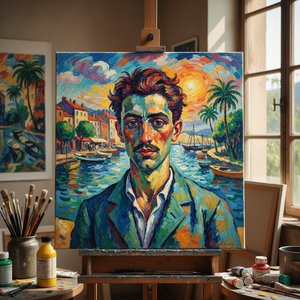
André Derain: Fauvism's Bold Visionary & the Evolution of Modern Color
Explore the revolutionary art of André Derain, co-founder of Fauvism. Discover his bold use of color, evolution from radical expressionism to classicism, and lasting influence on modern art history. Learn more at AllPaintingsStore.

The Enduring Allure of the Nude: A Historical & Artistic Exploration of the Human Form
Explore the captivating history of nude art! Discover iconic paintings & artists from classical to modern eras. Uncover symbolism, techniques & find museum-quality reproductions at AllPaintingsStore.

Beyond the Shadows: The Powerful Rise of Female Masters in Art History
Explore the profound legacy of female masters in art history. From Baroque brilliance to modern resilience, discover rediscovered virtuosos through AllPaintingsStore’s premium, museum-quality oil reproductions and expert art consultations for discerning collectors.


