


 Előnézet
 Megosztás
 Megosztás
 Részletek
 Útmutató

 Letöltés
 Hasonló darabok
 X-ray felvétel
 Diavetítés
 Statisztika
Christ on the Mount of Olives -


 Tovább olvasom
Kézzel készített olajfestmény reprodukció
Kézzel festett olajvastú vászon, az Ön által választott méretben és keretben, művészeink készítik meglévőre. ( Váltás nyomtatványra Áttérés digitális képre)




P118B $10

P118H $10

P118W $10

P438Z $10

P508JH $12

P508YH $12

P805H $10

P805Z $10

P919BZ $10

P919G $10

P919XJ $10

P959ZH $10

P968JZ $12

W106C $8

W218G $10

W218JH $8

W218Y $10

W307PJ $10

W316G $10

W316PJ $8

W316Y $10

W398PJ $8

W4111J $10

W500HY $15

W500JH $15

W692G $12

W849H $8

W940BG $15

W953PJ $8




Válasszon előre meghatározott méreteink közül, amelyek megfelelnek a műalkotás eredeti arányainak.

Ön megadhat saját méreteket egy adott kerethez vagy térhez igazításhoz. Ha a kiválasztott méret nem egyezik az eredeti kép arányával, akkor a műalkotást levágjuk, vagy további kézzel festett elemekkel meghosszabbítjuk a festményt. A gyártás megkezdése előtt küldünk Önnek egy digitális előnézetet jóváhagyásra.
Kérjük, vegye figyelembe, hogy a képernyőn megjelenő előnézet nem tükrözi a tényleges vágást vagy kiterjesztést. Csak az előnézet fog pontosan mutatni a végső kompozíciót.
Bár egyedi méretek állnak rendelkezésre, javasoljuk, hogy válasszon egy méretet az előre meghatározott listából az eredeti arányok megőrzése érdekében.
A rendelést követően a AllPaintingsStore.com csapata e-mailt küld az ügyfélnek az instrukciókért, és biztosít egy előnézeti képet (mockup).
Világszerte elérhető szállítás () 3-4 hét alatt a szokásos 5 hét helyett. (21 szeptember). A minőség nem kérdőjelezhető.

Ingyenes globális expressz szállítás

Prémium minőségű len vászon

Teljes körű szállítási biztosítás

Vámvisszatérítési Garancia

Tökéletes színarányosság garancia

100 napos visszaküldési garancia (csak gyártási hibás termékek esetén)

100% pénzvisszatérítési garancia

Több darab vásárlásakor kedvezmény
 Az üvegkeretes opció csak 110 cm alatti méretben érhető el

Christ on the Mount of Olives -
Reprodukciós technika
Reprodukció méretei
-


Összesített ár
$ 258
The Weight of Sorrow: Andrea Mantegna’s Christ on the Mount of Olives
Andrea Mantegna's 1455 painting, “Christ on the Mount of Olives,” isn’t merely a depiction of a biblical scene; it’s a profound meditation on human emotion and the transition from Byzantine formality to the burgeoning dynamism of the Italian Renaissance. More than just a religious image, this work is a carefully constructed tableau of grief, anticipation, and the quiet dignity of suffering – a testament to Mantegna's mastery of perspective, his deep understanding of classical forms, and his ability to infuse even sacred subjects with palpable realism.

The scene unfolds against a dramatic, mountainous backdrop – a carefully rendered landscape that immediately establishes a sense of depth and spatial awareness, a hallmark of Mantegna’s innovative use of perspective. Jesus stands at the center, not as a divine figure radiating power, but as a profoundly human one, burdened by sorrow. His posture is slumped, his face etched with anguish; he's not triumphant or majestic, but vulnerable and deeply affected. Surrounding him are twelve figures – disciples, mourners, and perhaps even angels – arranged in a complex composition that draws the viewer into the heart of the drama. The inclusion of a solitary bird soaring above adds an element of naturalism and subtly underscores the themes of loss and ascension.
A Bridge Between Worlds: Byzantine Roots and Renaissance Innovation
To fully appreciate “Christ on the Mount of Olives,” it’s crucial to understand its historical context. Mantegna, a student of Francesco Squarcione, was deeply influenced by the artistic traditions of Byzantium – the Eastern Orthodox Christian art that dominated the visual landscape of his time. Byzantine paintings were characterized by their rich gold backgrounds, stylized figures, and a focus on symbolic representation. However, Mantegna deliberately diverged from these established conventions. He embraced a more realistic approach, employing sharper lines, greater detail in drapery and facial expressions, and a dramatic use of light and shadow – techniques that would become defining features of the Renaissance.
The painting’s composition reflects this shift. Unlike the flattened perspective often found in Byzantine art, Mantegna utilizes linear perspective to create an illusion of three-dimensionality, drawing the viewer into the scene with remarkable immediacy. The bench positioned prominently at the center is a particularly intriguing detail; it suggests rest, contemplation, and perhaps even a shared grief among those gathered around Jesus.
Symbolism and Emotional Resonance
Beyond its technical brilliance, “Christ on the Mount of Olives” is rich in symbolic meaning. The presence of the twelve figures can be interpreted as representing the apostles’ impending betrayal and their subsequent abandonment of Christ. The bird, often associated with hope and resurrection, offers a glimmer of solace amidst the prevailing sorrow. The very act of Jesus praying – a moment of profound vulnerability – speaks to his humanity and his acceptance of his fate. It's a scene not just of suffering, but of deep spiritual struggle.
Mantegna’s decision to depict Christ in such an emotionally raw state was revolutionary for its time. He wasn’t interested in presenting a sanitized or idealized image of the savior; instead, he sought to capture the full spectrum of human experience – including pain, doubt, and despair. This willingness to confront difficult emotions is what makes “Christ on the Mount of Olives” such a powerful and enduring work of art.
Reproductions: Bringing Renaissance Emotion Home
AllPaintingsStore offers meticulously crafted hand-painted reproductions of Andrea Mantegna’s “Christ on the Mount of Olives,” allowing you to experience this masterpiece in stunning detail. Our skilled artists faithfully recreate Mantegna's nuanced brushstrokes, vibrant colors, and masterful use of perspective, ensuring that your reproduction captures the painting’s original emotional impact. Whether displayed in a grand salon or a cozy study, a AllPaintingsStore reproduction will serve as a timeless reminder of Renaissance artistry and the profound beauty of human emotion.
Hasonló műalkotások


A művész életrajza
A Renaissance Forged in Antiquity: The Life and Art of Andrea Mantegna
Andrea Mantegna, born near Padua around 1431, stands as a pivotal figure bridging the Early and High Renaissances. His artistic journey wasn’t merely about adopting classical forms; it was an immersive excavation of antiquity, a passionate attempt to resurrect the spirit of Rome within the burgeoning Italian Renaissance. Unlike many contemporaries who drew inspiration from classical models, Mantegna possessed a unique fervor for archaeological accuracy. This obsession stemmed from his formative years under Francesco Squarcione, a painter and collector whose workshop functioned less as a traditional studio and more as an academy dedicated to the study of Roman ruins, sculptures, and inscriptions. It was within these walls, surrounded by fragments of a lost empire, that Mantegna’s artistic vision began to take shape—a vision characterized by sculptural forms, dramatic perspective, and an almost obsessive attention to detail. His early life remains somewhat shrouded in mystery; accounts suggest he was discovered as a promising apprentice, his innate talent recognized and nurtured by Squarcione despite humble origins. This unconventional beginning perhaps fueled Mantegna’s relentless pursuit of artistic mastery and his determination to forge a style distinctly his own.The Gonzaga Court and the Illusion of Reality
Mantegna's career truly blossomed when he entered the service of the Gonzaga family in Mantua, becoming court painter in 1488. This patronage provided him with an unprecedented level of artistic freedom and a platform to realize his most ambitious projects. The Gonzaga’s were not simply patrons; they were collaborators, commissioning works that pushed the boundaries of artistic innovation. It was during this period that Mantegna created what is arguably his masterpiece: the *Camera degli Sposi* (Bridal Chamber) frescoes in the Palazzo Ducale. This groundbreaking work transcends mere decoration; it's a complete illusionistic environment, seamlessly integrating architecture and painting to create an extended sense of space. The frescoes depict scenes from the life of the Gonzaga family, portraits that are remarkably lifelike and engaging, and a breathtaking *di sotto in sù* (seen from below) ceiling panel that creates the illusion of an open sky. This masterful manipulation of perspective wasn’t simply about technical skill; it was about creating a world within a room, blurring the lines between reality and representation. The *Camera degli Sposi* is considered one of the most important achievements in Renaissance art, demonstrating Mantegna's unparalleled ability to create convincing illusions and transform a simple chamber into a monumental space. Beyond the *Camera degli Sposi*, Mantegna continued to produce works of exceptional quality for the Gonzaga court, including the monumental series *Triumphs of Caesar*. These paintings, inspired by Roman triumphal processions, are not merely historical depictions; they are elaborate allegories celebrating the power and prestige of the Gonzaga family, presented with a grandeur that rivals the imperial ambitions of ancient Rome.A Master of Perspective and Anatomical Precision
Mantegna’s artistic innovations extended far beyond illusionistic environments. He was a pioneer in the use of perspective, frequently adjusting the horizon line to create dramatic effects and a sense of monumentality. His meticulous attention to anatomical detail was equally revolutionary for his time. He wasn't content with simply representing the human form; he dissected it, studied its musculature, and rendered it with a precision that was unparalleled. This dedication to anatomical accuracy wasn’t merely an exercise in technical skill; it reflected Mantegna’s deep engagement with classical sculpture and his desire to emulate the idealized forms of antiquity. He sought not just to depict the human body but to capture its inherent dignity and power. His influence on subsequent generations of artists, including Raphael and Michelangelo, is undeniable, as they built upon his foundations in perspective, anatomy, and composition. Mantegna’s use of *trompe-l'oeil* – creating illusions so convincing they deceive the eye – further enhanced this effect, blurring the boundaries between painting and reality.Early Works and Influences
Mantegna’s early career was shaped significantly by his apprenticeship with Francesco Squarcione. Squarcione’s workshop served as a unique training ground, exposing Mantegna to Roman ruins, sculptures, and inscriptions – a direct connection to antiquity that profoundly influenced his artistic vision. This immersion in the past instilled in him a deep respect for classical art and a desire to emulate its grandeur and realism. His early works, such as the *Agony in the Garden* (c. 1460-65), demonstrate this influence vividly. The composition, with its dramatic lighting and sculptural figures, echoes the style of ancient Roman sculpture, while the meticulous detail and precise perspective are hallmarks of Mantegna’s distinctive approach. He also drew inspiration from other artists, including Donatello, whose dynamic sculptures influenced his depiction of human form, and Giovanni Bellini, whose use of color and atmospheric effects contributed to his evolving artistic style.Legacy and Enduring Influence
Andrea Mantegna died in Mantua in 1506, leaving behind a legacy that continues to resonate with art historians and enthusiasts alike. His work represents a crucial turning point in the history of Renaissance art, bridging the gap between the Early and High Renaissance styles. He wasn’t simply an imitator of classical forms; he was an interpreter, adapting ancient motifs and techniques to create something entirely new and uniquely his own. His meticulous attention to detail, his mastery of perspective, and his profound engagement with classical antiquity established him as a leading figure of his time. Mantegna’s exploration of classical themes helped revive interest in ancient art and culture, paving the way for the artistic achievements of the High Renaissance. His influence can be seen in the works of countless artists who followed, from Raphael's graceful compositions to Michelangelo's powerful figures. Today, his paintings are housed in major museums around the world, including The National Gallery in London and the Pinacoteca di Brera in Milan, where they continue to inspire awe and admiration.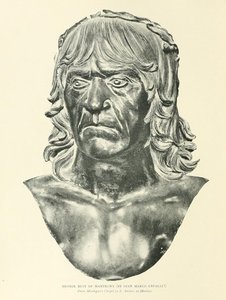
Andrea Mantegna
1431 - 1506 , Olaszország
Gyors információk
- Artistic Movement Or Style: Korai reneszánsza
- Artists Or Movements Influenced By This Artist:
- Raffaello
- Michelangelo
- Artists Who Influenced This Artist:
- Squarcione
- Donatello
- Date Of Birth: 1431
- Date Of Death: 1506
- Full Name: Andrea Mantegna
- Nationality: Olasz
- Notable Artworks:
- Camera degli Sposi
- Triumphs Caesar
- Lamentáció
- Place Of Birth: Padova, Olaszország
Kapcsolódó cikkek

Illuminating Eternity: A Comprehensive Exploration of Byzantine Art's Legacy
Explore the rich history & stunning artistry of the Byzantine Empire! Discover iconic mosaics, profound symbolism, and lasting influence on Western art. A comprehensive guide for history lovers.

Fra Angelico Mesterek: A 25 Legszebb Műalkotás a Lelki Békeért – AllPaintingsStore.com
Fedezze fel Fra Angelico 25 legszebb műalkotását! Reneszánsz festmények, angyalok és spirituális ikonfestészet a firenzei iskola mesterétől. Vásároljon exkluzív olajfestmény reprodukciókat otthonába a AllPaintingsStore.com-on. Explore the full collection online!

Golden Splendor: A Definitive Guide to the Timeless Majesty of Byzantine Art
Embark on a scholarly journey through the golden era of Byzantine art. Discover the profound symbolism, masterful mosaics, and imperial grandeur that defined an epoch of spiritual and aesthetic splendor in this expert-led guide for art enthusiasts.

Byzantine Art: The Golden Era of Bold Icons, Divine Mosaics, and Imperial Grandeur
Step into the golden era of Byzantine art. Explore the breathtaking power of gold mosaics, sacred iconography, and imperial design that shaped history. Discover how this bold, divine aesthetic continues to inspire modern visual impact and luxury interiors.
Giotto di Bondone 25 Mesterműve: A Reneszánsz Előhírnöke a Falakon – AllPaintingsStore
Fedezze fel Giotto di Bondone 25 legpárásabb műalkotását! Ismerje meg a reneszánsz előhírnökét, festményeit és freskóit. Vásároljon exkluzív reprodukciókat otthona díszítésére a AllPaintingsStore.com-on – múzeumi minőségben!


