Pénzvisszatérítési Garancia · 100 nap Ingyenes világszerte történő szállítás
612 262műalkotások 52 888művészek 5 406múzeumok 32nyelv
Adèle Riché portréja

Adèle Riché festményei: A legnévesebb 1 alkotás, rangsorolva

Frissítve: november 2026 · rangsorolva népszerűségi pontszámunk alapján (minden mű keresései, látogatásai és megrendelései alapján) · 1 mű Adèle Riché alkotása a katalógusunkban

Gyors válasz

A leghíresebb Adèle Riché festmény a Portrait of Natalia Obrenovich, Queen of Serbia (1876); az eredeti mű a Hermitaeus-múzeum múzeumában található, Szentpétervár. A Adèle Riché 1 műve közül a következők a 1 leghíresebb alkotás, rangsorolva, évszámmal és múzeummal ellátva, hogy Ön kiválaszthassa a megrendelésre szánt festményt.

1791 – 1878, Paris A legtöbb mű: Hermitaeus-múzeum

A Adèle Riché legjobb 10 festménye, rangsorolva

1
Portrait of Natalia Obrenovich, Queen of Serbia (1876) (1889) -ja Adèle Riché

Portrait of Natalia Obrenovich, Queen of Serbia

1876 · Oil On Canvas · Hermitaeus-múzeum, Szentpétervár

The Portrait of Natalia Obrenovich, Queen of Serbia is a painting by Adèle Riché. It captures the likeness of the woman born Natalia Keșco. She moved through the courts of Europe as the wife of King Milan I of Serbia. Her presence in the history of the Balkan monarchy was defined by her tenure as Queen Consort of Serbia from 1882 to 1889.

Kézzel festett olajfestmény másolat, kezdő áron: $170 28 × 35 cm Az eredeti méretben $252 55 × 69 cm Megrendelem az eredeti méretben →
Rendelj egy kézzel festett másolatot A festményről

A Adèle Riché eredeti műveit őrző múzeumok

A múzeum, amely ezen az oldalon szereplő festmények többségét őrzi.

Múzeum Város Adèle Riché művei Ebből a listából származó festmények
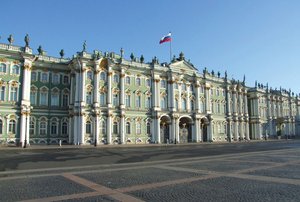
Hermitaeus-múzeum, SzentpétervárHermitaeus-múzeum Szentpétervár 1 Portrait of Natalia Obrenovich, Queen of Serbia

Adèle Riché évsorozata: a legjobb festmények

Az oldalon található összes 1876 évszáraz Adèle Riché festmény rangsorban van felsorolva.

Művek évszáma szerint

Váasszon ki egy évet a festmények megtekintéséhez.

Adèle Riché festményei: gyakori kérdések

Mi a leghíresebb műve Adèle Riché alkotótól?Megjelenítés

Portrait of Natalia Obrenovich, Queen of Serbia (1876) az első helyen áll.

Hány éves volt Adèle Riché, amikor a Portrait of Natalia Obrenovich, Queen of Serbia készült?Megjelenítés

Adèle Riché 85 éves volt: Portrait of Natalia Obrenovich, Queen of Serbia 1876-ből származik, Adèle Riché pedig 1791 évfolyamon született.

Hány Adèle Riché műve szerepel a listán?Megjelenítés

1 műve Adèle Riché alkotása a katalógusunkban.

Hol tárolják az eredeti Adèle Riché festményeket?Megjelenítés

Főleg Hermitaeus-múzeum (Szentpétervár) található. A teljes listaért tekintse meg a fenti múzeumi táblázatot.

Megrendelhetek egy Adèle Riché reprodukciót?Megjelenítés

Igen. Az oldalon található összes festmény rendelhető kézzel festett olajfestmény-másolatként vagy nyomtatványként is. Nyissa meg a festményt, válassza ki a méretet, és adja meg a zamówelést.

A művészről: Adèle Riché

The Precision of the Botanical Eye

Adèle Riché did not merely paint flowers; she documented them with the clinical accuracy required by the French Natural History Museum in Paris. Born in 1791, she occupied a specific niche where art met science. Her lineage provided her entry into this world, as her father, François-Joseph Riché, served as the chief gardener of the Paris Jardin des Plantes. This proximity to living specimens shaped her technical development. She was not a self-taught amateur but a disciplined student of Jan Frans van Dael and Gerard van Spaendonck, masters who understood the structural necessity of botanical illustration.

Her work on vellum required a level of control that most painters never achieve. Working on such a surface demands immediate, decisive application, as mistakes cannot be easily erased. This technical rigor is evident in her watercolor and gouache works, such as her depiction of the Queen of the Night or Night-Flowering Cereus. She moved between the delicate requirements of entomological and natural painting and the more traditional demands of oil portraiture. While her still lifes leaned toward the watercolor medium, her portraits, including a likeness of Natalia Obrenovich, Queen of Serbia, utilized oil to meet the stylistic expectations of the era.

Technical Mastery and Scientific Contribution

Riché’s career was defined by a dual identity as both a fine artist and a scientific illustrator. Her ability to translate complex organic forms into clear, legible images earned her a gold medal at the 1831 Salon. This was not a hollow accolade; it recognized a specific command over her medium. Her illustrations for François André Michaux's 1813 Histoire des arbres forestiers de l'Amerique Septentrionale demonstrate her capacity to handle large-scale botanical subjects with the same precision she applied to small-scale watercolors on vellum.

Her professional circle included significant figures in the field of botanical art, such as Pierre-Joseph Redouté and Pancrace Bessa. These collaborations were not mere social connections but professional alignments with the leading specialists of the nineteenth century. Her output was diverse, spanning several distinct methods:

By the time of her death in Fontainebleau, France, Riché had established a body of work that bridged the gap between aesthetic composition and scientific record. She did not rely on abstraction; she relied on the truth of the specimen. Her legacy is found in the accuracy of her lines and the permanence of her botanical observations.