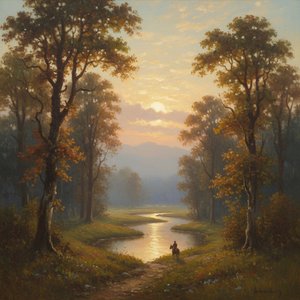
Bernard Hoffman: A Painter of Montana's Soul
Bernard Hoffman (1913–1979) emerged from obscurity as a self-taught American painter, driven by an unwavering fascination with the rugged beauty of Montana landscapes and the traditions of Native American culture. His artistic journey began in relative isolation, fueled by a profound connection to the wilderness and a desire to capture its essence on canvas—a pursuit that would ultimately yield remarkable results. Hoffman’s formative years were spent absorbing the visual language of European Impressionism and Post-Impressionism, notably Cézanne and Van Gogh. These artists instilled in him a meticulous attention to detail and an expressive use of color—principles he diligently applied to his own compositions. Rejecting the grand narratives favored by many contemporaries, Hoffman instead sought to portray the quiet dignity of Montana ranchers and the spiritual significance of Native American ceremonies—a deliberate choice that distinguished his artistic vision. His technique was characterized by layering thin glazes of oil paint over a textured underpainting, achieving surfaces that possessed an ethereal shimmer through subtle optical blending. He painstakingly rendered every element of his scenes—the weathered faces of cowboys etched with experience and the intricate patterns woven into tribal textiles—transmitting not merely visual information but also palpable emotion. This dedication to realism combined with an intuitive understanding of color theory resulted in paintings imbued with a remarkable sense of atmosphere and psychological depth. Hoffman’s most celebrated works depict iconic Montana vistas: The Absaroka Mountains bathed in the golden glow of sunrise, capturing the majesty of the American West; and the Yellowstone River meandering through verdant meadows, reflecting the serenity of untouched wilderness. However, it was his portraits of Native American elders—individuals who had borne witness to generations of tradition—that solidified Hoffman’s reputation as a visionary artist. These canvases conveyed profound wisdom and spiritual insight—a testament to Hoffman's ability to distill complex ideas into understated elegance. Throughout his prolific career, Hoffman continued to refine his artistic sensibilities, experimenting with new approaches while maintaining steadfast adherence to his core aesthetic principles. He achieved considerable acclaim during his lifetime, exhibiting his paintings in galleries across the United States and garnering recognition from fellow artists and critics alike. Bernard Hoffman’s legacy endures as a symbol of American Romanticism—a celebration of nature's grandeur and humanity's capacity for empathy.- Notable Influences: Cézanne, Van Gogh
- Technique: Glaze Painting
- Subject Matter: Montana Landscapes & Native American Portraits
- Recognition from Fellow Artists
- Critical Acclaim
Kérdések és válaszok
Hogyan követhetem Bernard Hoffman munkásságát év évre bontva?
Bernard Hoffman műveletei időrendi sorrendben tekinthetők meg a művész Műalkotások időrendje oldalán.
Hogyan találhatom meg Bernard Hoffman alkotásainak összes darabját egy adott médiumban?
Bernard Hoffman művei technikák szerint is böngészhetők a művész Minden médium oldalán.
Milyen más neveken ismert Bernard Hoffman?
Bernard Hoffman más néven is ismert: Bernard Cathelin.