The Psychological Mirror of the Dutch Golden Age
In the vibrant, bustling streets of seventeenth-century Amsterdam, where commerce and intellect collided, David van der Plas emerged as a master of the human spirit. He was not merely a painter of faces, but an architect of identity, capable of peering through the velvet and lace of his subjects to reveal the profound psychological depths beneath. During this illustrious era of the Dutch Golden Age, Plas distinguished himself by eschewing the purely idealized, choosing instead a path of unflappable realism. His brushwork served as a bridge between the physical world and the inner character, creating portraits that felt less like static images and more like living encounters with the past.
A Tapestry of Tradition and Connection
The foundations of Plas’s artistry were laid within a rich environment of artistic lineage and social prestige. His training under the guidance of Jacob Appel provided him with the technical rigor necessary to navigate the complexities of anatomy and light, yet it was his personal connections that truly expanded his canvas. Through his marriage in 1684 to Cornelia van der Gon, a woman from the influential circles of Haarlem, Plas found himself woven into the very fabric of Dutch high society. This union brought him into the orbit of notable figures such as the architect Adriaan Dortsman and provided a professional kinship with his brother-in-law, the painter Govert van der Leeuw. Such an atmosphere of shared creativity and social prominence allowed his reputation to flourish, attracting patrons who sought not just a likeness, but a legacy.
The Alchemy of Light and Detail
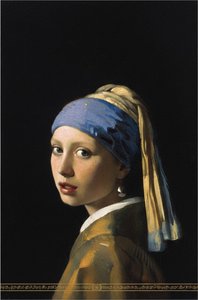
To gaze upon a work by Van der Plas is to witness a masterclass in the use of chiaroscuro. He possessed an uncanny ability to manipulate shadow and light, using subtle gradations to sculpt form and evoke mood. His technique was defined by several core elements:
- Anatomical Precision: A meticulous rendering of the human figure that grounded his subjects in a palpable reality.
- Masterful Color Palettes: The use of rich, emotive tones that conveyed both the status and the temperament of his sitters.
- Unflinching Honesty: A commitment to capturing the true essence of a person, including the subtle lines of age or the weight of responsibility.
His most celebrated works, such as the Portrait of Cornelis Tromp and the Portrait of Willem van Outhoorn, stand as testaments to this skill. In these pieces, the heavy textures of armor and the delicate sheen of fabric are rendered with such precision that they seem almost tactile. Through his dedication to detail and his profound understanding of human emotion, David van der Plas secured his place in history, leaving behind a collection of portraits that continue to breathe with the vitality of the age that created them.