


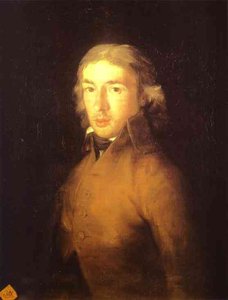


The Intent of the Image: Capturing Character Over Likeness
 Portrait of a Man
, Pieter Pourbus
A portrait is rarely a mere record of physical dimensions. Whether through a brush or a sensor, the goal is to reveal the personality and mood of the subject. While a clinical photograph might document the exact placement of a silk gown or the precise shade of a bouquet, it often misses the underlying atmosphere. A true portrait seeks the essence of the human spirit, moving beyond the literal to interpret the soul of the moment.
This pursuit of character finds its historical echo in the Northern Renaissance. Consider Portrait of a Man by Pieter Pourbus, dated 1574. In this oil on canvas, the subject is defined not just by his ruff collar or black doublet, but by the dramatic lighting that carves his features out of the darkness. Like the modern photographer using a telephoto lens to compress features for a flattering headshot, Pourbus used meticulous detail and light to ensure the viewer engaged with the man's presence rather than just his clothing.
The distinction between documentation and interpretation remains the central tension in portraiture. A digital snapshot captures the fact of an event, but the artist seeks to capture the feeling. This is why the transition from a digital file to a hand-painted oil reproduction offers a different experience; the texture of the paint provides a depth that a screen cannot replicate.
The Geometry of Light: From Windowpanes to Softboxes
Light is the primary tool of the portraitist, acting as the sculptor of the face. In modern studios, photographers use a variety of tools to control this element, from the soft diffusion of a fabric-encased soft box to the precise focus provided by snoots, barn doors, and gobos. Even the use of color gels can transform a background, turning a standard studio session into a stylized composition. The goal is often to achieve a specific balance, using white reflectors to even out the shadows on the darker side of a face.
Long before the invention of the electric strobe, artists relied on the natural movement of the sun. Arthur Hammond noted that a photographer needs only two things to light a portrait: a window and a reflector. This reliance on natural light is a direct descendant of the chiaroscuro techniques used by Old Masters. The soft, directional light from a window in the early morning or late afternoon provides a rich, tonal quality that artificial light often struggles to mimic without significant diffusion.
Today, we see this legacy in the preference for soft light. Whether it is achieved through a curtain or a professional umbrella, the aim is to avoid the harshness of direct light. By controlling the intensity and direction, the photographer—much like the painter—directs the viewer's eye to the most important part of the subject: the eyes.
The Challenge of Time: From Long Exposures to Instantaneous Moments
The history of photography is a history of managing time. In the mid-19th century, the rise of the daguerreotype changed how we viewed the self. Because exposure times were significantly longer than they are today, subjects had to remain perfectly still, often for thirty seconds or more. This technical limitation dictated the stiff, formal poses of the era and even led to the practice of "hidden mother" photography, where a mother would hide behind a child to keep them calm and stationary during the sitting.
This struggle with stillness finds a parallel in the formal senior portraits that became common in the United States around the 1880s. These sessions required a level of composure and preparation that modern, candid street photography has largely abandoned. While street photography seeks to capture the "decisive moment"—the spontaneous, unmediated encounter in a public space—the early portraitists were masters of the controlled, prolonged moment.
Modern technology has largely solved the problem of long exposure times, but the aesthetic of the "slow" portrait remains. We see it in the choice to use a shallow depth of field, where the eyes and face are in sharp focus while the rest of the world falls into a soft, creamy blur. This technique directs the viewer's attention, forcing a pause in the rush of visual information.
Framing the Soul: The Evolution of Composition and Focus
 Portrait of Ferdinand VII
, Francisco Goya
Composition is the silent language of the portrait. A photographer must decide whether to use a wide-angle lens to create an environmental portrait that shows the subject in their surroundings, or a telephoto lens to provide the compression necessary for a tight headshot. The choice of focal length changes the relationship between the subject and the viewer, altering the perceived intimacy of the image.
This intentionality in framing is a direct continuation of the traditions seen in classical portraiture. In the works of Francisco Goya, such as his Portrait of Ferdinand VII, the composition is used to convey power and psychological depth. The way a subject is positioned—whether in profile, three-quarters, or facing the viewer directly—is a deliberate choice meant to evoke empathy or command respect.
Even the concept of "soft focus" is a calculated artistic decision. While modern digital sensors aim for crystalline clarity, some photographers deliberately use lenses designed with controllable spherical aberration to create a "gauzy" or flattering effect. This is not a failure of the equipment, but a pursuit of a specific aesthetic that prioritizes the mood of the subject over clinical accuracy.
The Permanence of the Portrait: From Oil on Canvas to Digital Files
We live in an era of high-resolution perfection, where a relentless barrage of digital imagery is captured every second. Yet, a digital photograph remains a fleeting fragment of light, a reproducible moment existing on a screen or a glossy surface. While photography captures the fact of a wedding or a milestone with clinical accuracy, it often lacks the ability to interpret the atmosphere of the event. The digital image is a record of what was there; the painting is an interpretation of what was felt.
This tension between the ephemeral and the eternal is what drives the demand for custom art. A handmade oil reproduction, with its visible brushstrokes and physical texture, possesses a tactile presence that a digital file or a computer-printed look cannot match. Unlike a flat print, an artist works with layered oils on 100% cotton canvas to create an object with depth and a rich tonal range. This transition from the digital to the painterly moves away from mere documentation toward the preservation of an emotion that transcends temporal boundaries.
At AllPaintingsStore.com, we bridge this gap between the digital and the physical. Whether it is a custom oil reproduction of a personal photograph or a large-scale mural for a hotel, our goal is to provide a sense of permanence. We allow you to transform a modern moment into a piece of history, ensuring that the soul of the subject is preserved long after the shutter has closed.


