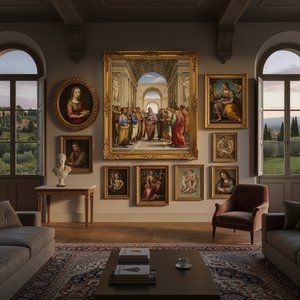


Venetian Splendor and Architectural Harmony: A Tapestry of Styles
Beyond these celebrated masters, the Pinacoteca Vaticana houses a remarkable collection encompassing works by Titian, Correggio, Veronese, and countless other artists—each contributing to the gallery’s rich tapestry of stylistic diversity. These paintings showcase the breadth of Venetian art during the Renaissance, demonstrating the influence of humanist ideals on artistic expression. The gallery's architectural design—characterized by soaring ceilings and expansive windows—further enhances the viewing experience, allowing visitors to immerse themselves in the beauty and grandeur of these masterpieces. Notice particularly the interplay of light within the rooms, carefully orchestrated to highlight the details and colors of each painting. The collection includes a stunning array of portraits, mythological scenes, and religious compositions, reflecting the diverse patronage of the Vatican’s rulers.
Leonardo’s Shadow and Caravaggio’s Fire: The Drama Intensifies
The Pinacoteca doesn't shy away from confronting the dramatic intensity of later periods. Leonardo da Vinci’s *Saint Jerome in the Wilderness* is a haunting meditation on solitude and spiritual struggle—a masterful demonstration of *sfumato*, that subtle blurring of lines lending his figures an ethereal quality and creating an atmosphere of profound contemplation. The painting captures Leonardo's fascination with capturing psychological depth and conveying emotion through nuanced shading techniques, reflecting his deep understanding of human nature.
Alongside this iconic work stands Caravaggio’s *Entombment of Christ*, a visceral experience brimming with raw emotion and dramatic *chiaroscuro*—the stark contrast between light and dark defining Caravaggio’s style and drawing the viewer into the heart of the tragedy. The figures emerge from the shadows, their grief palpable, embodying Caravaggio's revolutionary approach to painting and challenging conventional artistic conventions.
Giotto’s Dawn and Raphael’s Grace: Foundations of a Renaissance
The Pinacoteca’s narrative begins with Giotto di Bondone’s *Stefaneschi Triptych*, a monumental work marking a decisive departure from Byzantine conventions toward more naturalistic representation of form and emotion—a vibrant explosion of color and expressive figures offering a glimpse into the dawn of Italian Renaissance painting. The triptych, commissioned for the altar of Santa Maria Novella in Florence, depicts the martyrdoms of Saints Stephen and Lawrence, embodying Giotto’s revolutionary approach to portraying human experience with unprecedented realism and emotional depth.
The figures are no longer stylized icons but individuals imbued with palpable emotion, their gestures and expressions conveying a sense of immediacy and drama. Notice particularly the use of perspective – Giotto pioneered this technique, creating an illusion of depth that was revolutionary for its time. The painting immediately establishes the gallery’s thematic focus: exploring how artists wrestled with theological concepts and conveyed spiritual truths through visual language.
Pinacoteca Vaticana: A Legacy of Artistic Vision
Established in 1932 by Pope Pius XI, the Pinacoteca Vaticana stands as a testament to papal patronage and artistic ambition. Its mission is to preserve and celebrate Italian art from the medieval period through the Baroque era—a remarkable collection encompassing masterpieces by Giotto, Raphael, Leonardo da Vinci, Caravaggio, and countless other artists. Located within Vatican City’s historic galleries, it welcomes visitors eager to immerse themselves in the beauty and grandeur of these artistic treasures.
The gallery's architectural design—characterized by soaring ceilings and expansive windows—further enhances the viewing experience, allowing visitors to appreciate the delicate nuances of color and texture. The Pinacoteca’s curators meticulously organize exhibitions showcasing both canonical works and emerging talents—a vibrant dialogue between tradition and innovation.