

Acrylic On Canvas.

§ 1Katalogo duomenys

Šis kūrinys yra saugomas autorinės teisės
Šiame puslapyje rodomas meno kūrinys yra saugomas autorių teisių įstatymais, todėl neturime teisės legaliai kurti ar parduoti jo identiškos reprodukcijos. Ši apsauga užtikrinama remiantis tokiais tarptautiniais susitarimais kaip Bernės konvencija ir pagal nacionalines įstatymų nuostatas, įskaitant tas, kurias nurodo JAV autoriškos teisės įstatymas – 17-asis skyrius.
Kaip pagarbią ir teisėtą alternatyvą, mes siūlome pagal užsakymą rankomis dažytus paveikslus, įkvėptus originalo. Mūsų įgudę ir profesionalūs menininkai kruopščiai tiria originalo stilių, nuotaiką ir meninę esmę, kad sukurtų naują, unikalią kūrinį, kuris sukelia tą paties jausmą – išlikdamas tuo tarciau originaliu, savarankišku kūrybiniu darbu.
Šis metodas visiškai atitinka autorių teises, nes jame nėra saugomo kūrinio kopijavimo ar dubliavimo. Tai yra kūrybinė reinterpretacija – naujas paveikslas, kurį įkvėpė originalas, tačiau kuris nėra jo identiškas.
 Skaityti daugiau
§ 2Abstraktus
Kolekcinio objekto aprašas
Autoriaus biografija
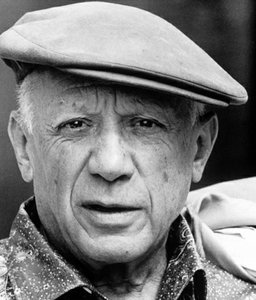
Pablo Picasso (1881–1973) – revoliucinis ispanų dailininkas ir skulptorius, kubizmo pradininkas bei įvairių stilių meistras. Jo ikoniniai darbai, tokie kaip „Guernica“, visciąż įkvepia milijonus žmonių.
§ 3Komentaras
A Fragmented Portrait of Artistic Collaboration
Pablo Picasso’s “The Painter and His Model,” painted in 1928 during his Parisian period, transcends mere representation; it embodies the very essence of Cubism's revolutionary approach to visual art. Captured in oil on canvas—a testament to Picasso’s mastery of traditional mediums—the artwork presents a deceptively simple scene: an artist seated before a nude figure, engaged in what appears to be contemplation or instruction. Yet, beneath this surface tranquility lies a complex tapestry woven from geometric abstraction and psychological insight.- Composition & Style: The painting exemplifies Cubism’s core tenets—multiple perspectives simultaneously depicted on a single canvas. Picasso dismantles the traditional illusion of depth, fracturing forms into interlocking planes that overlap and intersect, mirroring the artist's fragmented perception of his subject. This deliberate disregard for realism isn’t merely stylistic; it speaks to the broader philosophical concerns of the era regarding subjective experience and the limitations of visual representation.
- Technique & Materials: Picasso employed a meticulous technique characterized by careful layering of oil paints—a hallmark of Cubist practice—to achieve subtle gradations of tone and texture. The canvas surface itself is smooth, reflecting Picasso’s desire to minimize visible brushstrokes while maximizing the impact of tonal variations.
- Color Palette & Lighting: Dominated by grayscale hues—primarily shades of black, white, and gray—the palette underscores the painting's intellectual character. Sparse accents of red, green, yellow, and blue punctuate the composition, serving as visual anchors and subtly enhancing the overall mood. The diffused lighting contributes to an atmosphere of quiet contemplation, mirroring the stillness of the scene.
- Symbolism & Emotional Impact: Beyond its formal qualities, “The Painter and His Model” resonates with deeper symbolic meanings. The fragmented figures can be interpreted as representing the complexities inherent in artistic creation—the artist wrestling with ideas and attempting to capture fleeting impressions. Simultaneously, it evokes a sense of intimacy and vulnerability, reflecting the relationship between creator and muse.
- Historical Context: Created during Picasso’s prolific Parisian years, this artwork aligns perfectly with the burgeoning avant-garde movement that was reshaping European art in the 1920s. Cubism challenged established conventions, paving the way for subsequent artistic explorations of abstraction and psychological realism—influences that continue to reverberate throughout contemporary art practice.
Klausimai ir atsakymai
Kokią emociją perteikia „The painter and his model“ – Pablo Pikaso?
„The painter and his model“ – Pablo Pikaso perteikia Reflective emocinę nuotaiką.
Ar yra panašių darbų kaip „The painter and his model“?
Puslapio Panašūs kūriniai skiltyje, skirtoje kūriniam darbui „The painter and his model“ – Pablo Pikaso, pateikiami panašūs meno kūriniai.
Kokia technika sukurta „The painter and his model“ – Pablo Pikaso?
„The painter and his model“ technika – Acrylic On Canvas.


 Perjungti į spausdinamus版作品


 Dėl meno kūrinių ar reprodukcijų, kurių bet kuri pusė yra didesnė nei 105 cm (apie 41 inch), rėmas bus siunčiamas kaip išskaidytas surinkimo rinkinys. Šis metodas užtikrina saugų pristatymą ir apsaugo nuo transportavimo metu galimos žalos.


