Introduction
To step into the world of Impressionism is to abandon the rigid lines of reality in favor of a fleeting moment, a sudden shimmer of light on water, or the soft haze of a morning mist. It is an invitation to stop looking merely with the eyes and start feeling with the soul. This movement, which emerged in the late 19th century as a rebellion against the stifling constraints of academic tradition, sought to capture the impression —the immediate, sensory perception of a scene before the mind has time to categorize it into formal shapes.
Born in the vibrant, changing landscapes of France, Impressionism captured a world in motion. The artists of this era moved their easels outdoors, embracing en plein air techniques to chase the sun as it moved across the sky. They traded heavy shadows and somber tones for a luminous palette of broken brushstrokes and unblended colors, allowing the viewer's eye to optically mix the light. This was more than a change in technique; it was a cultural shift toward celebrating the ephemeral beauty of everyday life, from the bustling Parisian boulevards to the quiet, sun-drenched gardens of Giverny.
Today, these masterpieces remain profoundly meaningful because they mirror our own modern experience of a world that never stands still. In an age of digital perfection, there is a deep, human resonance in the visible texture of oil on canvas—the way a thick impasto stroke can convey the heat of a summer afternoon or the chill of a twilight breeze. These works remind us to find beauty in the transient and the imperfect.
As we journey through this curated selection, we will explore ten definitive works that embody the essence of the movement. Each painting serves as a window into a different light, a different mood, and a different way of seeing the world, guiding you through the very heart of the Impressionist revolution.
Sunflowers - vincent willem van gogh
 Sunflowers - vincent willem van gogh
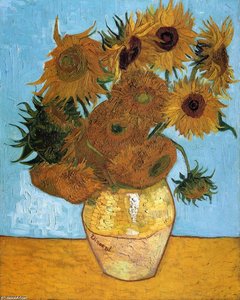
Step into the radiant warmth of Arles, 1888, where Vincent van Gogh captures the very essence of vitality in his iconic Sunflowers . This masterpiece transcends simple still life; it is a sensory explosion of Post-Impressionist brilliance. As you gaze upon the canvas, the thick, tactile impasto technique brings the blooms to life, with heavy, energetic brushstrokes creating a three-dimensional texture that seems to pulse with sunlight.
The palette is a masterful study in harmony, dominated by sun-drenched yellows and deep ochres that contrast against soft, atmospheric backgrounds. While the vibrant hues evoke gratitude and friendship, the subtle drooping of certain petals introduces a poignant reflection on mortality and the fleeting nature of beauty. For the modern collector, integrating such a powerful work into a professional or residential space offers more than mere decoration; it provides an anchor of emotional depth and creative energy. Whether displayed in a high-end hotel lobby or a quiet study, these sunflowers serve as a timeless symbol of resilience and light, elevating any environment with their profound, luminous presence.
Cafe Terrace on the Place du Forum, Arles, at Night - vincent willem van gogh
 Cafe Terrace on the Place du Forum, Arles, at Night - vincent willem van gogh
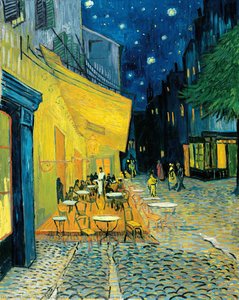
In Cafe Terrace on the Place du Forum, Arles, at Night , Vincent van Gogh transcends mere observation to capture the very pulse of human connection and nocturnal wonder. As a cornerstone of our exploration into works that define the evolution of Impressionism, this masterpiece moves beyond optical accuracy into the emotive realm of Post-Impressionism. Van Gogh utilizes a brilliant, high-contrast palette where the warm, glowing yellows of the café’s gas lamps clash beautifully against the deep, velvety blues and purples of the Arles sky.
The painting's heavy impasto technique creates a tactile, three-dimensional energy that remains incredibly relevant to modern interior aesthetics. The way the light spills onto the cobblestones offers a masterclass in creating ambiance, making it a perennial favorite for those looking to introduce warmth and dramatic focal points into contemporary spaces. Through swirling brushstrokes and symbolic light, Van Gogh transforms a simple street corner into an eternal, luminous sanctuary of color and soul.
The Child's Bath - Mary Stevenson Cassatt
 The Child's Bath - Mary Stevenson Cassatt
In The Child's Bath by Mary Cassatt, the eye is immediately drawn to the tactile richness of the oil paint, where short, broken brushstrokes capture the soft sheen of water and the delicate texture of skin. This 1893 masterpiece exemplifies the essence of Impressionism, moving away from rigid lines toward a sensory exploration of light and atmosphere. Cassatt utilizes a harmonious palette of muted pinks, blues, and creams to evoke a profound sense of maternal tenderness and domestic quietude. The composition, influenced by the flattened perspective of Japanese ukiyo-e prints, creates an intimate, unmediated window into a private moment of care.
At AllPaintingsStore.com, we honor this revolutionary technique by providing high-end, hand-painted reproductions that preserve the tactile, three-dimensional quality of Cassatt’s original brushwork. Our artists meticulously recreate every visible stroke and tonal depth on 100% cotton canvas, ensuring that the emotional resonance and physical soul of this Impressionist icon are brought into your professional or private space with absolute fidelity.
Haystacks in Provence - vincent willem van gogh
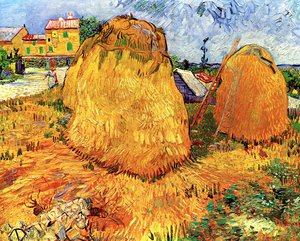 Haystacks in Provence - vincent willem van gogh
In Haystacks in Provence by Vincent van Gogh, the light does not merely illuminate the landscape; it vibrates with an almost tactile energy. Painted during his transformative Arles period in 1888, this masterpiece captures a sun-drenched vision where the golden hues of the haystacks seem to radiate their own internal warmth. Van Gogh’s command of illumination moves beyond the fleeting observations of pure Impressionism, utilizing thick, rhythmic impasto to sculpt light and shadow directly onto the canvas. This heavy application of paint creates a dynamic interplay of brilliance and depth, securing its place among the top 10 artworks exploring Impressionism and Post-Impressionism.
The way the sunlight catches the raised ridges of the brushstrokes offers a sensory experience that transcends traditional viewing. When reproduced as a high-quality oil painting, this sophisticated use of light brings an unparalleled sense of luxury and architectural depth to any contemporary space. The interplay of vibrant yellows and deep, textured shadows provides a focal point that can anchor a large-scale wall installation, adding both historical prestige and a warm, emotive atmosphere to professional or residential interiors.
The Great Bathers (The Nymphs) - Pierre-Auguste Renoir
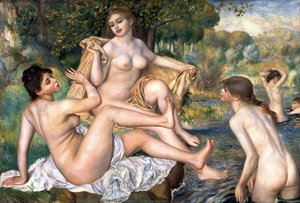 The Great Bathers (The Nymphs) - Pierre-Auguste Renoir
In The Great Bathers (The Nymphs) by Pierre-Auguste Renoir, the mastery of light serves as the primary protagonist. Rather than utilizing harsh chiaroscuro, Renoir employs a soft, diffused illumination that filters through a lush canopy, creating a rhythmic dance of dappled sunlight across the figures' skin and the shimmering river. This sophisticated command of light—capturing the ephemeral interplay between shadow and brilliance—is precisely what secures this work's position among the top 10 artworks exploring Impressionism . It represents a pivotal moment where the fleeting impressions of his youth met a more structured, monumental form.
The painting radiates a serene, pastoral warmth, utilizing a palette of delicate peaches, soft greens, and luminous whites to evoke an atmosphere of timeless tranquility. When integrated into a contemporary interior, a faithful reproduction of such light-drenched textures adds profound depth and a sense of organic luxury to any wall. The visible, fluid brushstrokes and the way the light seems to emanate from within the canvas offer a sophisticated focal point that elevates modern architectural spaces with classical elegance.
Grainstack in the Morning, Snow Effect - Claude Monet
 Grainstack in the Morning, Snow Effect - Claude Monet
Owning Grainstack in the Morning, Snow Effect by Claude Monet isn’t merely a purchase; it is an inheritance of the Impressionist spirit. As a cornerstone of his celebrated Haystacks series, this 1890 masterpiece serves as a profound study of light and atmosphere. Monet moves beyond mere representation, using short, broken brushstrokes to capture the ephemeral chill of a winter morning. The composition is a sensory dialogue between the warm, textured browns of the haystack and the cool, shimmering violets and blues of the snow-covered landscape.
Through his en plein air technique, Monet invites us into a world where light dictates form, transforming a humble agricultural scene into a scientific investigation of vision itself. The painting evokes a deep sense of tranquility, capturing the quiet stillness of nature's seasonal shift. To display such a work is to participate in a lineage of taste; it brings the museum’s legacy directly to your walls, ensuring that every glance at your collection is a sophisticated nod to the masters of light.
The Walk. Lady with a Parasol - Claude Monet
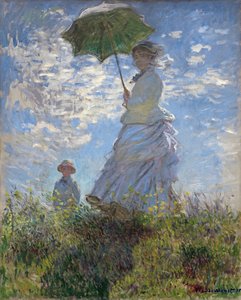 The Walk. Lady with a Parasol - Claude Monet
In Claude Monet’s 1875 masterpiece, The Walk. Lady with a Parasol , the lines aren’t merely drawn; they are choreographed . This is not just a composition of figures in a meadow; it is a dance frozen in time . As you observe the woman and child strolling through the sun-drenched landscape, you realize this piece is a tribute to the ability to make atmospheric chaos feel like perfect harmony.
Monet utilizes loose, visible brushstrokes to capture the fleeting essence of light, where the sky transitions from soft blues to warm, glowing pinks. The texture of the wind-swept grass and the billowing fabric of the dress create a rhythmic movement that pulls the viewer into the scene. The painting breathes with the vitality of the outdoors, using a vibrant palette to evoke tranquility and leisure. What if your living room could hold that same balance? What if your walls could breathe rhythm through the soft, impressionistic light of this iconic moment?
Impression, Sunrise - Claude Monet
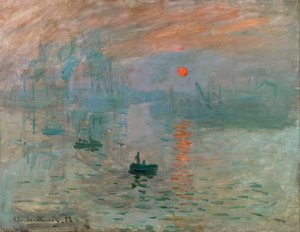 Impression, Sunrise - Claude Monet
In Impression, Sunrise by Claude Monet, the lines aren’t merely drawn; they are choreographed . This is not a static composition of a Le Havre harbor; it is a dance frozen in time . As the sun breaks through the morning haze, Monet uses broken brushstrokes to capture the fleeting interplay of cool blues and vibrant, glowing oranges, making the water appear to shimmer with life. The painting does not rely on precise detail but on the emotional resonance of light and atmosphere.
This masterpiece serves as a cornerstone in our exploration of top artworks that explore the theme of Impressionism because it embodies the movement's very soul. Its ability to make the chaos of a working port feel like pure harmony is unparalleled. Imagine if your professional or residential space could hold that same balance—what if your walls could breathe rhythm ? By bringing this iconic piece into an interior, you introduce a sense of tranquil prestige and a timeless, atmospheric depth that transforms any environment.
Dance at the Moulin de la Galette - Pierre-Auguste Renoir
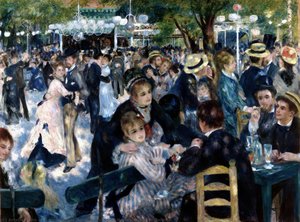 Dance at the Moulin de la Galette - Pierre-Auguste Renoir
Pierre-Auguste Renoir’s 1876 masterpiece, Dance at the Moulin de la Galette , stands as a definitive pillar in our exploration of Impressionism, capturing the very heartbeat of Parisian joy. This work transcends mere scenery; it is a sensory immersion into a sun-drenched afternoon where light and movement become one. Renoir utilizes broken brushstrokes and a luminous palette of pastels—soft pinks, lavenders, and peaches—to replicate the dappled sunlight filtering through Montmartre trees, creating a shimmering atmosphere that feels vibrantly alive.
As a centerpiece in any collection of Impressionist art, it exemplifies the movement's shift from rigid realism to the emotional capture of fleeting moments. The painting’s emphasis on soft, diffused light and organic, flowing shapes offers timeless inspiration for modern interior design, where creating a sense of warmth and airy elegance is paramount. By prioritizing the feeling of a crowded, happy dance hall over precise detail, Renoir invites viewers into a perennial celebration of social connection and the beautiful, ephemeral nature of human experience.
Paris street, Rainy Day - Gustave Caillebotte
 Paris street, Rainy Day - Gustave Caillebotte
Gustave Caillebotte’s 1877 masterpiece, Paris Street, Rainy Day , stands as a profound pillar in our exploration of Impressionism, offering much more than a mere atmospheric study. It captures the precise moment when the fleeting light of Impressionism met the structured weight of Realism, reflecting the dramatic urban transformation of Haussmann’s Paris. The painting’s placement in this collection is earned through its cinematic perspective and its ability to evoke the quiet, often alienated pulse of modern city life.
As you observe the wet cobblestones reflecting a muted, overcast sky, notice how the sharp architectural lines contrast with the soft, diffused light. There is a haunting beauty in the way the elegantly dressed figures move through the vast boulevard—a study in both intimacy and urban solitude. This work invites us to reflect on how we perceive ourselves within the grand scale of civilization. For the modern collector, integrating such a sophisticated piece into a curated space creates a timeless dialogue between historical grandeur and contemporary interior elegance, bringing a sense of structured calm and narrative depth to any environment.
Conclusion
As the light fades on our journey through these Impressionist wonders, we are reminded that these masterpieces are far more than mere relics of a bygone era or static subjects in a museum gallery. They are living, breathing presences that continue to pulse with the energy of the moment they were captured. Each stroke of color and dance of light serves as a bridge across centuries, connecting the fleeting observations of masters like Monet and Renoir to our own modern sensibilities. When we stand before these works, we are not just observing history; we are participating in a timeless conversation between the artist’s soul and our own.
These paintings possess a unique power to transform the spaces we inhabit, breathing warmth, movement, and a sense of profound serenity into our homes and lives. They remind us that beauty lies in the ephemeral—in the way sunlight hits a lily pond or how shadows soften at dusk. To bring these works into your personal sanctuary is to invite that same spirit of wonder and emotional resonance into your daily existence. We invite you to continue this exploration and find your own connection within our full collection , where the enduring legacy of Impressionism remains forever vibrant and waiting to be rediscovered.