

The Physics of Perception: From Barbizon Realism to Impressionist Light
The transition from the controlled environments of the studio to the unpredictable reality of the outdoors marked a fundamental shift in how artists approached the canvas. Before the Impressionists, the landscape was often a stage for idealized scenes, governed by academic rules that prioritized composition over the actual behavior of light. The Barbizon School began to challenge this by moving toward en plein air painting, seeking to depict the changing appearance of light as weather conditions altered the landscape. This practice allowed painters to observe how a single field could transform under a passing cloud or a shifting sun. The Impressionists took this observation further, moving from the tonal, muted palettes of the Barbizon painters toward a more direct engagement with atmospheric truth. While the Barbizon artists used the outdoors to find a sense of naturalism, the Impressionists used it to capture the very essence of transience. They realized that to seize the likeness of an outside setting at a specific moment, one had to be present in that moment, often working under the diffuse light of a large white umbrella to soften the harshness of the midday sun.The Science of Contrast: Chevreul’s Influence on Chromatic Intensity
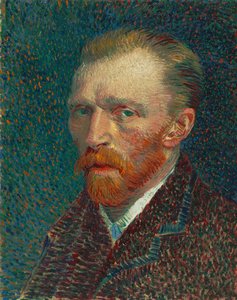 Vincent van Gogh
. Dutch Post-Impressionist of swirling night skies and sunflowers, known for thick impasto and expressive brushwork in vibrant colors.
The Mechanics of Luminosity: Optical Mixing and the Neo-Impressionist Method
As the movement evolved, the application of color became increasingly systematic, moving toward a method known as Divisionism. This technique involved applying individual strokes of pure, unblended pigment rather than pre-mixing colors on a wooden palette. The goal was to rely on the viewer's eye to perform the mixing process, a phenomenon known as optical mixing. This method sought to achieve a greater apparent luminosity, as the mixture of light in the eye tends toward white, whereas the physical mixing of pigments on a palette tends toward black and dullness. This approach reached its most disciplined form in Pointillism, where tiny dots of paint were used to elicit a distinct luminous effect. While the traditionalist might see this as a departure from the fluid brushwork of earlier years, the Neo-Impressionists viewed it as a way to achieve maximum brilliance and conformity to actual light conditions. By separating the colors, they ensured that the light remained pure, allowing the canvas to breathe with a structured, scientific radiance.The En Plein Air Revolution: Portable Tools and the Capture of Transience
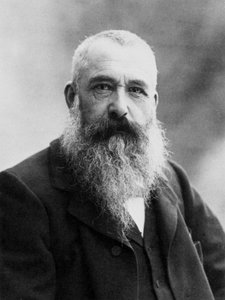 Claude Monet
. French Impressionist of plein air landscapes and water lilies, capturing shifting light through repetitive series of the same subject.
The Chromatic Shadow: Moving Beyond the Academic Use of Black
One of the most radical departures from tradition was the Impressionist rejection of black as the primary component of shadows. In the academic tradition, shadows were often rendered with black or dark brown pigments to create depth. The Impressionists, however, observed that shadows are actually composed of reflected light and complementary colors. A shadow cast on a sunlit path is rarely black; it is often a deep violet or a cool blue, depending on the color of the sky and the surrounding environment. By eliminating black from their palette, these artists achieved a much higher degree of tonal range and clarity. They understood that light is not merely something that illuminates an object, but something that interacts with every surface to create a complex web of color. This shift allowed for a more accurate representation of how light behaves in the real world, where even the darkest corners are filled with the subtle, reflected hues of the atmosphere.The Blurred Edge: Photography and the Subjective Vision of Atmosphere
The relationship between painting and the emerging medium of photography in the late nineteenth century was one of mutual influence and shared inquiry. While mainstream photography sought sharp detail and documentary realism, a subset of practitioners—often termed photographic Impressionists—sought to replicate the imprecise, dreamlike qualities of memory. Using pinhole cameras, gauze, or soft-focus lenses, these photographers aimed to convey visual impermanence through motion blur and dissolving edges. This experimental approach to atmosphere was mirrored in the work of painters like Edgar Degas, who used photography to study the play of artificial light and oblique framing. The focus shifted from the "what" of a subject to the "how" of its perception. Whether through the lens of a camera or the brush of a painter, the goal was the same: to capture the subjective experience of a moment, where the edges of reality soften and the light becomes the primary subject.For those seeking to bring these historical textures into a modern space, AllPaintingsStore.com offers a wide selection of high-quality, hand-painted oil reproductions. Our artists specialize in recreating the specific impasto and light-drenched styles of the masters, ensuring that every piece maintains the tactile depth of the original. Whether you require a single statement piece or a multi-panel group set for a large architectural project, we provide professional, reliable service with global shipping.