Pinigų grąžinimo garantija · 100 dienų Nemokamas pristatymas į visas pasaulio valstybes
644.615kūriniai 52.888menininkai 5.406muziejai 32kalbos
Jan Hackaert portretas

Jan Hackaert tapiai: 32 garsiausių, išvardytų pagal rangą

Atnaujinta lapkritis 2026 · pagal mūsų populiarumumo koeficientą (paieškos, lankytojai ir užsakymai kiekvienam kūriniui) · 33 Jan Hackaert darbai mūsų kataloge

Greitas atsakymas

Žymiausias Jan Hackaert paveikslas yra A Stag Hunt in a Forest (1660); originalas saugomas National Gallery, Londonas. A hawking party on a woodland path (1680) ir Deer Hunt in a Forest (1672) yra skaičiai du ir tris. Iš 33 Jan Hackaert darbų mūsų kataloge tai yra 32 garsiausi, surikiuoti pagal eilę, su nurodyta metais ir muziejumi, kad galėtumėte pasirinkti siųsti siuntinį.

1628 – 1685, Amsterdam Baroque Daugiausia darbų: Rijksmuseum

Jan Hackaert 10 geriausių paveikslų, išvardytų pagal rangą

1
A Stag Hunt in a Forest (1660) aut. Jan Hackaert

A Stag Hunt in a Forest

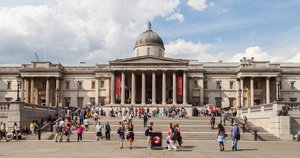
1660 · Oil On Canvas · National Gallery, Londonas

The tension of the chase unfolds in A Stag Hunt in a Forest, a work by the Dutch Golden Age painter Jan Hackaert. Within this dense woodland, a stag moves through the shadows, pursued by the focused energy of a hunt. The scene captures a moment of high stakes, where the quiet of the trees meets the sudden movement of the quarry. Every element of the landscape, from the towering…

Ranku tapytos aliejaus reprodukcija nuo $220 35 × 29 cm Pusė kaip originalo $541 120 × 100 cm Užsakyti originalaus dydžio →
Pasirinkite dydį Peržiūrėti detales
3
Deer Hunt in a Forest (1672) aut. Jan Hackaert

Deer Hunt in a Forest

1672 · Oil On Canvas · Mauritshuis, Haga

The forest breathes with a heavy, humid stillness. Sunlight pierces through a dense canopy of ancient trees, casting long, shifting patterns across a floor of moss and fallen leaves. In this dappled light, the tension of the chase begins to stir. A stag moves through the thicket, its presence felt in the sudden rustle of foliage and the quiet, focused energy of the woods. Hunters and hounds emerge from the…

Ranku tapytos aliejaus reprodukcija nuo $170 28 × 36 cm Pusė kaip originalo $251 54 × 69 cm Užsakyti originalaus dydžio →
Užsisakyti šį paveikslą Paveikslos informacija

Jan Hackaert tapiai, iš rango nuo 11 iki 32

11Italianate Landscape by Evening with Dancing Couple (1658) aut. Jan HackaertItalianate Landscape by Evening with Dancing Couple1658 · Museum Boijmans Van Beuningen Pasirinkite dydį nuo $170 →
12Italian Landscape (1658) aut. Jan HackaertItalian Landscape1658 · Museum Boijmans Van Beuningen Užsisakyti rankų darbo kopiją nuo $170 →
13The Lake of Zurich (1660) aut. Jan HackaertThe Lake of Zurich1660 · Rijksmuseum Pasirinkite dydį nuo $170 →
14Italian scenery with figures (1654) aut. Jan HackaertItalian scenery with figures1654 Užsisakyti šį paveikslą nuo $170 →
15Landscape with a Waterfall (1649) aut. Jan HackaertLandscape with a Waterfall1649 · Holburne Museum Pasirinkite dydį nuo $170 →
16Beech Forest with Hunting Party (1670) aut. Jan HackaertBeech Forest with Hunting Party1670 · Bavarijos valstybinės paveikslų kolekcijos Užsisakyti šį paveikslą nuo $170 →
17The Ash Alley (1670) aut. Jan HackaertThe Ash Alley1670 · Petit Palais Užsisakyti šį paveikslą nuo $170 →
18Mountainous Landscape with Rider at Sunset (1672) aut. Jan HackaertMountainous Landscape with Rider at Sunset1672 · Städel Museum Užsisakyti rankų darbo kopiją nuo $170 →
19View of Schwanenburg castle at Kleve (1674) aut. Jan HackaertView of Schwanenburg castle at Kleve1674 · Groninger Museum Užsisakyti rankų darbo kopiją nuo $170 →
20Mountainous landscape (1672) aut. Jan HackaertMountainous landscape1672 · Rijksmuseum Užsisakyti šį paveikslą nuo $170 →
21Landscape with cattle herders (1672) aut. Jan HackaertLandscape with cattle herders1672 · Rijksmuseum Pasirinkite dydį nuo $170 →
22Mountainous Landscape with Cattle (1680) aut. Jan HackaertMountainous Landscape with Cattle1680 · Nationalmuseum Užsisakyti šį paveikslą nuo $170 →
23An Avenue in a Wood (1675) aut. Jan HackaertAn Avenue in a Wood1675 · Wallace Collection Užsisakyti rankų darbo kopiją nuo $170 →
24Hunters in the Woods, Jan Hackaert, 1660 - 1685 (1685) aut. Jan HackaertHunters in the Woods, Jan Hackaert, 1660 - 16851685 · Rijksmuseum Užsisakyti šį paveikslą nuo $170 →
25The Avenue of Birches, Jan Hackaert, 1660 - 1685 (1685) aut. Jan HackaertThe Avenue of Birches, Jan Hackaert, 1660 - 16851685 · Rijksmuseum Pasirinkite dydį nuo $170 →
26River Scene (1660) aut. Jan HackaertRiver Scene1660 · Wallraf-Richartz-Museum Užsisakyti šį paveikslą nuo $245 →
27Forest Landscape with Stag Hunt aut. Jan HackaertForest Landscape with Stag HuntKunsthistorisches Museum Užsisakyti rankų darbo kopiją nuo $170 →
28Landscape aut. Jan HackaertLandscapeStatens Museum For Kunst Užsisakyti rankų darbo kopiją nuo $170 →
29Landschaft mit Staffage aut. Jan HackaertLandschaft mit Staffage Užsisakyti rankų darbo kopiją nuo $170 →
30Wooded Landscape with Bandits Attacking a Coach aut. Jan HackaertWooded Landscape with Bandits Attacking a Coach Pasirinkite dydį nuo $170 →
31Deer Hunters in the Woods aut. Jan HackaertDeer Hunters in the WoodsNacionalinis muziejus Varšuvoje Pasirinkite dydį nuo $170 →
32A Stag Hunt in a Forest aut. Jan HackaertA Stag Hunt in a Forest Užsisakyti šį paveikslą nuo $170 →

Jan Hackaert paveikslai pagal temą

Didžiausiausia šio reitingo populiariausių keturių temų apžvalga su geriausiais kiekvienos jų paveiksliais.

Muziejai, kuriuose eksponuojami Jan Hackaert originalūs darbai

8 muziejai, kuriuose saugoma daugiausia šioje pusėje esamų paveikslų.

Muzejaus Miestas Jan Hackaert darbai Šiojo sąrašo paveikslai
Rijksmuseum, AmsterdamasRijksmuseum Amsterdamas 5 The Lake of Zurich, Mountainous landscape, Landscape with cattle herders
Bavarijos valstybinės paveikslų kolekcijos, MiunchasBavarijos valstybinės paveikslų kolekcijos Miunchas 2 Landscape, Beech Forest with Hunting Party
Wallace Collection, LondonasWallace Collection Londonas 2 The Wooded Banks of a River, An Avenue in a Wood
Museum Boijmans Van Beuningen, RoterdamasMuseum Boijmans Van Beuningen Roterdamas 2 Italianate Landscape by Evening with Dancing Couple, Italian Landscape
National Gallery, LondonasNational Gallery Londonas 1 A Stag Hunt in a Forest
Mauritshuis, HagaMauritshuis Haga 1 Deer Hunt in a Forest
Detroito meno institutas, DetroitasDetroito meno institutas Detroitas 1 Forest Landscape with Stag Hunt
Museum Voor Moderne Kunst, ArnhemMuseum Voor Moderne Kunst Arnhem 1 Travellers in a Wooded Landscape

Jan Hackaert pagal dešimtmečius: geriausias tapas kiekvienam

Darbai pagal dešimtmečius

Pasirinkite dešimtmetį, kad pamatytėte jo geriausią tapybą.

Jan Hackaert paveikslai: dažniausiai užduodami klausimai

Koks yra garsiausias Jan Hackaert paveikslas?Rodyti atsakymą

A Stag Hunt in a Forest (1660), National Gallery, Londonas, užima pirmą vietą, o paskui sekia A hawking party on a woodland path (1680) ir Deer Hunt in a Forest (1672).

Kokia buvo Jan Hackaert amžius, kai buvo nupieštas kūrinys A Stag Hunt in a Forest?Rodyti atsakymą

Jan Hackaert buvo 32 metų: A Stag Hunt in a Forest datuota 1660 m., o Jan Hackaert gimė 1628.

Kokie yra 10 geriausių Jan Hackaert paveikslų?Rodyti atsakymą

A Stag Hunt in a Forest, A hawking party on a woodland path, Deer Hunt in a Forest, Forest Landscape with Stag Hunt, Travellers in a Wooded Landscape, Landscape, The Wooded Banks of a River, A Wooded Landscape, A Hawking Party ir Estate Reigersburg in the Watergraafsmeer. Kiekvieno kūrinio metai ir muziejus nurodyti viršuje esančiame reitinge.

Kiek Jan Hackaert darbų jūs siūlote?Rodyti atsakymą

Mūsų kataloge yra 33 Jan Hackaert darbų, datuoti nuo 1645 iki 1685.

Kur saugomi originalūs Jan Hackaert paveikslai?Rodyti atsakymą

Daugiausia – Rijksmuseum (Amsterdamas), Bavarijos valstybinės paveikslų kolekcijos (Miunchas) ir Wallace Collection (Londonas). Pilną sąrašą rasite virš esančioje muzejos lentelėje.

Kuri laikotarpis sukūrė garsiausias Jan Hackaert paveikslus?Rodyti atsakymą

1660s laikotarpyje: 8 iš čia esamų 32 paveikslų kilę iš to laiko, įskaitant A Stag Hunt in a Forest.

Kokie yra ankstyviausi ir vėliausi garsieji Jan Hackaert paveikslai?Rodyti atsakymą

Pirmiausia šioje puslapyje: Travellers in a Wooded Landscape (1645). Paskutinė: Hunters in the Woods, Jan Hackaert, 1660 - 1685 (1685).

Kokie yra pagrindiniai Jan Hackaert paveikslų temai?Rodyti atsakymą

Tarp 32 čia išvardytų paveikslų: Forest (4), Stag (3) ir Hunter (3).

Kokia technika dažniausiai naudojama Jan Hackaert originaliose darbuose?Rodyti atsakymą

Oil On Canvas, iš 32 čia išvardytų 5 paveikslų.

Su kokiu kierliu siejama Jan Hackaert?Rodyti atsakymą

Baroque, remiantis šioje pusėje pateiktais paveiksliais.

Kurių Jan Hackaert originalūs darbai yra Rijksmuseum?Rodyti atsakymą

Rijksmuseum, Amsterdamas kolekcijoje yra 5 šių įrangių paveikslų, įskaitant The Lake of Zurich, Mountainous landscape ir Landscape with cattle herders.

Ar galiu užsakyti Jan Hackaert reprodukciją?Rodyti atsakymą

Taip. Kiekvieną šioje pusėje esantį paveikslą galite užsakyti kaip rankinio šešiojo aliejaus reprodukciją arba spausdiną. Pasidarykite paveikslą, pasirinkite dydį ir atlikite užsakymą.

Apie šį menininką: Jan Hackaert

Jan Hackaert: Weaver of Light and Shadow in the Dutch Golden Age

Jan Hackaert, a name perhaps less familiar than those of Rembrandt or Vermeer, nevertheless stands as a significant figure within the vibrant tapestry of the Dutch Golden Age. Born in Amsterdam around 1628 and tragically passing away in 1685, Hackaert’s life was one dedicated to capturing the essence of landscape – not merely depicting scenes, but imbuing them with atmosphere, light, and a subtle, almost mystical quality. His career unfolded across Germany and Switzerland, yet his most enduring legacy lies in the meticulously rendered Italianate landscapes that defined much of his output.

Early biographical details about Hackaert are scarce, shrouded in the typical obscurity that often accompanies artists working during this period. He seems to have embarked on a series of journeys, notably traveling through Switzerland and Germany, likely seeking inspiration and opportunities. It’s within these foreign lands that his distinctive style began to take shape – a synthesis of observation and artistic license. A particularly intriguing anecdote reveals the complexities of his work; accounts suggest he was occasionally met with suspicion by local miners when sketching their operations in the mountains. The workers, understandably perplexed by his detailed renderings, viewed him as either a spy or even a practitioner of dark arts, leading to complaints and highlighting the potential for misinterpretation inherent in representing unfamiliar subjects.

Hackaert’s contribution to the artistic landscape extended beyond individual paintings. He frequently served as a landscape painter for other prominent artists, acting as a crucial collaborator. His skill was particularly valued by Nicolas Berchem and Adriaen van de Velde, who relied on his expertise to create atmospheric backgrounds that elevated their compositions. This role underscores Hackaert’s understanding of composition and color theory – he wasn't simply painting pretty pictures; he was contributing to the overall narrative and emotional impact of larger works.

The Italianate Influence and a Misunderstood Lake

A defining characteristic of Hackaert’s work is his embrace of the Italianate style, which was immensely fashionable during the Dutch Golden Age. This wasn't merely imitation; rather, he skillfully adapted Italian techniques to the Dutch landscape tradition. He masterfully employed light and shadow, creating a sense of depth and drama that mirrored the works of Venetian masters. The influence of the Italian Renaissance is evident in his use of perspective, color palettes, and the depiction of classical ruins or distant mountains – elements frequently incorporated into his compositions.

Interestingly, one particular painting—his depiction of Lake Zurich—became a source of considerable confusion for decades. Due to Hackaert’s adeptness at simulating southern Italian light and atmosphere, the lake was mistakenly identified as an Italian lake for years after its creation. This anecdote serves as a testament to his technical skill and the widespread fascination with Italian landscapes during that era.

Technique and Materials

Hackaert's paintings are characterized by a meticulous attention to detail and a sophisticated understanding of color mixing. He primarily worked in oil on panel, utilizing layering techniques to build up rich textures and luminous effects. His brushwork is often subtle yet remarkably expressive, conveying the feel of wind, water, and sunlight with remarkable precision. Hackaert’s use of glazes—thin layers of translucent paint applied over dried underlayers—allowed him to achieve a remarkable level of depth and luminosity, capturing the fleeting qualities of light in natural settings.

He was known for his ability to render foliage with astonishing realism, creating a sense of immersion within the depicted landscapes. His compositions frequently feature elements such as winding paths, distant hills, and shimmering water surfaces, all rendered with a remarkable degree of accuracy and atmospheric perspective. The integration of figures—often shepherds or hunters—added a human element to these idyllic scenes, further enhancing their appeal.

Legacy and Significance

While Jan Hackaert may not be as widely celebrated as some of his contemporaries, his contributions to the Dutch landscape tradition are undeniable. His paintings offer a captivating glimpse into the beauty of the German and Swiss countryside during the 17th century, imbued with the spirit of the Golden Age. He demonstrated an exceptional ability to capture the essence of light and atmosphere, creating works that continue to resonate with viewers today.

Hackaert’s legacy extends beyond his individual paintings; he played a vital role in shaping the artistic landscape by collaborating with other prominent artists. His work serves as a valuable example of how artists could adapt foreign styles while maintaining their own unique vision. His meticulous approach to detail and atmospheric rendering cemented his place as a skilled and influential figure within the Dutch Golden Age art world.