Pinigų grąžinimo garantija · 100 dienų Nemokamas pristatymas į visas pasaulio valstybes
612.380kūriniai 52.887menininkai 5.406muziejai 32kalbos

1485 - 1567

Pagrindiniai faktai

  • Art period: Renaissance
  • Museums on this site: Pallant House Gallery
  • Born: 1485
  • Copyright status: Public domain
  • Died: 1567
  • Typical colors: espresso

Lambert Barnard: The Silent Master of Chichester Cathedral

Lambert Barnard (c.1485 – 1567) remains a captivating enigma in the history of English Renaissance art, a figure whose brilliance was often obscured by his own meticulous craftsmanship and the sheer scale of his commissions. While other artists of his era commanded royal patronage and produced flamboyant portraits for the court, Barnard’s legacy is inextricably linked to the magnificent Chichester Cathedral, where he spent nearly four decades creating an astonishing array of frescoes, oil paintings, and intricate gilding – a testament to his skill and a window into the religious and political landscape of Tudor England. His work isn't characterized by dramatic individualism or bold innovation; instead, it’s a subtle, deeply layered narrative woven through the very fabric of the cathedral itself, demanding careful observation and scholarly interpretation.

Early Life and Influences – A Shadowy Beginning

The precise details of Lambert Barnard’s birth are lost to history, shrouded in the same ambiguity that surrounds much of his early career. Records are scarce, and speculation abounds regarding his origins. It is believed he was born sometime around 1485, though pinpointing an exact date remains elusive. What *is* known is that his artistic development unfolded almost entirely within the confines of Chichester, a strategically important city in West Sussex. The influence of his work suggests connections to both continental European traditions – particularly the meticulous fresco techniques and rich color palettes favored by Italian Renaissance artists – and the established practices of English panel painting. Some scholars have tentatively suggested a possible apprenticeship with a Franco-Flemish workshop, pointing to stylistic similarities in certain details within his compositions. However, this remains speculative, and Barnard’s unique approach—characterized by an almost obsessive attention to detail and a remarkable ability to blend decorative elements with narrative storytelling—clearly distinguishes him from any single identifiable master.

The Cathedral Commissions – A Chronicle of Power and Faith

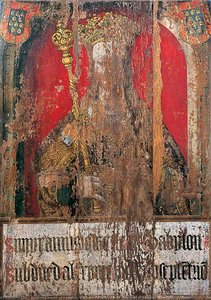
Barnard's career truly blossomed under the patronage of Robert Sherborn, Bishop of Chichester (1508-1536), a man deeply invested in enhancing the grandeur and prestige of his cathedral. The bishop commissioned a series of ambitious projects from Barnard, most notably the spectacular vault paintings depicting scenes from the early history of Chichester – a chronicle of its founding by Caedwalla, King of Wessex, and subsequent development through the centuries. These “Charter History Paintings,” executed between 1513 and 1533, are arguably Barnard’s greatest achievement, offering a rare glimpse into the religious and political ideologies of the Tudor period. They aren't merely decorative; they serve as potent propaganda, reinforcing the authority of the Church and celebrating the lineage of Chichester’s bishops. Beyond these monumental frescoes, Barnard undertook numerous smaller commissions, including intricate heraldic panels for the bishop’s residences, domestic wall paintings, and even a potential altarpiece for Westminster Abbey – a testament to his versatility and reputation.

Technique and Style – Precision and Subtlety

Barnard's artistic style is defined by remarkable technical skill combined with an understated elegance. He primarily worked in *fresco*, applying pigments directly onto wet plaster, creating durable and vibrant murals. However, he also mastered the art of oil painting on panel, producing highly detailed portraits and decorative panels. His work is characterized by a meticulous attention to detail—from the intricate folds of clothing to the delicate rendering of facial features—and an almost obsessive concern with accuracy. A defining feature of Barnard’s style is his use of heavy black outlines, which delineate forms and create a sense of depth and perspective. Furthermore, he employed lavish gilding, adding shimmering accents that enhanced the overall richness and splendor of his compositions. Despite the scale of some of his projects, Barnard's work rarely feels overwhelming; instead, it exudes a quiet dignity and a profound sense of order.

Legacy and Significance – A Forgotten Voice

Lambert Barnard’s contribution to English Renaissance art has long been overshadowed by more flamboyant figures of the era. His meticulous style and lack of overt self-expression have led some scholars to dismiss him as a technically proficient but ultimately unremarkable artist. However, closer examination reveals a wealth of subtle symbolism and historical insight within his work. The “Charter History Paintings,” in particular, provide invaluable documentation of Tudor England—offering insights into religious beliefs, political alliances, and social customs. Furthermore, Barnard’s innovative use of fresco as a medium for narrative storytelling foreshadowed later developments in Renaissance art. Today, his murals at Chichester Cathedral remain a remarkable testament to his skill and vision – a silent voice from the past that continues to speak volumes about the history and culture of England. His work is now recognized as an important example of regional English painting during the Tudor period, offering a unique perspective on the artistic and cultural landscape of 16th-century Britain.

Viktorina

Kiekviename klausime yra tik vienas teisingas atsakymas.

Klausimas 1:
Lambert Barnard is most known for his work at which cathedral?
Klausimas 2:
What style of painting was Lambert Barnard primarily associated with?
Klausimas 3:
Which of the following best describes a key element in Lambert Barnard's artistic style?
Klausimas 4:
Around what year did Lambert Barnard begin his most significant work at Chichester Cathedral?

Klausimai ir atsakymai

Ar galiu ieškoti Lambert Barnard kūrybos temų pagal temas?

Lambert Barnard kūrybą temomis galima tyrinėti puslapio Tematų katalogas temų kataloge.

Kiek Lambert Barnard kūrinių galima peržiūrėti?

Visi kūriniai puslapio kataloge galite peržiūrėti 7 kūriniai kūrinius, autoriaus: Lambert Barnard.

Ar galima rasti Lambert Barnard kūrybos darbų pagal spalvą?

Lambert Barnard Spalvų indeksas – tai puslapis, kuriame kūriniai sugruoti pagal jų spalvas.

Kokie kiti Lambert Barnard vardai yra žinomi?

Lambert Barnard taip pat žinomas (a) pavadinimais Lambert Bernardi, Lambert Berenard, Lambert Barnardi.

Ar galiu peržiūrėti Lambert Barnard darbus pagal spalvų paletę?

Lambert Barnard kūrybą spalvų paletėms sugrupuota galite rasti puslapyje Pagrinti pagal spalvų paletę.

Ar galiu peržiūrėti Lambert Barnard darbus pagal medžiagą?

Norėdami rasti visus Lambert Barnard kūrinius tam tikra technika, apsilankykite šio paveikslautojo Visi mediai puslapį.

Kur galiu pamatyti Lambert Barnard kūrybos spalvų profilį?

Lambert Barnard Paletės genomas – tai puslapis, kuriame pateikiamas kūrybos efortų spalvų profilis.

Kur galima rasti Lambert Barnard kūrybą, suskirstytą pagal meno kryptis?

Lambert Barnard kūrybą pagal stilių galima peržiūrėti puslapio Visi meno kryptys skiltyje.

Kas yra Lambert Barnard?

Lambert Barnard: The Silent Master of Chichester Cathedral Lambert Barnard (c.1485 – 1567) remains a captivating enigma in the history of English Renaissance art, a figure whose brilliance was often obscured by his own meticulous craftsmanship and the sheer scale of his commissions. While other artists of his era commanded royal patronage and produced flamboyant portraits for the court, Barnard’s legacy is inextricably linked to the magnificent Chichester Cathedral, where he spent nearly four d