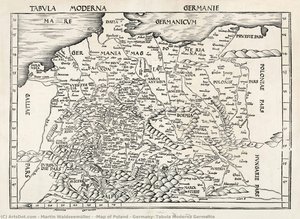
Martin Waldseemüller: The Pioneer of Modern Cartography
Martin Waldseemüller (c. 1470 – 16 march 1520) stands as a monumental figure in the history of European scholarship and cartography, largely unrecognized for centuries until recent scholarly rediscovery breathed new life into his legacy. Born near Freiburg im Breisgau, Germany, he emerged from humble beginnings to become one of the foremost humanist thinkers and mapmakers of his era—a man whose meticulous observations and innovative techniques fundamentally reshaped our understanding of the world.
Early Life & Education: Waldseemüller’s formative years were steeped in the intellectual fervor of Freiburg University, where he studied under Gregor Reisch, a pivotal figure in disseminating Ptolemaic knowledge. Reisch's Margarita Philosophica, published in 1503, profoundly impacted Waldseemüller’s worldview and instilled within him a dedication to synthesizing classical learning with contemporary scientific inquiry.
Basel & The Gymnasium Vosagense: Around 1490, Waldseemüller relocated to Basel, Switzerland, immersing himself in the vibrant humanist community centered around Johann Amerbach's printing press. This association fostered collaboration with Matthias Ringmann and Jean Basin de Saundacourt—the Gymnasium Vosagense—a group committed to reviving Ptolemy’s Geographia and advancing geographical understanding.
The Cosmographiae & The Birth of America
The Gymnasium's ambitious undertaking culminated in the publication of Cosmographiae Introductio (1507) alongside a monumental atlas—the Universalis Cosmographia—representing an unprecedented feat of cartographic artistry. This atlas, comprising twelve meticulously crafted sheets, incorporated both Ptolemaic maps and newly discovered charts documenting voyages by explorers like Amerigo Vespucci. Waldseemüller’s genius lay in recognizing Vespucci's observations as evidence for a fourth continent – America – distinct from Asia—a bold assertion that challenged prevailing cosmological beliefs. The atlas’s geometric precision and innovative printing techniques established it as the first modern atlas, marking a decisive break from medieval mappa mundi traditions.
A Legacy Forged in Ptolemy & Vespucci
Waldseemüller's intellectual debt to Ptolemy was undeniable; he painstakingly recreated Ptolemaic maps based on ancient texts, demonstrating an unwavering commitment to scholarly rigor. However, his collaboration with Ringmann and Vespucci ignited a spark of innovation—the conscious adoption of Vespucci’s discoveries as foundational for reconstructing the world map. This decision cemented Waldseemüller's place in history as the originator of the term “America,” honoring Vespucci’s pioneering explorations and signaling the dawn of a new era in geographical thought.
The Uppsala Codex Argenteus & The First Printed Globe
Waldseemüller’s contribution extended beyond mapmaking; he was credited with producing the first printed globe—a remarkable achievement considering the technological limitations of his time. This globe, housed within the Uppsala University Library (Sweden), exemplifies Waldseemüller's mastery of visual representation and underscores his role as a visionary innovator. Furthermore, his maps served as invaluable resources for scholars and navigators alike, shaping the intellectual landscape of the Renaissance and influencing subsequent explorations.
Historical Significance & Enduring Influence
Martin Waldseemüller’s legacy transcends mere cartographic accomplishment; he embodies the spirit of humanist inquiry—a relentless pursuit of knowledge grounded in classical tradition yet propelled by empirical observation. His Universalis Cosmographia remains a cornerstone of geographical history, demonstrating the transformative power of intellectual collaboration and artistic ingenuity. Today, Waldseemüller's maps continue to inspire awe and fascination, serving as tangible reminders of a pivotal moment in human understanding—the genesis of our conception of America and the birth of modern atlasmaking.
AllPaintingsStore.com redakcijos komanda
Viktorina
Kiekviename klausime yra tik vienas teisingas atsakymas.
Klausimas 1:
What was Martin Waldseemüller primarily known for?
Klausimas 2:
In what year did Waldseemüller and Ringmann publish the first map with the name “America”?
Klausimas 3:
Waldseemüller collaborated with Matthias Ringmann on a project to republish Ptolemy’s Geographia. What was the main goal of this ambitious endeavor?
Klausimas 4:
What was Waldseemüller’s role in the Gymnasium Vosagense?
Klausimas 5:
Waldseemüller is credited with producing the first printed globe. What significance did this achievement hold for the dissemination of geographical knowledge?
Embark on a curated journey through the world's most prestigious art collections. From imperial legacies to sacred Renaissance masterpieces, this expert guide offers deep insights for the discerning art enthusiast seeking to understand history's greatest treasures.
Kokias nuota išreiškia Martin Waldseemüller kūryba?
Martin Waldseemüller Nuotaudų kambarys – tai puslapis, kuriame kūriniai sugrupuoti pagal nuotaiką.
Ar galiu ieškoti Martin Waldseemüller kūrybos temų pagal temas?
Tematų katalogas puslapio tematikos žemėlapyje Martin Waldseemüller kūriniai suskirstyti pagal temas.
Kur galiu pamatyti visus Martin Waldseemüller kūrybos darbus?
Visi ši ši internetinė svetainė esantys Martin Waldseemüller kūriniai galima peržiūrėti puslapyje Visi kūriniai.
Kaip Martin Waldseemüller karjera skirstoma į laikotarpius?
Chronologinė Martin Waldseemüller kūrybos apžvalga galima rasti puslapio Karieros istorija puslapio, kuriame kūriniai pateikiami pagal jų kūrimo tvarką, skirstant į skyrius.
Ar galiu peržiūrėti Martin Waldseemüller darbus pagal medžiagą?
Norėdami rasti visus Martin Waldseemüller kūrinius tam tikra technika, apsilankykite šio paveikslautojo Visi mediai puslapį.
Ar galima rasti Martin Waldseemüller kūrybos darbų pagal spalvą?
Martin Waldseemüller Spalvų indeksas – tai puslapis, kuriame kūriniai sugruoti pagal jų spalvas.
Kur galiu pamatyti Martin Waldseemüller kūrybinę veiklą chronologine tvarka?
Galite peržiūrėti Martin Waldseemüller kūrybos laiko liniją: puslapyje Kūrybos chronologija kūriniai surikiuoti pagal jų sukūrimo datą.
Kurių spalvų Martin Waldseemüller naudojo dažniausiai?
Martin Waldseemüller Paletės genomas – tai puslapis, kuriame pateikiamas kūrybos efortų spalvų profilis.
Kiek Martin Waldseemüller paveiklių rodoma ArtsDot.com?