Pinigų grąžinimo garantija · 100 dienų Nemokamas pristatymas į visas pasaulio valstybes
646.446kūriniai 53.409menininkai 5.406muziejai 32kalbos
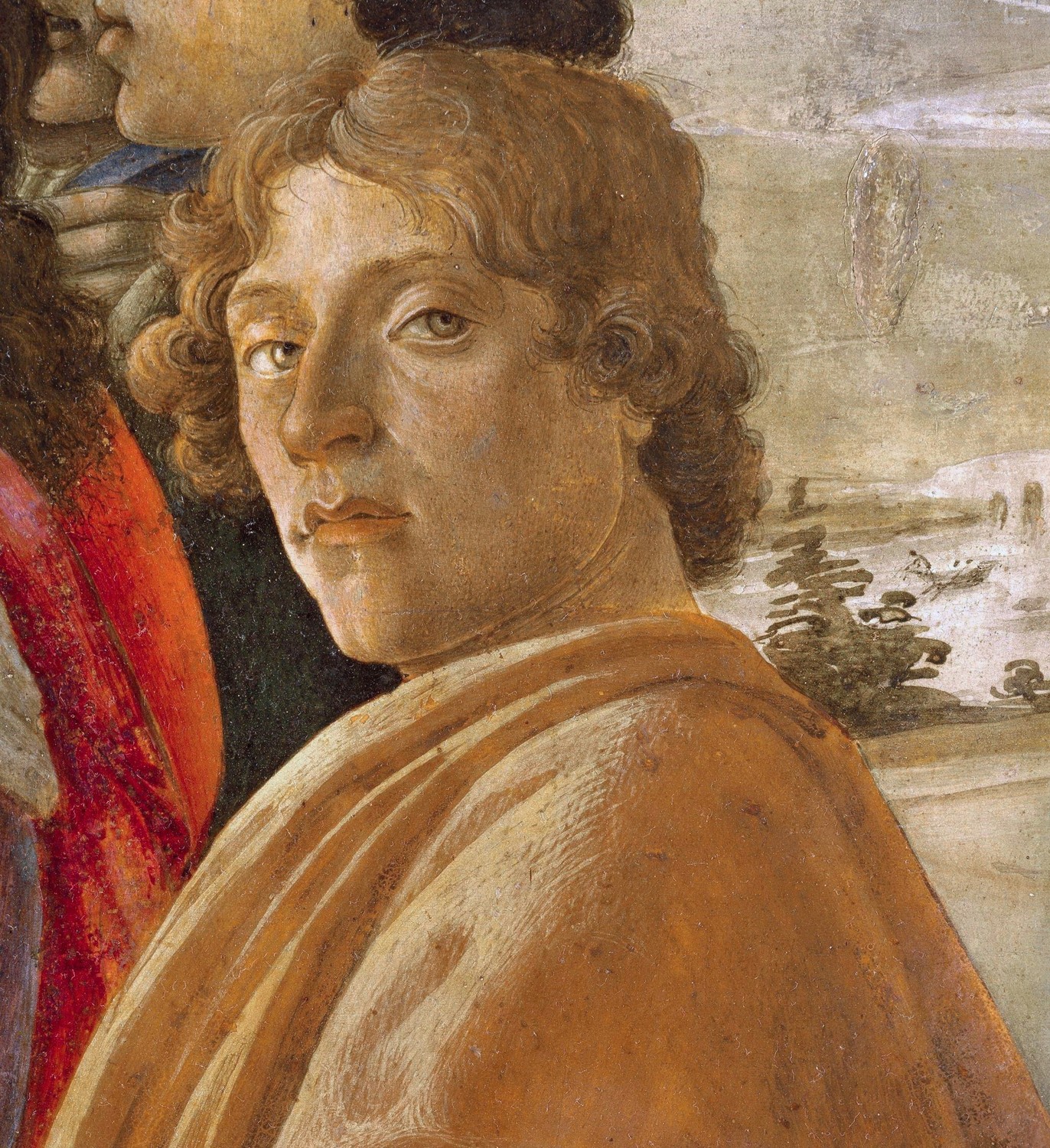
Sandro Botticelli portretas

The 100 Most Famous Sandro Botticelli Paintings to Choose From

Atnaujinta spalis 2026 · pagal mūsų populiarumumo koeficientą (paieškos, lankytojai ir užsakymai kiekvienam kūriniui) · 733 Sandro Botticelli darbai mūsų kataloge

Quick answer

Number one among Sandro Botticelli's paintings is Veneros Gimimas (1485), whose original is at the Galleria degli Uffizi, Florencija. In second and third place: Pavasaris (1482) and Венера и Марс (1483). Our catalogue holds 733 works by Sandro Botticelli. The 100 listed here are the most famous, in rank order, with the year and museum of each original.

1445 – 1510, Florencija Ankstyvasis renesansas Daugiausia darbų: Galleria degli Uffizi

The top 10: Sandro Botticelli's most famous paintings

1
Veneros Gimimas (1485) aut. Sandro Botticelli

Veneros Gimimas

1485 · Kiaušinių temperos ant medinio panoelio · Galleria degli Uffizi, Florencija

Venere Gimimas: Botičelio Renesanso Vizija Sandro Botičelio „Veneros gimimas“ (apie 1485 metus) – neatsiejamas nuo Italijos renesanso, simbolizuojantis atnaujintą susidomėjimą klasikinės mitologijos ir idealizuota žmogaus grožio koncepcijomis. Šis ikoninis kūrinys nukelia žiūrovus į eteriškos elegancijos pasaulį, užčiuopiant lemtingą Veneros – meilės, atgimimo ir dvasinio atsivėrimo simbolio – atsiradimo akimirksnį. Šis paveikslas nėra tik dailininkų meistriškumo demonstracija; tai yra filosofinis traktatas, įminto į spalvą ir liniją. Botičelis ne tiesiog perteikia mitologinį…

2
Pavasaris (1482) aut. Sandro Botticelli

Pavasaris

1482 · Aliejus ant drobės · Galleria degli Uffizi, Florencija

Sandro Botticellio „Primavera“ yra vienas garsiausių Italijos Renesanso šedevrų, įkūnijantis tą laikmetį, kai klasikinė mitologija ir natūralus grožis sufleravo neįtikėtiną susižavėjimą. Šis meistriškas 1482 metais sukurtas kūrinys yra Botticellio kompozicijos, linijos ir spalvos meistriškumo įrodymas, todėl jis yra nepakeičiamas turtas tiek meno mėgėjams, tiek kolekcionieriams.

3
Венера и Марс (1483) aut. Sandro Botticelli

Венера и Марс

1483 · Aliejus ant drobės · National Gallery, Londonas

Mitologinis šedevras Sandro Botticellio „Venera ir Marsas“ – tai užburiantis Renesanso paveikslas, kuris atgaivina amžiną mitologinę meilės ir karo pasaką. Sukurtas apie 1483 metus, šis šedevras yra itin išraiškingas Botticellio stiliaus pavyzdys, sujungiantis elegantišką linijų meistriškumą su giliu simbolizmu. Kūrinį pavcuda dievė Venera, įtvirtinanti meilę ir grožį, kartu su Marsu, karo dievu, taip sukuriant dinamišką šių priešingų jėgą sąveiką. Renesanso elegancija Skirtingas Botticellio stilius tarsi tiltelėja tarp vėliojo Italijos gotikos…

4
Magių Garbinimas aut. Sandro Botticelli

Magių Garbinimas

Kiaušinių temperos ant medinio panoelio

Sandro Botticelli's "Adoration of the Magi" – tai ne tik paveikslas, bet ir kelionė į vidinį žmogaus pasaulį, atspindintis ankstyvosios Renesanso idealus. Šis kūrinys, sukurtas apie 1475 metus Florencijoje, kviečia pasitelkti vaizduotę ir įsijausti į sceną, kurioje išmintingieji iš Rytų atvyksta pagerbti naujagimį Jėzū Christų. Paveikslas nėra tik religinis motyvas; tai yra istorijos, simbolizmo ir meniškos meistriškumo derinys, kuris iki šiol žavi žiūrovus.

5
Apelio Apkalimas (1495) aut. Sandro Botticelli

Apelio Apkalimas

1495 · Aliejus ant drobės · Galleria degli Uffizi, Florencija

Pasaulio Grožis: Sandro Botičelio "Skelūstis Apole" – Renesanso Alegorijos Šedė Skelūstis Apole, 1495 m. sukurtas Sandro Botičelio darbas, yra ne tik dailės kūrinys, bet ir įtraukiamo istorinio konteksto, gilių simbolių ir išskirtinės meistriškumo demonstravimo pavyzdys. Šis paveiksliukas, sukeltas Florencijos renesanso epochoje, atspindi tuo metu menininko idealus – eleganciją, detalizavimą ir gebėjimą sukurti istorijas, kurios liepta į širdį. Paveiksle pasakomos legendos apie nuolypę, aistras ir skaldytas nuomonės, o pagrindinis motyvas –…

6
Pallas and Centaur (1482) aut. Sandro Botticelli

Pallas and Centaur

1482 · Acrylic On Canvas

In the heart of the Florentine Renaissance, where the light of humanism began to illuminate the shadows of the Middle Ages, Sandro Botticelli captured a profound psychological struggle in his 1482 masterpiece, Pallas and the Centaur. This is not merely a mythological tableau; it is a breathtaking visual dialogue between the civilized mind and the untamed spirit. As the viewer encounters this work, they are immediately drawn into a tension…

7
Margaritės Madonos iš Magnifikato (1481) aut. Sandro Botticelli

Margaritės Madonos iš Magnifikato

1481 · Kiaušinių temperos ant medinio panoelio · Musée Fabre, Montpeljė

Švento Marijos Magnifikato Madonos Aprašymas Švento Marijos Magnifikato Madonos Aprašymas yra įtraukiantis tekstas apie Sandro Botičelio Šventąją Mariją Magnifiką – vieną iš Renesanso meno meistriškumo simbolių. Šis kūrinys, kuriame naudojamas tempera dažai ant drobės ir kuris šiuo metu yra Florencijos Uffizi Galerijoje, įvyko 1481 metais ir išliko nepriekšėjęs savo laikmečio estetikos principų. Madonos Aprašymas nėra tik religijinis paveikslas; tai įtraukiantis žvilkstimas į Florencijos visuomenę ir meistriškumo įrodymas Renesanso meno estetikoje.…

8
Magiškasis Gimtadienis (1500) aut. Sandro Botticelli

Magiškasis Gimtadienis

1500 · Aliejus ant drobės

, sukurtas Sandru Botičeliu apie 1500 metus, yra užburiantis ir spiritualiai turtingas kūrinys, kuris nuostabiai sujungia žemaiškos ir dangaus elementus. Šis aliejaus ant drobilio šedevras garsėja savo sudėtingu detalumu, gyvomis spalvomis ir giliu simbolizmu.

9
Portrait Of A Young Woman aut. Sandro Botticelli

Portrait Of A Young Woman

Acrylic On Canvas · Städel Museum, Frankfurtas

A Vision of Renaissance Beauty: Sandro Botticelli’s Portrait of Simonetta Vespucci Botticelli's ‘Portrait of Simonetta Vespucci,’ painted around 1480, stands as a quintessential emblem of the Florentine Early Renaissance—a period defined by humanist ideals and an unparalleled revival of classical art. Attributed to the maestro himself, though scholarly debate continues regarding authorship’s precise attribution, this exquisite oil painting transcends mere representation; it embodies a profound exploration of feminine grace and…

10
Mieganti Mergelė su Kristumi (1490) aut. Sandro Botticelli

Mieganti Mergelė su Kristumi

1490 · Akrilas ant drobės

Sandro Botticelli's *The Virgin Adoring the Child*, nuply dažytas apie 1490 metus, nėra tik religinių ikonų vaizdavimas; tai intymi ir giliai jaudinanti motininės meilės ir dieviško veneracijos atvaizdavimo forma. Dėžinėtas dabartiniu metu Nacionalinės galerijų Skotlandijoje, pavepia žiūrovą į ramų pasaulį, kuriame dera delnus su subtilia grožiu ir dvasine giliuoju. Matmenys 60 x 60 cm, jo palyginti mažas dydis nusipelno didelio emocinio atgarsio, esančio jo sudėtyje. Botticelli išskirtinai užfiksavo laiką –…

Ranks 11 to 100: more Sandro Botticelli paintings

11Veneros Gimimas aut. Sandro BotticelliVeneros Gimimas 12Alegorija - Pavasaris aut. Sandro BotticelliAlegorija - Pavasaris 13Marius ir Žmoguiškis su Angelu (1470) aut. Sandro BotticelliMarius ir Žmoguiškis su Angelu1470 · Isabella Stewart Gardner Museum 14Венера и Марс aut. Sandro BotticelliВенера и Марс 15Marija ir Dievulis su ketur angelais ir šešia šventeliais (San Barnabasų altorius) (1488) aut. Sandro BotticelliMarija ir Dievulis su ketur angelais ir šešia šventeliais (San Barnabasų altorius)1488 · Galleria degli Uffizi 16Sadaro Dievynu Pogardas (1470) aut. Sandro BotticelliSadaro Dievynu Pogardas1470 · National Gallery 17Miesto Gimimo Dievykė (1501) aut. Sandro BotticelliMiesto Gimimo Dievykė1501 · National Gallery 18Paskutinis Čydėjimas ir Šv. Zenobijaus Mirtis (1500) aut. Sandro BotticelliPaskutinis Čydėjimas ir Šv. Zenobijaus Mirtis1500 · National Gallery 19Madonna of the Rosengarden (arba Madonna del Roseto) (1469) aut. Sandro BotticelliMadonna of the Rosengarden (arba Madonna del Roseto)1469 · Galleria degli Uffizi 20Venus födelse ca Uffizi (1480) aut. Sandro BotticelliVenus födelse ca Uffizi1480 21Venere gimimas (1486) aut. Sandro BotticelliVenere gimimas1486 · Galleria degli Uffizi 22Vojų skaičiai (1480) aut. Sandro BotticelliVojų skaičiai1480 · Biblioteca Apostolica Vaticana 23La primavera aut. Sandro BotticelliLa primavera 24Daudžiosios gausos alegorija (1480) aut. Sandro BotticelliDaudžiosios gausos alegorija1480 · British Museum 25Apelesio šmeždžiai - (1494) aut. Sandro BotticelliApelesio šmeždžiai -1494 · Galleria degli Uffizi 26Magnifikat Madona (Madonna del Magnificat) (1480) aut. Sandro BotticelliMagnifikat Madona (Madonna del Magnificat)1480 · Galleria degli Uffizi 27Palas ir Kentauras (1482) aut. Sandro BotticelliPalas ir Kentauras1482 · Galleria degli Uffizi 28„Nasto Džio Degli Onisi“ antroji dalis“ (1483) aut. Sandro Botticelli„Nasto Džio Degli Onisi“ antroji dalis“1483 · Museo del Prado 29Jauniojo žmogaus portretas (1483) aut. Sandro BotticelliJauniojo žmogaus portretas1483 · National Gallery 30Šventoji Mergelė ir Vaikas Trone (Bardi altarijus) (1484) aut. Sandro BotticelliŠventoji Mergelė ir Vaikas Trone (Bardi altarijus)1484 · Staatliche Museen zu Berlin 31Pavasaris (detale) (1482) aut. Sandro BotticelliPavasaris (detale)1482 · Galleria degli Uffizi 32Jaunos moters portretas (1480) aut. Sandro BotticelliJaunos moters portretas1480 · Städelsche Kunstinstitut Und Städtische Galerie 33Cestello Pradžia (rėmuje) (1489) aut. Sandro BotticelliCestello Pradžia (rėmuje)1489 · Galleria degli Uffizi 34Venera ir trys Gražiosios dovanojai jaunai motriesi aut. Sandro BotticelliVenera ir trys Gražiosios dovanojai jaunai motriesi 35Veneros gimimas (detale) (11) (1485) aut. Sandro BotticelliVeneros gimimas (detale) (11)1485 · Galleria degli Uffizi 36Veneros gimimas (1484) aut. Sandro BotticelliVeneros gimimas1484 37Jauniojo vyro portretas (1482) aut. Sandro BotticelliJauniojo vyro portretas1482 · National Gallery of Art 38Venera ir Gražios trokštia dovanas jaunosiems mergai (1486) aut. Sandro BotticelliVenera ir Gražios trokštia dovanas jaunosiems mergai1486 · Liuvro muziejus 39Pasaulis Nastagio iš Onesti ( pirmas epizodas) (1483) aut. Sandro BotticelliPasaulis Nastagio iš Onesti ( pirmas epizodas)1483 · Museo del Prado 40Žilionių častiškumas (detale) (1465) aut. Sandro BotticelliŽilionių častiškumas (detale)1465 · National Gallery 41Granatų Madona (Madonna della Melagrana) (1487) aut. Sandro BotticelliGranatų Madona (Madonna della Melagrana)1487 · Galleria degli Uffizi 42Pekas, XVIII daina (1480) aut. Sandro BotticelliPekas, XVIII daina1480 · Staatliche Museen zu Berlin 43Illustration to the Divine Comedy (Inferno) (1480) aut. Sandro BotticelliIllustration to the Divine Comedy (Inferno)1480 · Biblioteca Apostolica Vaticana 44Primavera (detail) (16) (1482) aut. Sandro BotticelliPrimavera (detail) (16)1482 · Galleria degli Uffizi 45Apelesio šmeždžiai (detalė) (8) (1494) aut. Sandro BotticelliApelesio šmeždžiai (detalė) (8)1494 · Galleria degli Uffizi 46Jaunas vyras, pristatomas septyniaiems laisvajoms menams (1484) aut. Sandro BotticelliJaunas vyras, pristatomas septyniaiems laisvajoms menams1484 · Liuvro muziejus 47Mošės išbandymai ir pašaukimas (1481) aut. Sandro BotticelliMošės išbandymai ir pašaukimas1481 · Sistinos kapelica 48Tretybė ir Imglele su angelu (1480) aut. Sandro BotticelliTretybė ir Imglele su angelu1480 · Art Institute of Chicago 49Illustration to the Divine Comedy (Inferno) (1480) aut. Sandro BotticelliIllustration to the Divine Comedy (Inferno)1480 · Biblioteca Apostolica Vaticana 50Nastagio degli Onesti istorija (antrosios epizodo detalė) (1483) aut. Sandro BotticelliNastagio degli Onesti istorija (antrosios epizodo detalė)1483 · Museo del Prado 51Madona su Švč. Mergelė ir astrajos (1478) aut. Sandro BotticelliMadona su Švč. Mergelė ir astrajos1478 · Staatliche Museen zu Berlin 52Primavera (detail) (14) (1482) aut. Sandro BotticelliPrimavera (detail) (14)1482 · Galleria degli Uffizi 53Šv. Zenobaus trys stebuklai (detale) (1500) aut. Sandro BotticelliŠv. Zenobaus trys stebuklai (detale)1500 · Metropolitano meno muziejus 54Žiemoji Dievo sūgaus garbėjimas (14) (1481) aut. Sandro BotticelliŽiemoji Dievo sūgaus garbėjimas (14)1481 · National Gallery of Art 55Judita išeina iš Holoferno tendros (1495) aut. Sandro BotticelliJudita išeina iš Holoferno tendros1495 · Rijksmuseum 56Cestello Pržiūtis (1489) aut. Sandro BotticelliCestello Pržiūtis1489 · Galleria degli Uffizi 57Gimimo Venės (1486) aut. Sandro BotticelliGimimo Venės1486 · Galleria degli Uffizi 58Portrait of Giuliano de' Medici (1476) aut. Sandro BotticelliPortrait of Giuliano de' Medici1476 · National Gallery of Art 59Merginė ir vaikas su dviem angeliais (detalė) (1490) aut. Sandro BotticelliMerginė ir vaikas su dviem angeliais (detalė)1490 · Vienos dailės akademija 60Mistikinis Gimimas (1500) aut. Sandro BotticelliMistikinis Gimimas1500 · National Gallery 61Primavera (detail) (18) (1482) aut. Sandro BotticelliPrimavera (detail) (18)1482 · Galleria degli Uffizi 62Šventoji Mergelė žvelgianti į vaiką (1490) aut. Sandro BotticelliŠventoji Mergelė žvelgianti į vaiką1490 · National Gallery of Art 63Veneros gimimas (detale) (12) (1485) aut. Sandro BotticelliVeneros gimimas (detale) (12)1485 · Galleria degli Uffizi 64Šv. Jeronimo paskutinėjė komunija (detale) (1495) aut. Sandro BotticelliŠv. Jeronimo paskutinėjė komunija (detale)1495 · Metropolitano meno muziejus 65Šiaudragio Madona (1487) aut. Sandro BotticelliŠiaudragio Madona1487 66Lamentation over the Dead Christ with Saints (1490) aut. Sandro BotticelliLamentation over the Dead Christ with Saints1490 · Alte Pinakothek 67Cestello Pradžia (detale) (1489) aut. Sandro BotticelliCestello Pradžia (detale)1489 · Galleria degli Uffizi 68Mystic nativity aut. Sandro BotticelliMystic nativityNational Gallery 69Giuliano de' Medicio portretas (1476) aut. Sandro BotticelliGiuliano de' Medicio portretas1476 · National Gallery of Art 70Madona su Švč. Mergelės vaiku ir dviem angelais (1470) aut. Sandro BotticelliMadona su Švč. Mergelės vaiku ir dviem angelais1470 · Museo di Capodimonte 71Vyro portretas su Kosimo Senojo medaliu (1474) aut. Sandro BotticelliVyro portretas su Kosimo Senojo medaliu1474 · Galleria degli Uffizi 72Pavasaris (detalė) (15) (1482) aut. Sandro BotticelliPavasaris (detalė) (15)1482 · Galleria degli Uffizi 73La divina komedija, Inferno XIX. Vergilis ir Džantės aštuntoje košėje (Malebolge), 3. Bolgia: Krikščionių pareigūnų korupcija, Simonistų nuosprendis aut. Sandro BotticelliLa divina komedija, Inferno XIX. Vergilis ir Džantės aštuntoje košėje (Malebolge), 3. Bolgia: Krikščionių pareigūnų korupcija, Simonistų nuosprendisKupferstichkabinett 74Vyro portretas su Kozimo medaliu (1474) aut. Sandro BotticelliVyro portretas su Kozimo medaliu1474 · Galleria degli Uffizi 75Madona ir Šv. Vaikas (1467) aut. Sandro BotticelliMadona ir Šv. Vaikas1467 · Galleria degli Uffizi 76Trečiausia motina ir Šventasis Jonas Krikštytojas adoruoja Imglaikį Kristų (1477) aut. Sandro BotticelliTrečiausia motina ir Šventasis Jonas Krikštytojas adoruoja Imglaikį Kristų1477 · Škotijos Nacionalinė galerija 77Šventosios Marijos Užtikrinimas (1484) aut. Sandro BotticelliŠventosios Marijos Užtikrinimas1484 78Ateivė (1485) aut. Sandro BotticelliAteivė1485 · Metropolitano meno muziejus 79Nastagio degli Onesti istorija (antros dalies fragmentas) (1483) aut. Sandro BotticelliNastagio degli Onesti istorija (antros dalies fragmentas)1483 · Museo del Prado 80Portrait of a Young Man (1487) aut. Sandro BotticelliPortrait of a Young Man1487 81Pranašymas (detale) (1485) aut. Sandro BotticelliPranašymas (detale)1485 · Metropolitano meno muziejus 82Lamentation over the Dead Christ aut. Sandro BotticelliLamentation over the Dead Christ 83Trečiausia ir Pasaivis (1490) aut. Sandro BotticelliTrečiausia ir Pasaivis1490 · Harvard Art Museums 84Žiežgių aplankymas (detalė) (1475) aut. Sandro BotticelliŽiežgių aplankymas (detalė)1475 · Galleria degli Uffizi 85Cestello Pranešimas (detalė) (11) (1489) aut. Sandro BotticelliCestello Pranešimas (detalė) (11)1489 · Galleria degli Uffizi 86Dievo Motina su Kūdikiu ir šešiais angelais bei Krikto Dievo</a> (1485) aut. Sandro BotticelliDievo Motina su Kūdikiu ir šešiais angelais bei Krikto Dievo</a>1485 · Galleria Borghese 87Mošės išbandymai ir šaukimas (detalė) (19) (1481) aut. Sandro BotticelliMošės išbandymai ir šaukimas (detalė) (19)1481 · Sistinos kapelica 88Bardi auksinis šventorius (detale) (1484) aut. Sandro BotticelliBardi auksinis šventorius (detale)1484 · Staatliche Museen zu Berlin 89Madonna and Child with St. John the Baptist (1490) aut. Sandro BotticelliMadonna and Child with St. John the Baptist1490 · Indianapolis muziejus 90Lamentation over the Dead Christ (1490) aut. Sandro BotticelliLamentation over the Dead Christ1490 91Mistinis Gimimas (detalė) (1500) aut. Sandro BotticelliMistinis Gimimas (detalė)1500 · National Gallery 92Koraho bausmė ir Mošės bei Arojos apibatus (detalė) (12) (1481) aut. Sandro BotticelliKoraho bausmė ir Mošės bei Arojos apibatus (detalė) (12)1481 · Sistinos kapelica 93Madonna of the Magnificat (1480) aut. Sandro BotticelliMadonna of the Magnificat1480 94The Punishment of Korah and the Stoning of Moses and Aaron (1481) aut. Sandro BotticelliThe Punishment of Korah and the Stoning of Moses and Aaron1481 · Sistinos kapelica 95Annunciation (1495) aut. Sandro BotticelliAnnunciation1495 · Pushkinio valstybinis dailės muziejus 96Primavera - (8) aut. Sandro BotticelliPrimavera - (8) 97Tretybė ir Imelė su Šiemoniu (1500) aut. Sandro BotticelliTretybė ir Imelė su Šiemoniu1500 · National Museum Cardiff 98The Youth Of Moses, In The Sistine Chapel aut. Sandro BotticelliThe Youth Of Moses, In The Sistine Chapel 99The Temptation of Christ aut. Sandro BotticelliThe Temptation of Christ 100Madonna su Imglaite ir angelu aut. Sandro BotticelliMadonna su Imglaite ir angeluMusée du Petit Palais

Sandro Botticelli paintings by period

Sandro Botticelli paintings by subject

The four most frequent subjects in this ranking, with the top painting for each.

Museums holding Sandro Botticelli's originals

8 muziejai, kuriuose saugoma daugiausia šioje pusėje esamų paveikslų.

Muzejaus Miestas Sandro Botticelli darbai Šiojo sąrašo paveikslai
Galleria degli Uffizi, FlorencijaGalleria degli Uffizi Florencija 56 Veneros Gimimas, Pavasaris, Apelio Apkalimas
National Gallery, LondonasNational Gallery Londonas 21 Венера и Марс, Sadaro Dievynu Pogardas, Miesto Gimimo Dievykė
National Gallery of Art, VašingtonasNational Gallery of Art Vašingtonas 11 Jauniojo vyro portretas, Žiemoji Dievo sūgaus garbėjimas (14), Portrait of Giuliano de' Medici
Sistinos kapelica, Vaticano miestasSistinos kapelica Vaticano miestas 15 Mošės išbandymai ir pašaukimas, Mošės išbandymai ir šaukimas (detalė) (19), Koraho bausmė ir Mošės bei Arojos apibatus (detalė) (12)
Staatliche Museen zu Berlin, BerlinasStaatliche Museen zu Berlin Berlinas 11 Šventoji Mergelė ir Vaikas Trone (Bardi altarijus), Pekas, XVIII daina, Madona su Švč. Mergelė ir astrajos
Metropolitano meno muziejus, NiujorkasMetropolitano meno muziejus Niujorkas 11 Šv. Zenobaus trys stebuklai (detale), Šv. Jeronimo paskutinėjė komunija (detale), Ateivė
Museo del Prado, MadridasMuseo del Prado Madridas 7 „Nasto Džio Degli Onisi“ antroji dalis“, Pasaulis Nastagio iš Onesti ( pirmas epizodas), Nastagio degli Onesti istorija (antrosios epizodo detalė)
Biblioteca Apostolica Vaticana, Vaticano ValstybėBiblioteca Apostolica Vaticana Vaticano Valstybė 3 Vojų skaičiai, Illustration to the Divine Comedy (Inferno), Illustration to the Divine Comedy (Inferno)

Each decade's top Sandro Botticelli painting

Darbai pagal dešimtmečius

Select a decade to see its top painting.

Sandro Botticelli paintings: FAQ

Which is Sandro Botticelli's most famous work?Show answer

Veneros Gimimas (1485), Galleria degli Uffizi, Florencija, ranks first, followed by Pavasaris (1482) and Венера и Марс (1483).

At what age was Veneros Gimimas painted by Sandro Botticelli?Show answer

Sandro Botticelli was 40: Veneros Gimimas is dated 1485, and Sandro Botticelli was born in 1445.

What are the ten most famous Sandro Botticelli paintings?Show answer

Veneros Gimimas, Pavasaris, Венера и Марс, Magių Garbinimas, Apelio Apkalimas, Pallas and Centaur, Margaritės Madonos iš Magnifikato, Magiškasis Gimtadienis, Portrait Of A Young Woman ir Mieganti Mergelė su Kristumi. Year and museum for each are in the ranking above.

How many paintings by Sandro Botticelli are listed?Show answer

733 works by Sandro Botticelli are in our catalogue, dated 1465 to 1501.

Which museums hold Sandro Botticelli's most famous originals?Show answer

Mainly in Galleria degli Uffizi (Florencija), National Gallery (Londonas) ir National Gallery of Art (Vašingtonas). See the museum table above for the full list.

When were the top Sandro Botticelli paintings made?Show answer

In 1480s: 53 of the 100 paintings ranked here date from that time, including Veneros Gimimas.

What are the oldest and the most recent famous Sandro Botticelli paintings?Show answer

Earliest on this page: Žilionių častiškumas (detale) (1465). Latest: Miesto Gimimo Dievykė (1501).

Which subjects appear most in Sandro Botticelli's paintings?Show answer

Among the 100 paintings ranked here: Botičelis (18), Renaissance (17) ir Renesanso menas (16).

Which medium is most common in Sandro Botticelli's paintings?Show answer

Kiaušinių temperos ant medinio panoelio, for 32 of the 100 paintings ranked here.

What movement do Sandro Botticelli's paintings belong to?Show answer

Ankstyvasis renesansas, based on the paintings ranked on this page.

Which famous Sandro Botticelli paintings does the Galleria degli Uffizi have?Show answer

The Galleria degli Uffizi, Florencija holds 27 of the paintings ranked here, including Veneros Gimimas, Pavasaris ir Apelio Apkalimas.

Can I buy a Sandro Botticelli painting as a reproduction?Show answer

Yes. Every painting on this page can be ordered as a hand-painted oil reproduction or a print. Open the painting, choose the size and place your order.

Sandro Botticelli: the artist behind the paintings

The Life of Sandro Botticelli

Sandro Botticelli lived his life within the narrow, busy streets of Florence, Italy. Born Alessandro di Mariano di Vanni Filipepi around 1445, he was the son of a tanner. His family lived in the neighborhood of Ognissanti, a place he remained close to throughout his years. He eventually became known by the name Botticelli, a nickname taken from the word botticello, which refers to a small wine cask or little barrel.

His presence in the city was constant. He moved through the same Florentine air for decades, working from his early training until his death on May 17, 1510. His work emerged during the Early Renaissance, a time when the city was a center of intense creative activity. He was an Italian painter who focused his hands on the wood and plaster of his home city.

His life was tied to the local rhythms of trade and faith. He was a man of the Florentine streets, from his early days as an apprentice to his final years. His existence was defined by the light and the shadows of the Italian Renaissance.

Early Life, Family and Training

Born Alessandro di Mariano di Vanni Filipepi, he was the youngest of four surviving children. His father, Mariano Filipepi, worked as a goldsmith and later as a tanner. This background in craftsmanship likely shaped the way he approached the fine details of his later work. Before finding his way into painting, he was thought to have first trained with Maso Finiguerra, a goldsmith. This early exposure to the precision of metalwork provided a foundation for the meticulous lines that would define his hand.

Around 1460, he entered the studio of Fra Filippo Lippi. This apprenticeship was the most significant period of his formation, where he learned the specific techniques of the Florentine school. He studied the way to handle panel painting and the application of fresco. He remained under Lippi's guidance for several years, likely leaving the workshop by April 1467. During these years, he absorbed the ability to create intimate compositions and a certain way of rendering figures that felt both graceful and slightly melancholic.

Patrons, Workshop and Commissions

The circles of Florence provided much of the work that filled his studio. He worked closely with the Medici family, including Lorenzo de' Medici and Giuliano de' Medici, whose influence shaped much of his professional life. Beyond the Medici, the Vespucci family commissioned his fresco Saint Augustine in his Study. His reach extended to the religious and civic centers of Italy as well. In Rome, he was invited by Pope Sixtus IV to paint frescoes for the Sistine Chapel. Back in Florence, he completed the Adoration of the Magi for the altar in the funerary chapel of Gaspare di Zanobi del Lama.

His workshop functioned as a place of continuity and shared skill. He employed Filippino Lippi, the son of his former teacher, as an apprentice. This connection kept the traditions of his training alive within his own space. The studio was a place of steady production, where the demands of patrons dictated the rhythm of the day. He moved between the private commissions of wealthy families and the large-scale requirements of the church, often working within the established social structures of the city.

Artistic Technique and Style

His hand moved with a specific, rhythmic grace. There is a lyrical quality to the way he defines a shape, using elegant linearity and flowing contours to guide the eye across the panel. He often began his compositions with a silverpoint drawing, a method that required a steady, controlled touch to lay down the initial underpainting. This precision allowed him to build up layers of tempera paint, which provided a way to render fine details and maintain a clear, bright color palette. He did not rely on heavy shadows to create form; instead, he used the strength of the line itself to define the presence of his subjects.

The figures he painted possess an ethereal quality. They often feature elongated proportions and graceful, almost weightless poses that suggest a sense of movement without the need for heavy physical mass. He found a way to marry the decorative use of line with the classical traditions of his time, creating a visual language that felt both ancient and uniquely his own. This approach allowed him to depict complex mythological scenes with a sense of calm and poetic rhythm.

Key Works and Masterpieces

The Birth of Venus captures a goddess emerging from a seashell, a scene that embodies the Renaissance ideals of beauty. In Primavera, the subject turns to a complex and enigmatic celebration of spring and love, populated by figures from classical mythology. These works show a focus on the rhythmic movement of lines and the grace of the human form.

Earlier in his career, his brush moved toward different subjects. He painted Saint Sebastian before January 1474. Around 1475, he produced the Adoration of the Magi, which includes members of the Medici family and a self-portrait. As his interests shifted, his work took on a different tone. The Mystic Nativity, created in 1501, reflects this change in focus.

Later Years and Spiritual Shift

The 1490s brought a change to the way he approached the panel. The ornamental charm that defined his earlier years began to fade. He moved away from the decorative grace of his youth, opting instead for a more simplistic approach. This shift was not merely a change in technique but a response to the changing atmosphere in Florence. He became a follower of the Dominican friar Savonarola, whose fervent preaching influenced the city's spiritual direction. This connection marked a departure from the humanist interests that had previously guided his brush.

His work during this period took on a different character. The figures lost some of their rhythmic, flowing quality, moving instead toward a more archaic or Gothic style. The compositions became more austere, reflecting a growing spiritual intensity. This period of his life shows a man turning inward, trading the lightness of mythological scenes for a more heavy-handed, religious focus. The paintings from these years carry a different weight, stripped of the previous elegance in favor of something more direct and emotionally charged.

Legacy and Artistic Rediscovery

After his death in 1510, the name Botticelli largely slipped from the public eye. For nearly three centuries, his paintings sat in quiet corners, overshadowed by the heavy presence of High Renaissance figures. The specific, rhythmic lines and the way he handled color were left to the dust of history, forgotten by a world moving toward different ideals of form and perspective.

This silence ended in the late 19th century. A group known as the Pre-Raphaelite Brotherhood began looking backward, seeking a different kind of clarity. They found it in his work. They were drawn to the way his figures moved with a certain linear grace and the specific, bright quality of his colors. This interest sparked a slow, steady reassessment of his place in history. What was once obscured began to emerge again, moving from the shadows of obscurity back into the light of the Florentine tradition.

Today, he is recognized as a central figure of the Early Renaissance. His ability to blend classical myth with a sense of spiritual longing remains a key part of his identity. His influence persists in the way later generations approached the intersection of beauty and emotion.

Where to See His Works Today

Walking through the halls of the Galleria degli Uffizi in Florence, one finds his most famous subjects. The Birth of Venus and Primavera occupy space here, alongside the Adoration of the Magi. These works show the way he handled color and the way figures move through a garden or across a sea shell.

His presence extends beyond the borders of Italy. In France, the Musée du Petit Palais in Avignon holds a Madonna and Child. The painting shows the Virgin Mary with the infant Jesus, a quiet scene that reflects his earlier training. In Berlin, the Gemäldegalerie houses his Saint Sebastian, a work that captures a sense of repose in the figure.

Visi 733 Sandro Botticelli darbai →