Geld-terug-garantie · 100 dagen Gratis wereldwijde verzending
646.446kunstwerken 53.409kunstenaars 5.406musea 32talen
Portret van Altobello Melone

Schilderijen van Altobello Melone: De top 13 bekendste, gerangschikt

Bijgewerkt in oktober 2026 · gerangschikt op basis van onze populariteitsscore (zoekopdrachten, bezoeken en bestellingen per kunstwerk) · 13 werken van Altobello Melone in onze catalogus

Snel antwoord

Het beroemdste schilderij van Altobello Melone is The Transfiguration (1512); het origineel bevindt zich in het Szépművészeti Múzeum, Boedapest. Portrait of Alda Gambara (1515) en Tobias and the Angel (1521) zijn de getallen twee en drie. Van de 13 werken van Altobello Melone in onze catalogus zijn dit de 13 bekendste, gerangschikt met elk hun jaartal en museum, zodat u het schilderij kunt kiezen om te bestellen.

1485 – 1543, Cremona Renaissance Meeste werken: Szépművészeti Múzeum

Top 10 schilderijen van Altobello Melone, gerangschikt

1
The Transfiguration (1512) door Altobello Melone

The Transfiguration

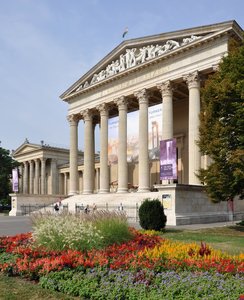
1512 · Szépművészeti Múzeum, Boedapest

Created in 1512, The Transfiguration represents a significant moment in the career of Altobello Melone. Born in Cremona, Italy, Melone developed a style that bridged the gap between the harmonious traditions of the Lombard school and the emerging complexities of Mannerism. This specific work reflects the artist's ability to navigate these shifting aesthetic currents, moving toward a more sophisticated use of light and shadow to define form and presence.

Hand-painted oil reproduction from $170 36 × 28 cm Same size as the original $1051 191 × 164 cm Order at original size →
Bestel een handgeschilderde kopie Over het schilderij
2
Portrait of Alda Gambara (1515) door Altobello Melone

Portrait of Alda Gambara

1515 · Oil On Canvas · Pinacoteca di Brera, Milaan

To stand before this portrait is to step directly into the opulent, yet intensely private world of the early sixteenth century Italian aristocracy. Altobello Melone’s depiction of Alda Gambara is far more than a mere likeness; it is a carefully constructed tableau vivant, rich with the textures of wealth and the weight of societal expectation. The subject herself commands attention with her direct, serious gaze—an arresting look that seems to…

Hand-painted oil reproduction from $170 29 × 34 cm Same size as the original $229 50 × 60 cm Order at original size →
Kies een formaat Details bekijken
3
Tobias and the Angel (1521) door Altobello Melone

Tobias and the Angel

1521 · Oil On Panel · Ashmolean Museum, Oxford

Altobello Melone's “Tobias and the Angel,” painted in 1521, is a captivating testament to the flourishing artistic spirit of the Italian Renaissance. This exquisite oil-on-panel painting, now residing within the Ashmolean Museum’s collection in Oxford, offers a profound meditation on faith, protection, and innocence through its meticulously rendered figures and evocative use of color and light. Measuring 112 x 48 cm, the artwork immediately draws the viewer into a scene…

Hand-painted oil reproduction from $195 21 × 48 cm Same size as the original $324 48 × 112 cm Order at original size →
Kies een formaat Details bekijken
4
Saint Jerome (1512) door Altobello Melone

Saint Jerome

1512 · Oil On Panel · Castelvecchio Museum, Verona

In the quiet intensity of Altobello Melone’s Saint Jerome, we are invited into a moment of profound spiritual introspection. Painted around 1512, this evocative panel serves as a window into the soul of one of Christianity's most revered scholars. The saint is depicted not in the grandeur of a cathedral, but grounded in the raw, natural world, his nakedness symbolizing a stripping away of worldly vanity to reveal the pure…

Hand-painted oil reproduction from $170 22 × 46 cm
Bestel een handgeschilderde kopie Over het schilderij
6
Flight to Egypt (1517) door Altobello Melone

Flight to Egypt

1517 · Kathedraal van Cremona, Cremona

The painting Flight to Egypt by Altobello Melone is a remarkable work of art that showcases the artist's skill and attention to detail. Created in 1517, this fresco painting is located in the Cathedral of Cremona, Italy and depicts a scene from Christian art history, where Mary, Joseph, and baby Jesus are on their journey into Egypt to escape Herod's slaughter of infants. Composition and Symbolism The painting is rich…

Hand-painted oil reproduction from $295 30 × 33 cm
Bestel dit schilderij Schilderijdetails
7
Christ Carrying the Cross (1515) door Altobello Melone

Christ Carrying the Cross

1515 · Fresco · National Gallery, Londen

In the quiet corridors of The National Gallery in London, there exists a window into the turbulent soul of the High Renaissance—Altobello Melone’s Christ Carrying the Cross. Painted around 1515, this masterpiece is far more than a mere religious illustration; it is a profound psychological drama captured in pigment. As the viewer approaches, they are immediately struck by the sheer emotional weight of the scene. Christ, bearing the heavy timber…

Schilderijen van Altobello Melone gerangschikt van 11 tot 13

Schilderijen van Altobello Melone per onderwerp

De vier meest voorkomende onderwerpen in deze ranglijst, met het topstuk per onderwerp.

Musea met originele werken van Altobello Melone

De 8 musea met de meeste schilderijen op deze pagina.

Museum Stad Werken van Altobello Melone Schilderijen uit deze lijst
Szépművészeti Múzeum, BoedapestSzépművészeti Múzeum Boedapest 2 The Transfiguration, A loving couple, altobello melone
Kathedraal van Cremona, CremonaKathedraal van Cremona Cremona 2 Massacre of the Innocents, Flight to Egypt
National Gallery, LondenNational Gallery Londen 2 Christ Carrying the Cross, The Road to Emmaus
Pinacoteca di Brera, MilaanPinacoteca di Brera Milaan 1 Portrait of Alda Gambara
Ashmolean Museum, OxfordAshmolean Museum Oxford 1 Tobias and the Angel
Castelvecchio Museum, VeronaCastelvecchio Museum Verona 1 Saint Jerome
Harvard Art Museums, CambridgeHarvard Art Museums Cambridge 1 Portrait of a young Man
Städel Museum, FrankfurtStädel Museum Frankfurt 1 Narcissus at the Fountain

Altobello Melone per jaar: de beste schilderijen

De gedateerde schilderijen van Altobello Melone hier vallen binnen een periode van 10 jaar, van 1512 tot 1521. Blader jaar voor jaar door de collectie om uw favoriet te kiezen.

Werken per jaar

Selecteer een jaar om de bijbehorende schilderijen te bekijken.

Schilderijen van Altobello Melone: veelgestelde vragen

Wat is het beroemdste schilderij van Altobello Melone?Antwoord tonen

The Transfiguration (1512), Szépművészeti Múzeum, Boedapest, staat op de eerste plaats, gevolgd door Portrait of Alda Gambara (1515) en Tobias and the Angel (1521).

Hoe oud was Altobello Melone toen The Transfiguration werd geschilderd?Antwoord tonen

Altobello Melone was 27 jaar oud: The Transfiguration dateert uit 1512, en Altobello Melone werd geboren in 1485.

Wat zijn de top 10 schilderijen van Altobello Melone?Antwoord tonen

The Transfiguration, Portrait of Alda Gambara, Tobias and the Angel, Saint Jerome, Massacre of the Innocents, Flight to Egypt, Christ Carrying the Cross, Portrait of a young Man, Narcissus at the Fountain en The Journey of Saint Helen to Jerusalem in Search of the True Cross.. Het jaar en het museum per werk staan in de bovenstaande ranglijst.

Hoeveel werken van Altobello Melone staan er in uw lijst?Antwoord tonen

13 werken van Altobello Melone zijn opgenomen in onze catalogus, gedateerd van 1512 tot 1521.

Waar worden de originele schilderijen van Altobello Melone bewaard?Antwoord tonen

Voornamelijk in Szépművészeti Múzeum (Boedapest), Kathedraal van Cremona (Cremona) en National Gallery (Londen). Zie de museumtabel hierboven voor de volledige lijst.

Welke periode bracht de beroemdste schilderijen van Altobello Melone voort?Antwoord tonen

In 1512: 2 van de 13 hier gerangschikte schilderijen stammen uit die tijd, waaronder The Transfiguration.

Wat zijn de vroegste en de meest recente beroemde schilderijen van Altobello Melone?Antwoord tonen

Eerste op deze pagina: The Transfiguration (1512). Laatste: Tobias and the Angel (1521).

Wat zijn de belangrijkste onderwerpen in de schilderijen van Altobello Melone?Antwoord tonen

Onder de 13 schilderijen die hier gerangschikt zijn: Men (3), Man (2) en Religious art (2).

In welk medium zijn de meeste originele werken van Altobello Melone vervaardigd?Antwoord tonen

Oil On Panel, voor 2 van de 13 schilderijen in deze ranglijst.

Bij welke stroming wordt Altobello Melone gerekend?Antwoord tonen

Renaissance, gebaseerd op de schilderijen gerangschikt op deze pagina.

Welke originele werken van Altobello Melone zijn in het Szépművészeti Múzeum?Antwoord tonen

Het Szépművészeti Múzeum, Boedapest herbergt 2 van de schilderijen in deze ranglijst, waaronder The Transfiguration en A loving couple, altobello melone.

Kan ik een reproductie van Altobello Melone bestellen?Antwoord tonen

Ja. Elk schilderij op deze pagina kan worden besteld als een handgeschilderde olieverfreproductie of als een print. Open het schilderij, kies de gewenste afmeting en plaats uw bestelling.

Over de kunstenaar: Altobello Melone

The Renaissance Visionary of Cremona

In the heart of the Italian Renaissance, amidst the vibrant cultural resurgence of Cremona, the name Altobello Melone emerges as a profound bridge between the harmonious traditions of Lombardy and the burgeoning complexity of Mannerism. Born around 1491, Melone’s early life was shaped by the intellectual currents of his era, particularly the humanist ideals flowing from Ferrara under the influence of Cesare Borgia. This exposure to classical aesthetics provided the foundational bedrock upon which he would build a career defined by both meticulous detail and an expressive, almost restless, grandeur. His artistic journey was not merely a solitary pursuit but a deep immersion into the stylistic evolution of Northern Italy, where the grace of the High Renaissance began to yield to the more dramatic and elongated forms of the later sixteenth century.

The development of Melone’s unique hand is inextricably linked to the mentorship of Girolamo Romanino. It was through this connection that Melone absorbed a sense of monumental scale and an ability to imbue frescoes with a palpable, living energy. While his early training focused on the precision and balanced compositions characteristic of the Lombard school, he gradually moved toward a more sophisticated use of light and shadow. This transition is nowhere more evident than in his mastery of chiaroscuro, a technique that allowed him to sculpt figures out of darkness, lending his religious narratives a sense of profound psychological depth and physical presence.

Masterworks and Monumental Commissions

The true measure of Melone’s legacy lies in the monumental scale of his public works, most notably his ambitious contributions to the Cremona Cathedral. Beginning in December 1516, Melone undertook a massive fresco cycle that sought to surpass the established greatness of Boccaccio Bicentino. This endeavor was more than a mere commission; it was a bold artistic statement that solidified his reputation as a master of large-scale narrative painting. Within these sacred walls, works such as Flight to Egypt (1517) showcase his ability to weave complex symbolism with the tender, humanized depictions of Mary and Joseph, creating scenes that are as much about divine grace as they are about earthly journeying.

Beyond the cathedral, Melone’s oeuvre is scattered across the Lombardy region, leaving behind a trail of masterpieces that continue to captivate the modern eye. His ability to navigate different artistic modes allowed him to produce works of varying emotional intensities:

  • The Lamentation: Housed in the prestigious Brera Art Gallery, this work exemplifies his capacity for profound sorrow and dramatic composition.
  • Christ Carrying the Cross: A striking example of his 1515 period, where the use of light creates a hauntingly dramatic atmosphere.
  • The Road to Emmaus: A vibrant display of his Mannerist tendencies, capturing movement and interaction through a more fluid, expressive lens.
  • The Seven Scenes: Adorning the chapel of Saint Lorenzo in Brescia, these frescoes demonstrate his skill in large-scale storytelling and architectural integration.

Legacy and Historical Significance

Altobello Melone did not exist in a vacuum; he was a central node in a dynamic creative network that shaped the Cremonese art scene. Through collaborations with artists like Giovanni Francesco Bembo and Paolo da Drizzona, he helped foster an environment where stylistic innovation could flourish. His influence extended to the next generation of painters, most notably Francesco Prata, who absorbed Melone’s vision of expressive gestures and classical themes. This lineage ensured that the specific nuances of the Cremonese style—a blend of Lombard precision and Mannerist drama—would persist through the sixteenth century.

Today, Melone is remembered not just as a painter of religious devotion, but as a pivotal figure who navigated the transition between two great eras of Italian art. His work remains a testament to a period of intense experimentation, where the stability of the Renaissance was beginning to fracture into the beautiful, distorted, and emotionally charged world of Mannerism. To study Melone is to witness the very moment when the classical ideal met the human impulse for drama, leaving an indelible mark on the history of European painting.