


 Voorvertoning
 Verstuur
 Delen
Delen
 Details bekijken
 Gids
Gids

 Download
 Vergelijkbare items
 Röntgenonderzoek
 Diavoorstelling
 Vraag & antwoord
 Statistieken
Driekoningen


 Lees meer
Ontvang een bestand dat klaar is voor drukwerk en de kwaliteit van het online voorbeeld ver overstijgt. Elke digitale afbeelding die wij verkopen, is afkomstig van een high-resolution master uit onze database — meestal tussen de 5.000 en 15.000 pixels breed — zodat u met vertrouwen groot kunt afdrukken, nauwkeurig kunt bijsnijden of fijne details kunt reproduceren.
Geen enkel bestand verlaat ons atelier onbewerkt. Een digitaal expert controleert de kleuren aan de hand van het originele schilderij en corrigeert deze indien nodig, om vervolgens de helderheid en details te verbeteren met professionele retoucheertechnieken — waarbij de penseelstreek en stijl van de kunstenaar altijd strikt worden gerespecteerd. Het resultaat is een afbeelding die oogt als het schilderij zelf, en niet als een gescande foto met een filter.
U keurt de afbeelding goed voordat de bestelling wordt afgerond: onze expert stuurt u binnen 72 uur een e-mail ter beoordeling. Niet tevreden? Vraag om aanpassingen of correcties, of vraag een terugbetaling aan als de kwaliteit niet aan de verwachtingen voldoet.
Dit is de kwaliteit waarop uitgevers, designstudio's, galeries en drukkerijen vertrouwen.
Digitale afbeeldingen
Download een bestand met hoge resolutie voor persoonlijke weergave, afdrukken en creatieve projecten. ( Schakel over naar print Bestel handgeschilderde reproductie)
Inbegrepen bij elke bestelling van een digitale afbeelding
Professionele digitale levering, gegarandeerd
Wanneer u kiest voor AllPaintingsStore.com, ontvangt u niet alleen een afbeelding – u krijgt een professioneel verbeterd digitaal kunstwerk, met precisie vervaardigd en voorzien van een tevredenheidsgarantie. Dit is alles wat automatisch bij uw bestelling is inbegrepen:

Snelle levering per e-mail
Uw hoogwaardige digitale afbeeldingsbestand wordt binnen 72 uur na bestelling naar u gemaild – klaar voor direct gebruik.

AI-verbeterd digitaal bestand
Uw kunstwerk wordt professioneel geoptimaliseerd met behulp van geavanceerde AI-tools en handmatige bewerkingen, waardoor maximale details, helderheid en kleurnauwkeurigheid worden gegarandeerd.

Gratis levenslange herlevering van digitale bestanden
Je bestand per ongeluk verwijderd of kwijtgeraakt? Geen zorgen – we sturen het u op elk gewenst moment gratis opnieuw toe.

Geen invoerkosten – nooit
Geniet direct van uw kunstwerk zonder invoerrechten, belastingen of verzendkosten – digitale downloads zijn altijd belastingvrij.

Garantie op kleurgetrouwheid
Met behulp van professionele hulpmiddelen en kleurbeheer zorgen wij ervoor dat uw digitale afbeelding de originele kleuren zo nauwkeurig mogelijk weergeeft.

100 dagen tevredenheidsgarantie
Mocht u niet tevreden zijn met uw digitale afbeelding, dan passen wij deze aan of storten wij 100% terug binnen 100 dagen – zonder vragen te stellen.

100% Geld-terug-garantie
Niet tevreden? Ontvang een volledige terugbetaling binnen 100 dagen na ontvangst van uw digitale bestand – zonder vragen te stellen.

Korting bij grote bestellingen
Koop 3 afbeeldingen, bespaar 10% - Koop 5, bespaar 15% - Koop 10+, bespaar 20%. Ideaal voor creatieve projecten, galerieën en bureaus.
Inleiding
De Driekoningen is een meeslepende olie-op-paneel triptiek, geschilderd door Hieronymus Bosch rond 1495. Dit meesterwerk toont de unieke stijl van Bosch en zijn ongeëvenaarde vermogen om surrealistische en fantasierijke voorstellingen van religieuze thema's te creëren.De kunstenaar: Hieronymus Bosch
Hieronymus Bosch, geboren als Jheronimus van Aken rond 1450, was een vooraanstaande Nederlands-Vlaamse schilder uit Brabant en een sleutelfiguur binnen de vroeg-Nederlandse schilderkunst. Hij wordt wereldwijd geprezen om zijn olieverfschilderijen op eikenhout, die voornamelijk surrealistische en visionaire beelden van religieuze motieven presenteren.De titel: De Driekoningen
De Driekoningen, ook wel bekend als De Aanbidding der Koningen, is een olieverfschilderij op houten panelen in triptiekvorm. Het centrale paneel heeft de afmetingen 138 x 72 cm, terwijl de zijvleugels elk 138 x 34 cm meten. Het originele werk is te bewonderen in het Prado Museum in Madrid.Medium: Olie op paneel
Olieverf op paneel is een traditionele schildertechniek die al eeuwenlang wordt toegepast. Hierbij wordt olieverf aangebracht op een stevig houten paneel, wat een stabiel en duurzaam oppervlak biedt voor het kunstwerk, waardoor de kleuren en details gedurende de eeuwen heen behouden blijven.Stijl: Noordelijke Renaissance
De Driekoningen is een treffend voorbeeld van de Noordelijke Renaissance, een stroming die wordt gekenmerkt door een onafhankelijke artistieke evolutie. De stijl van Bosch onderscheidt zich door een verfijnd detailniveau en levendige kleuren, die met uiterste precisie met olieverf op eikenhouten panelen zijn aangebracht.Analyse
Het centrale paneel van de Driekoningen toont de traditionele scène van de Aanbidding der Koningen, waarbij de Maagd Maria het Christuskind vasthoudt en de drie wijzen hun kostbare geschenken aanbieden. De linkerzijde van het triptiek toont de reis van de koningen, terwijl de rechtervleugel de verschrikkelijke scène van het Kindermoord illustreert.Conclusie
De Driekoningen is een meesterwerk van de vroeg-Nederlandse schilderkunst dat de unieke visie van Hieronymus Bosch en zijn talent om het bovennatuurlijke tastbaar te maken, perfect belichaamt.- Om meer te weten te komen over de kunstenaar, bezoek: /art/list/?Filter=hieronymus+bosch,hieronymus,bosch&
- Om een reproductie van het schilderij te bemachtigen, bezoek: https://AllPaintingsStore.com
De originele versie van De Driekoningen is te vinden in het Prado Museum in Madrid, Spanje.
Veelgestelde vragen
Wat is de luminantie van "Driekoningen" door Jeroen Bosch?
"Driekoningen" door Jeroen Bosch heeft een luminantie van Zachte schaduw. Luminantie beschrijft hoeveel licht de kleuren lijken te reflecteren.
Hoe wordt de stemming van "Driekoningen" door Jeroen Bosch beschreven?
De algehele stemming van "Driekoningen" door Jeroen Bosch is Mystiek. De stemming beschrijft de algemene atmosfeer van het werk.
Welke plaatsing past bij het formaat van "Driekoningen" door Jeroen Bosch?
Het Staand formaat-formaat van "Driekoningen" door Jeroen Bosch wordt aanbevolen voor een Woonkamer. Formaat en ruimte samen bepalen de ideale plaatsing van een reproductie.
Vergelijkbare kunstwerken


Kunstenaarsbiografie
A Netherlandish Enigma: The Life and Art of Hieronymus Bosch
Born around 1450 in the vibrant, bustling town of ’s-Hertogenbosch in the Netherlands—then part of Brabant—Hieronymus Bosch, originally Jheronimus van Aken, remains one of art history’s most compelling and mysterious figures. His world was steeped in late medieval religious fervor, folklore, and a growing sense of societal unease, all of which would profoundly shape his uniquely unsettling artistic vision. Coming from a family with a long tradition of painting—his grandfather, Jan van Aken, and father, Anthonius van Aken, were both artists—Bosch likely received his earliest training within the family workshop, absorbing the techniques and conventions of Netherlandish painting. However, even in his formative years, he began to diverge from established norms, hinting at the extraordinary imagination that would define his career. Biographical details are frustratingly scarce; records are fragmented, leaving much open to speculation and interpretation, adding to the aura of mystique surrounding both the man and his work. He married Aleyt Goyaerts van den Meerveen sometime before 1481, a union that provided him with some financial security through her family’s holdings, but little else is known about their personal life.Fantastical Visions and Symbolic Depths
Bosch's artistic style is instantly recognizable—a captivating blend of meticulous detail and wildly imaginative imagery. He primarily worked with oil on oak panels, demonstrating a masterful command of the medium, achieving luminous colors and intricate textures. While his early works show influences from traditional Netherlandish painting, particularly in their realism and attention to detail, he quickly moved beyond mere imitation, developing a profoundly original vision. His paintings are not simply representations of reality; they are allegorical landscapes populated by bizarre creatures, hybrid beings, and unsettling scenes that seem plucked from dreams—or nightmares. Religious themes form the core of much of his work, but these are rarely straightforward depictions of biblical stories. Instead, Bosch uses symbolism to explore complex moral and theological concepts, often focusing on the dangers of sin, the fragility of earthly pleasures, and the inevitability of divine judgment. His creatures—grotesque demons, fantastical animals, and strangely human figures—are not merely decorative elements; they are embodiments of vice, temptation, and spiritual corruption. The blending of the sacred and the profane, the beautiful and the grotesque, creates a uniquely unsettling effect that continues to captivate viewers centuries later.Masterpieces of Moral Allegory
Among Bosch’s most celebrated achievements is The Garden of Earthly Delights (c. 1490-1510), a triptych that remains one of the most enigmatic and debated works in art history. When opened, it presents a panoramic vision of paradise, earthly life, and hell—a complex allegorical representation of humanity’s fall from grace. The left panel depicts the Garden of Eden, teeming with fantastical creatures and lush vegetation; the central panel portrays a world consumed by sensual pleasure and unrestrained desire; and the right panel offers a terrifying glimpse into the torments of hell. The Triptych of the Last Judgement (c. 1480-1490) is another powerful example of his skill in portraying both heavenly bliss and infernal torment, while The Ascent of the Blessed (c. 1480-1490) demonstrates his ability to create ethereal and dreamlike scenes. Even smaller works like Epiphany (c. 1495) showcase his innovative use of oil on wood and complex symbolism, revealing a mind constantly grappling with profound questions about faith, morality, and the human condition.Influences and Artistic Development
Identifying Bosch’s direct influences is a challenging task, given the originality of his vision. Scholars suggest possible connections to medieval folklore, religious texts—particularly those emphasizing apocalyptic themes—and the prevailing anxieties of the time, including fears of heresy and social upheaval. However, it's clear that he synthesized these elements into something entirely new and uniquely his own. His early works show a strong influence from traditional Netherlandish painting, particularly in their realism and attention to detail. As he matured, however, Bosch began to experiment with more fantastical imagery and symbolism, developing his distinctive style. He was also influenced by the work of other artists, such as Jan van Eyck and Rogier van der Weyden, but he ultimately surpassed them in originality and innovation. The use of oil paint allowed him to achieve a level of detail and luminosity that had not been seen before, while his mastery of perspective created a sense of depth and realism that was both captivating and unsettling.Legacy and Enduring Influence
Bosch’s work has had a profound impact on art history, influencing generations of artists. Pieter Bruegel the Elder directly followed in his footsteps, adopting similar themes and compositional techniques, while later movements, such as Surrealism, also drew inspiration from Bosch’s dreamlike imagery and exploration of the subconscious. Artists like Salvador Dalí and Max Ernst openly acknowledged their debt to his unsettling visions. Even today, Bosch's work continues to fascinate and provoke debate, solidifying his place as a master of Netherlandish painting and a visionary artist whose influence extends far beyond his own time. His paintings offer valuable insights into the religious, social, and psychological climate of the late 15th and early 16th centuries, challenging conventional norms and paving the way for new forms of artistic expression. He died in 1516, leaving behind a body of work that continues to haunt and inspire, ensuring his enduring legacy as one of art history’s most singular and unforgettable voices.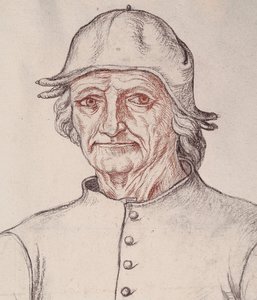
Jeroen Bosch
1450 - 1516 , Nederland
Belangrijkste feiten
- Artistic Movement Or Style: Surrealisme, Symboliek
- Artists Or Movements Influenced By This Artist: ['Pieter Bruegel']
- Date Of Birth: c. 1450
- Date Of Death: 1516
- Full Name: Hieronymus van Aken
- Nationality: Nederlands
- Notable Artworks:
- Tuin der Zotheid
- Oordeel van Laatste
- Ascentie Verlosse
- Place Of Birth: Den Bosch, Nederland