


 Bekijk op ware grootte
 Verstuur
 Delen
Delen
 Details bekijken
 Gids
Gids

 Download
 Vergelijkbare items
 Röntgenonderzoek
 Diavoorstelling
 Statistieken
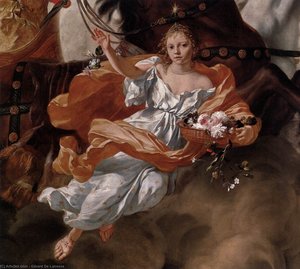
Venice Seated upon the Globe and upon a Lion


 Lees meer
Handgemaakte olieverfreproductie
Met de hand geschilderd in olieverf op canvas in uw gewenste maat en lijst, op bestelling gemaakt door onze kunstenaars. ( Schakel over naar print Schakel over naar digitale afbeeldingen)




P118B $10

P118H $10

P118W $10

P438Z $10

P508JH $12

P508YH $12

P805H $10

P805Z $10

P919BZ $10

P919G $10

P919XJ $10

P959ZH $10

P968JZ $12

W106C $8

W218G $10

W218JH $8

W218Y $10

W307PJ $10

W316G $10

W316PJ $8

W316Y $10

W398PJ $8

W4111J $10

W500HY $15

W500JH $15

W692G $12

W849H $8

W940BG $15

W953PJ $8




Kies uit onze vooraf ingestelde maten die overeenkomen met de originele verhoudingen van het kunstwerk.

U kunt uw eigen afmetingen invoeren om in een specifieke lijst of ruimte te passen. Als de door u gekozen maat niet overeenkomt met de verhoudingen van het originele beeld, zullen we het kunstwerk bijsnijden of het schilderij uitbreiden met extra handgeschilderde elementen. Een digitale mockup wordt ter goedkeuring naar u verzonden voordat de productie begint.
Houd er rekening mee dat de preview op het scherm niet de werkelijke uitsnede of uitbreiding weergeeft. Alleen de mockup toont de uiteindelijke compositie nauwkeurig.
Hoewel aangepaste afmetingen mogelijk zijn, raden we aan een maat uit de vooraf gedefinieerde lijst te selecteren om de originele verhoudingen te behouden.
Na de bestelling zal het team van AllPaintingsStore.com per e-mail contact opnemen met de klant voor instructies en een mockup-voorbeeld sturen.
Wereldwijde levering () binnen 3 tot 4 weken in plaats van de standaard 5 weken. (21 september). Zonder concessies aan de kwaliteit.

Gratis wereldwijde expressverzending

Hoogwaardig linnen canvas

Volledige verzendverzekering

Garantie op terugbetaling van invoerrechten

Garantie op exacte kleurweergave

Retourbeleid van 100 dagen (alleen bij defecten)

100% Geld-terug-garantie

Korting bij meerdere afnames
 De optie voor glas is alleen beschikbaar bij een formaat kleiner dan 110 cm.

Venice Seated upon the Globe and upon a Lion
Reproductiemethode
Formaat reproductie
-


Totaalprijs
$ 258
Venice Seated Upon the Globe and Upon a Lion by ZELOTTI, Giovanni Battista
Giovanni Battista Zelotti’s “Venice Seated Upon the Globe and Upon a Lion,” painted in 1553, stands as a testament to the zenith of Venetian Renaissance art – specifically, the Veronese tradition championed by Palladio's villas. This monumental fresco, housed within the Palazzo Ducale in Venice, captures a scene brimming with mythological grandeur and theological contemplation, reflecting the humanist ideals prevalent during its creation. The artwork depicts Venus Alexandrina, goddess of victory and beauty, majestically positioned on a colossal rock formation dominating the composition’s lower half. Her serene gaze directs upwards towards a radiant celestial sphere – a deliberate allusion to Ptolemy's geocentric model of the universe – symbolizing divine authority and cosmic order. Zelotti skillfully employs atmospheric perspective, blurring distant elements with subtle gradations of color and luminosity, creating an illusion of depth that draws the viewer into this ethereal realm. The rock itself is rendered with meticulous detail, showcasing textured surfaces and sculptural contours, emphasizing its stability and permanence as a foundation for Venus’s regal posture. A lion rests faithfully at Venus's feet, representing strength and nobility – attributes traditionally associated with royalty and divine protection. This juxtaposition of feminine grace and masculine fortitude underscores the artwork’s overarching theme: triumph over adversity and affirmation of virtue. Zelotti’s masterful brushwork contributes to the fresco’s dramatic effect, layering pigments to build up rich textures and capturing the interplay of light and shadow with remarkable accuracy. The artist's technique is characterized by a deliberate blending of colors—a hallmark of Venetian painting—resulting in luminous hues that imbue the scene with an aura of splendor. The fresco’s stylistic influences are undeniably rooted in the Mannerist movement, yet Zelotti retains the humanist spirit characteristic of Renaissance Venice. He skillfully integrates classical motifs – Venus and the celestial sphere – into a narrative framework imbued with religious symbolism. The artwork evokes feelings of awe and reverence, prompting contemplation on themes of divine grace and human aspiration. It serves as an enduring emblem of Venetian artistic excellence and continues to inspire admiration for its compositional brilliance and expressive power.- Artist: Giovanni Battista Zelotti
- Year Painted: 1553
- Location: Palazzo Ducale, Venice
- Style: Mannerist
- Medium: Fresco
Gerelateerde kunstwerken



Biografie van de kunstenaar
The Veronese Echo: The Life and Legacy of Giovanni Battista Zelotti
In the vibrant tapestry of the Venetian Renaissance, few threads are as intricately woven into the architectural grandeur of Italy as those spun by Giovanni Battista Zelotti. Born in Verona in 1526, a city then flourishing under the dominion of Venice, Zelotti emerged not merely as a painter, but as a master of atmosphere and narrative scale. His early years were shaped by the rigorous traditions of masters such as Antonio Badile and Domenico Riccio, and his artistic lineage suggests a profound connection to the legendary Titian. This formative period instilled in him a command over color and light that would later allow him to transform static walls into breathing, mythological landscapes.
Zelotti’s journey through the artistic hubs of Padua and Venice allowed him to absorb the evolving stylistic cues of his era. While often viewed as a contemporary and collaborator of Paolo Veronese, Zelotti possessed a unique ability to blend the classical ideals of the High Renaissance with an emerging sense of drama. His work became a bridge between the balanced compositions of the past and the more opulent, emotive qualities that would eventually characterize the Baroque period. This evolution is most evident in his mastery of fresco, a medium that required both immense physical stamina and a sophisticated understanding of how light interacts with plaster and pigment.
Architectural Symbiosis and the Palladian Connection
One of the most enduring aspects of Zelotti’s career was his profound synergy with architecture, most notably through his collaborations with the visionary Andrea Palladio. The relationship between painter and architect reached its zenith in the decoration of magnificent villas, such as Villa Emo and Villa Foscari. In these spaces, Zelotti did not merely decorate; he expanded the architectural boundaries. Alongside fellow artists like Bernardino India and Battista Franco, he injected a sense of movement and mythological depth into Palladio’s structured, classical designs.
His frescoes served to animate the stone and marble, bringing the heavens and ancient legends down to the earthly realm of the Venetian nobility. This ability to harmonize with monumental structures ensured that his work became an inseparable part of the Italian landscape. Whether decorating a private villa or a public monument, Zelotti’s hand was always present to provide the narrative soul to Palladio's structural bones.
A Monumental Presence in Venice and Beyond
The true scale of Zelotti’s ambition is perhaps best witnessed in his contributions to the most prestigious institutions of the Venetian Republic. The Doge’s Palace, a symbol of Venetian power and splendor, holds within its ceilings the masterful work of Zelotti, specifically his depiction of “Santi Giovanni e Paolo.” Here, his use of intricate detail and masterful perspective creates an illusion of infinite height, a testament to his skill in managing large-scale compositions. His work in the Biblioteca Marciana further solidified his reputation as a scholar-painter, as he utilized classical mythology to celebrate the humanist ideals that defined the age.
Beyond the borders of Venice, Zelotti’s influence traveled to Mantua, where he engaged with the prestigious Palazzo Gonzaga, continuing the rich Veronese tradition in new territories. His stylistic hallmarks—characterized by:
- Dramatic Lighting: A precursor to the Baroque, using shadow to create depth and emotion.
- Opulent Ornamentation: A lushness of detail that reflected the wealth and prestige of his patrons.
- Mythological Narrative: The seamless integration of Greco-Roman legends into contemporary settings.
Though history sometimes shadows him in the wake of Veronese, Giovanni Battista Zelotti remains an indispensable figure. He was a painter who understood that art is not merely something to be viewed, but something to be inhabited, turning the very walls of Italy's greatest palaces into windows onto the divine and the ancient.

Giovanni Battista Zelotti
1526 - 1578 , Italy
Snelle feiten
- Artistic Movement Or Style: Late Renaissance
- Artists Or Movements Influenced By This Artist: ['Andrea Palladio']
- Artists Who Influenced This Artist:
- Antonio Badile
- Domenico Riccio
- Titian
- Date Of Birth: 1526 Verona Italy
- Date Of Death: 1578 Mantova Italy
- Full Name: Giovanni Battista Zelotti
- Nationality: Italian
- Notable Artworks:
- View of the Room of Sofonisba
- Venice Seated upon the Globe and upon a Lion
- Place Of Birth: Verona Italy
Gerelateerde artikelen

The Enduring Power of Painting: A Historical & Contemporary Exploration of Form and Emotion
Explore the rich history & enduring techniques of oil painting with AllPaintingsStore. Discover masterpieces, learn about art collecting, and find authentic handmade reproductions crafted by skilled artists.

The Enduring Legacy of Oil on Canvas: Technique, History & Aesthetic Impact
Explore the rich history & techniques of oil painting – from Renaissance masters to Impressionism. Discover pigments, layering methods, and why this timeless medium endures. Expert insights for artists & art enthusiasts.

Golden Light & Rich Color: The Timeless Magic of Venetian Renaissance Art
Explore the luminous beauty of Venetian Renaissance art. Discover how masters like Titian used colorito and golden light to redefine painting through texture, emotion, and atmospheric brilliance in a masterclass of historical artistry.

Barokke Pracht: Kunst die Grootsheid in Huis Brengt
Ontdek de barokke pracht! Leer over de geschiedenis, kenmerken en toepassingen van deze weelderige kunststijl in uw interieur. Laat u inspireren door meesters en breng grootsheid in huis.

The Dramatic Flourish: Exploring the Baroque Movement's Enduring Legacy in Art History
Explore the dramatic world of Baroque art! Discover iconic artists like Caravaggio & Rubens, defining techniques, and its lasting impact on art history. Expert insights for collectors & enthusiasts at AllPaintingsStore.


