


 Bekijk op ware grootte
 Verstuur
 Delen
Delen
 Details bekijken

 Download
 Vergelijkbare werken
 Röntgenonderzoek
 Diavoorstelling
Denis Diderot


 Lees meer
Handgemaakte olieverfreproductie
Met de hand geschilderd in olieverf op canvas in uw gewenste maat en lijst, op bestelling gemaakt door onze kunstenaars. ( Bestel een print Naar afbeelding wisselen)




P118B $10

P118H $10

P118W $10

P438Z $10

P508JH $12

P508YH $12

P805H $10

P805Z $10

P919BZ $10

P919G $10

P919XJ $10

P959ZH $10

P968JZ $12

W106C $8

W218G $10

W218JH $8

W218Y $10

W307PJ $10

W316G $10

W316PJ $8

W316Y $10

W398PJ $8

W4111J $10

W500HY $15

W500JH $15

W692G $12

W849H $8

W940BG $15

W953PJ $8




Kies uit onze vooraf ingestelde maten die overeenkomen met de originele verhoudingen van het kunstwerk.

U kunt uw eigen afmetingen invoeren om in een specifieke lijst of ruimte te passen. Als de door u gekozen maat niet overeenkomt met de verhoudingen van het originele beeld, zullen we het kunstwerk bijsnijden of het schilderij uitbreiden met extra handgeschilderde elementen. Een digitale mockup wordt ter goedkeuring naar u verzonden voordat de productie begint.
Houd er rekening mee dat de preview op het scherm niet de werkelijke uitsnede of uitbreiding weergeeft. Alleen de mockup toont de uiteindelijke compositie nauwkeurig.
Hoewel aangepaste afmetingen mogelijk zijn, raden we aan een maat uit de vooraf gedefinieerde lijst te selecteren om de originele verhoudingen te behouden.
Na de bestelling zal het team van AllPaintingsStore.com per e-mail contact opnemen met de klant voor instructies en een mockup-voorbeeld sturen.
Wereldwijde levering () binnen 3 tot 4 weken in plaats van de standaard 5 weken. (6 augustus). Zonder concessies aan de kwaliteit.

Gratis wereldwijde expressverzending

Hoogwaardig linnen canvas

Volledige verzendverzekering

Garantie op terugbetaling van invoerrechten

Garantie op exacte kleurweergave

60 dagen retourbeleid (alleen bij defecten)

100% Geld-terug-garantie

Korting bij meerdere afnames
 De optie voor glas is alleen beschikbaar bij een formaat kleiner dan 110 cm.

Denis Diderot
Medium reproductie
Formaat reproductie
-


Totaalprijs
$ 258
Beschrijving kunstwerk
Denis Diderot: A Portrait of Enlightenment Thought
Jean-Antoine Houdon’s “Denis Diderot” stands as an emblem of the French Enlightenment—a testament to the artist's dedication to capturing not merely likeness, but intellectual essence. Completed in 1773, this marble bust transcends mere representation; it embodies the spirit of a pivotal figure who championed reason and challenged established dogma during a transformative era. The sculpture’s placement in profile maximizes detail, allowing viewers to appreciate Diderot's contemplative gaze and meticulously crafted hairstyle—elements that speak volumes about his intellectual pursuits and social standing.- Style: Neoclassical Sculpture – Houdon skillfully employed classical ideals of beauty and proportion, mirroring the artistic sensibilities prevalent in Europe during the late 18th century. This stylistic choice reflects a deliberate rejection of Rococo frivolity, favoring clarity, restraint, and an emphasis on idealized form.
- Technique: Houdon’s mastery lay in subtractive sculpting—carefully removing marble chips to reveal the desired shape beneath. The sculptor utilized tools like chisels and hammers with remarkable precision, achieving a surface texture that captures both smoothness and subtle variations, mirroring the meticulous craftsmanship of the time.
- Material: Crafted from Carrara Marble – This choice of material underscores the sculpture’s permanence and prestige, aligning with Enlightenment values of rationality and enduring legacy. The marble's luminosity contributes to the bust’s dramatic effect, highlighting Diderot’s facial features and conveying a sense of dignified solemnity.
- Notable Copy: A remarkable copy of Houdon's bust resides in the Virginia State Capitol Rotunda, showcasing the sculptor's influence on American art and culture.
Gerelateerde kunstwerken


Biografie van de kunstenaar
A Sculptor of the Enlightenment
Jean-Antoine Houdon, born in Versailles in 1741, stands as a pivotal figure bridging the Rococo and Neoclassical eras—a sculptor whose work embodies the intellectual fervor and evolving aesthetic sensibilities of the eighteenth century. His life unfolded amidst dramatic shifts in French society, from the waning opulence of the monarchy through the revolutionary upheaval and Napoleonic ascendance. Yet, Houdon remained remarkably consistent in his artistic vision: to capture not merely a likeness, but the very essence of his subjects—their intellect, character, and inner lives—in enduring marble and bronze. This dedication stemmed from an early aptitude for sculpture, nurtured by formal training at the Académie Royale de Peinture et de Sculpture beginning in 1752 under esteemed sculptors like René-Michel Slodtz, Jean-Baptiste Lemoyne, and Jean-Baptiste Pigalle. His subsequent enrollment at the École Royale des Élèves Protégés from 1761 to 1764 solidified his foundation, culminating in a triumphant win of the Prix de Rome competition in 1761—an award that granted him invaluable study time with classical art firsthand in Italy, an experience profoundly shaping his aesthetic sensibilities.The Art of Verisimilitude and Psychological Insight
Houdon’s sculptures are immediately recognizable for their breathtaking realism and meticulous attention to detail. He wasn't content with simply replicating physical features; he sought to penetrate the surface, revealing the personality and intellect within. This commitment to verisimilitude arose from a deep fascination with anatomy—evident in his celebrated *Muscleman Sideview* bronze sculpture—and an unwavering dedication to observation. Unlike many contemporaries who idealized their subjects, Houdon embraced imperfections, believing they contributed to a more truthful and compelling portrayal. He employed innovative techniques, including taking casts directly from life, allowing him to capture remarkable nuance and subtlety that distinguished his work from others of the time. This approach was particularly evident in his portrait busts, which became his signature achievement. These weren’t merely static representations; they were dynamic studies of character, imbued with psychological depth and emotional resonance. Houdon's ability to convey not just *how* someone looked, but *who* they were—their virtues, their passions, their anxieties—was a revolutionary departure from prevailing artistic conventions. He achieved this through subtle nuances in expression, posture, and the rendering of details like the eyes—often carved with a slight concavity to capture the play of light and suggest inner thought. This meticulous attention to detail wasn’t merely stylistic; it reflected Houdon's profound understanding of human psychology and his conviction that sculpture could illuminate the complexities of human experience.Immortalizing an Era: A Pantheon of Enlightenment Figures
The breadth of Houdon’s clientele reads as a veritable who’s who of the Enlightenment—a testament to his reputation for capturing not just physical likeness but also intellectual brilliance and moral character. He immortalized some of the most influential thinkers, writers, politicians, and leaders of his time. His terracotta portrait of Denis Diderot captures the philosopher’s intellectual intensity and unconventional spirit with remarkable sensitivity, reflecting the spirit of rational inquiry that defined the era. Benjamin Franklin, portrayed during his diplomatic mission to France, appears as a man of wisdom and pragmatism, his gaze both shrewd and benevolent—a figure embodying Enlightenment ideals of reason and diplomacy. Jean-Jacques Rousseau, sculpted with characteristic empathy, embodies both the passion and melancholy that defined his philosophy—a poignant portrayal capturing the complexities of human emotion. Perhaps most famously, Houdon sculpted Voltaire—creating multiple versions of the celebrated writer, including a dynamic seated figure for the Comédie-Française that captures his wit and intellectual energy. This sculpture exemplifies Houdon’s mastery of portraying not just appearance but also inner life—a feat rarely accomplished by artists of his time. Beyond these intellectual giants, Houdon received commissions from royalty, notably Louis XVI, and rising political figures like Napoleon Bonaparte, demonstrating the widespread admiration for his artistic talent and skill.Influences and Artistic Development
Houdon’s formative years were deeply impacted by the Baroque tradition—particularly the work of Bernini—which instilled in him a fascination with dynamism and theatricality. However, he swiftly embraced the neoclassical aesthetic championed by artists like Michelangelo and Donatello, prioritizing clarity, balance, and idealized form. His enrollment at the École Royale des Élèves Protégés provided invaluable exposure to classical art firsthand, fostering his understanding of sculptural principles rooted in antiquity. The Prix de Rome competition served as a catalyst for artistic innovation—allowing Houdon to hone his skills in Rome and develop his distinctive style. During this period, he absorbed lessons from the prevailing artistic currents—embracing both naturalism and classicizing themes—resulting in sculptures that seamlessly blended these influences. His meticulous anatomical studies—most notably *L’Écorché*—became foundational to his sculptural technique, establishing him as a pioneer in capturing human anatomy with unprecedented accuracy. Houdon's unwavering dedication to observation and experimentation cemented his legacy as one of the most influential sculptors of his time.Legacy and Enduring Influence
Jean-Antoine Houdon’s impact on the world of sculpture is undeniable. He elevated portraiture to an art form capable of profound psychological insight and historical documentation—a distinction that set him apart from many of his contemporaries. His dedication to realism, combined with his ability to capture the essence of his subjects, established a new standard for sculptural representation. Throughout his life, Houdon received widespread recognition, being named a Chevalier de la Légion d’honneur in 1804 and a Chevalier de l'Empire in 1809—testaments to his esteemed status within French society. His sculptures remain highly valued today, not only for their artistic merit but also for the invaluable glimpses they provide into the lives and times of the Enlightenment era. Houdon’s meticulous attention to detail—particularly in capturing the subtleties of human expression—continues to inspire artists and scholars alike. Houdon's work serves as a powerful reminder of the enduring power of art to capture the human spirit and preserve it for generations to come His influence can be seen in the works of countless sculptors who followed, solidifying his position as a master sculptor whose legacy continues to resonate with audiences worldwide.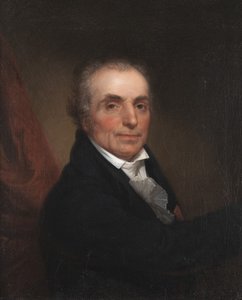
Jean-Antoine Houdon
1741 - 1828 , Frankrijk
Snelle feiten
- Artistic Movement Or Style: Neoclassicisme Realisme
- Artists Or Movements Influenced By This Artist: ['Canova']
- Artists Who Influenced This Artist:
- René-Michel Slodtz
- Jean-Baptiste Lemoyne
- Jean-Baptiste Pigalle
- Bernini
- Date Of Birth: 25 maart 1741
- Full Name: Jean-Antoine Houdon
- Nationality: Frans
- Notable Artworks:
- George Washington statue
- Voltaire
- Benjamin Franklin
- Place Of Birth: Versailles, Frankrijk
Gerelateerde artikelen

The Revival of Antiquity: Exploring the Ideals & Innovations of Neoclassical Art
Explore the revival of classical art with our deep dive into Neoclassicism! Discover key artists like Jacques-Louis David, Enlightenment influences & lasting impact on art history. Learn more now.

The Revival of Antiquity: Exploring Ideals of Beauty & Power in Neoclassical Portraiture
Explore the captivating world of Neoclassical portraiture! Discover the power & ideals behind masterpieces by David, Girodet & more. Expert analysis, custom reproductions & art appraisal at AllPaintingsStore.

The Enduring Allure of Marble in Art History: From Classical Sculpture to Modern Abstraction
Explore the captivating history of marble sculpture from ancient Greece to modern art. Discover renowned artists like Canova & Michelangelo, carving techniques, and investment insights at AllPaintingsStore.

The Enduring Legacy of Neoclassical Art: Order, Reason & Antiquity's Revival
Explore the enduring legacy of Neoclassical art! Discover masterpieces by David, Girodet & Garnier. Expert analysis, custom reproductions & art appraisal at AllPaintingsStore.

The Revival of Antiquity: Exploring Neoclassical Art's Ideals & Enduring Legacy
Explore the revival of classical ideals in Neoclassical art! Discover Jacques-Louis David & the movement's impact on painting, sculpture & architecture. Expert insights & high-quality reproductions at AllPaintingsStore.





