A Shadowy Master of Bruges: Unraveling the Enigma of Adriaen Isenbrant
Adriaen Isenbrant, or Ysenbrandt as he is sometimes known, remains one of the most elusive figures in Northern Renaissance painting. Born around 1490, likely in either Haarlem or Antwerp, his life unfolded amidst the burgeoning artistic climate of Bruges, yet a definitive body of work attributable solely to his hand continues to tantalize and frustrate art historians. Documentary evidence paints a picture of a successful and respected artist, deeply embedded within the guild system and enjoying patronage from wealthy merchants and traders, but concrete links between this thriving workshop leader and surviving paintings remain stubbornly scarce. This has led to decades of scholarly debate, with Isenbrant variously proposed as the author of works previously attributed to Gerard David and Jan Mostaert – earning him the moniker “Pseudo-Mostaert” – or even dismissed as a convenient label for a collective of anonymous artists.Life and Guild Affiliations in a Flourishing City
Isenbrant’s documented life begins in 1510, when he established himself as a burgher of Bruges. He swiftly ascended within the city's artistic community, becoming a master in both the painters’ guild of St. Luke and the goldsmiths’ guild of St. Elooi that same year. This dual membership speaks to the interconnectedness of crafts during the period and suggests Isenbrant possessed a versatile skillset – perhaps combining technical painting with metalworking or decorative arts. Over the following decades, he repeatedly held positions of responsibility within the guilds – serving nine times as a “deacon” (vinder) and twice as governor (treasurer) – demonstrating his standing among his peers. These roles involved managing guild affairs, overseeing apprenticeships, and ensuring the quality of artistic production, reflecting a position of considerable influence. His workshop flourished in the Korte Vlaminckstraat, strategically located near those of Gerard David and Hans Memling, placing him at the heart of Bruges’ artistic activity – a vibrant hub attracting wealth and refinement. The city itself was a magnet for wealth and refinement; its thriving merchant class eager to commission diptychs, portraits, and devotional pieces that reflected their status and piety. Isenbrant catered primarily to this private clientele, though he also produced works without specific commissions, indicating a robust demand for his art. Legal records from 1534 reveal the scale of his operation – a suit brought against Jan van Eyck (not the celebrated Jan van Eyck) for failing to deliver paintings Isenbrant had ordered for completion – suggesting a complex network of artistic transactions and potentially even disputes within the guild system. He also acted as an agent in Bruges for Adriaan Provoost, further solidifying his position within the artistic network, demonstrating a shrewd business acumen alongside his artistic talent.Artistic Influences and a Conservative Style
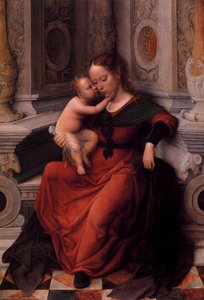
The influence of Gerard David is perhaps the most consistently cited element in discussions surrounding Isenbrant’s style. David's compositional strategies – particularly the use of receding landscapes and pyramidal arrangements – and his meticulous attention to detail are frequently echoed in works tentatively attributed to Isenbrant. However, unlike David’s increasingly refined and expressive approach, Isenbrant’s work – as it is tentatively identified – tends towards a more conservative aesthetic rooted in the traditions of Early Netherlandish painting. This manifests in meticulous detail, a restrained emotional palette, and a focus on precise rendering rather than dramatic innovation. The paintings attributed to him often depict religious subjects—the *Seven Sorrows of the Virgin* being particularly prominent—and devotional scenes intended for private contemplation. Many scholars believe that Isenbrant was influenced by the Italian Renaissance, specifically the work of artists like Masaccio and Botticelli, but this influence appears muted in his output, suggesting a deliberate choice to prioritize established Northern Netherlandish conventions. He seems to have absorbed these new ideas without fully embracing them, resulting in a style that is both familiar and subtly distinct. There is speculation that he may have travelled to Genoa in 1511 alongside Joachim Patinir and Gerard David, potentially exposing him to Italian artistic currents – though the extent of this influence remains unclear and largely circumstantial.The Problem of Attribution and Lasting Legacy
The core challenge surrounding Isenbrant lies in the absence of securely attributed paintings. Despite being described by contemporary sources as a “famous and well-to-do painter,” no work can be definitively declared his own. Georges Hulin de Loo, a prominent art historian, proposed in 1902 that Isenbrant was responsible for a substantial body of works previously assigned to David and Mostaert, but this attribution remains contentious. Many scholars now view “Isenbrant” as a useful designation for a group of paintings sharing stylistic characteristics rather than the product of a single artist’s hand – essentially a collective workshop style. Documents reveal that Isenbrant engaged in export trade, sending paintings to Spain, indicating an international reputation, yet these specific works have not been identified with certainty. He died in Bruges in 1551, leaving behind a considerable estate – including four houses – inherited by his children from two marriages and one acknowledged illegitimate daughter. Despite the enduring mystery surrounding his oeuvre, Adriaen Isenbrant’s story serves as a compelling reminder of the complexities inherent in art historical attribution and the often-tenuous connection between documented life and surviving artistic legacy. He remains a shadowy master, a pivotal figure whose true contribution to Northern Renaissance painting continues to beckon further research and reevaluation.Key Characteristics of Works Attributed to Isenbrant
- Conservative Style: A continuation of Early Netherlandish traditions with meticulous detail and restrained emotion.
- Religious Subject Matter: Predominantly devotional scenes, particularly depictions of the Virgin Mary and the Passion of Christ.
- Influence of Gerard David: Evident in compositional arrangements and landscape backgrounds.
- Precise Rendering: A focus on accurate representation rather than dramatic innovation.
- Private Patronage: Primarily commissioned by wealthy merchants and individuals for personal devotion.