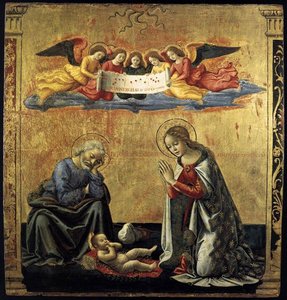
A Florentine Garland: The Life and Art of Domenico Ghirlandaio
Domenico di Tommaso Curradi di Doffo Bigordi, a name forever linked to the vibrant artistic heart of Florence, was born in 1449. He is best known as Domenico Ghirlandaio – “Il Ghirlandaio,” a moniker that speaks not to floral arrangements but to his father’s craft: the creation of exquisite, jewel-like headdresses adorning Florentine women during his youth. This familial connection to artistry, specifically the intricate metalwork and ornamentation of goldsmithery, instilled in young Domenico a profound appreciation for detail, precision, and the beauty of embellishment – qualities that would become the very foundation of his artistic vision. Initially apprenticed to his father, mastering the delicate techniques of metalworking, he soon transitioned to painting under the tutelage of Alesso Baldovinetti, absorbing the fundamental principles of fresco and mosaic that defined Florentine art during this formative period. Some scholars also suggest a brief but significant influence from Andrea del Verrocchio, placing him within a generation of masters who were reshaping the very definition of Renaissance aesthetics.Bridging the Sacred and the Secular
Ghirlandaio’s true genius lay in his remarkable ability to seamlessly intertwine religious narratives with the everyday realities of Florentine life. He didn't depict biblical figures as idealized, distant ancestors; instead, he populated his frescoes with recognizable Florentines – merchants bustling through their trades, townsfolk engaged in their daily routines, and even members of prominent patron families. This innovative approach injected a startling sense of realism and immediacy into his work, grounding the divine within the tangible world. His workshop, a dynamic hub of creativity, wasn’t just a studio; it was a family enterprise, bustling with the talents of his brothers Davide and Benedetto, alongside his brother-in-law Sebastiano Mainardi – and most notably, the burgeoning genius of Michelangelo Buonarroti, who spent several years as an apprentice under Ghirlandaio's guidance. The sheer efficiency and productivity of this collaborative environment allowed Ghirlandaio to undertake ambitious commissions that solidified his reputation as one of Florence’s foremost artists. Notable examples include the breathtaking fresco cycles within the Sassetti Chapel of Santa Trinita (1482-1485), a vibrant tapestry depicting the life of St. Francis, interwoven with scenes of Florentine commerce and social interaction – a testament to Ghirlandaio's ability to seamlessly blend the sacred and the secular. Similarly, his *Apotheosis of St. Zenobius* in the Palazzo Vecchio showcased his mastery of perspective and composition, creating a monumental fresco that celebrated the city’s patron saint.Rome and the Sistine Chapel
The pinnacle of Ghirlandaio's career arrived in 1483 when he was summoned to Rome by Pope Sixtus IV. The pontiff sought to assemble a team of Florence’s most skilled artists – including Botticelli, Perugino, and Rossetti – to adorn the walls of the newly constructed Sistine Chapel. Ghirlandaio's contribution, *The Vocation of the Apostles*, is a dynamic and captivating scene depicting Christ calling Peter and Andrew to follow him. While often overshadowed by Michelangelo’s later ceiling frescoes, this work demonstrates Ghirlandaio’s exceptional skill in narrative storytelling and his ability to create compelling compositions filled with expressive figures. Crucially, it also provided a vital learning experience for the young Michelangelo Buonarroti, who observed Ghirlandaio's techniques firsthand, absorbing invaluable lessons that would profoundly influence his own artistic development – a testament to the interconnectedness of Renaissance art.The Legacy of Realism and Influence
Domenico Ghirlandaio’s untimely death in 1494 at the age of forty-five tragically cut short a promising career. However, his impact on the course of Renaissance art was undeniably profound. He left behind a legacy not only through his numerous frescoes and paintings but also through the artists he trained – most notably Michelangelo. Ghirlandaio’s unwavering commitment to realism, his innovative ability to portray contemporary life within religious contexts, and his masterful command of color and composition served as a guiding light for generations of painters who followed. While perhaps less universally celebrated than figures like Leonardo da Vinci or Raphael, Domenico Ghirlandaio's work offers a unique and intimate glimpse into the vibrant world of Renaissance Florence – a city where faith, commerce, and artistic innovation converged to create an era of unparalleled cultural achievement. His paintings remain as luminous testaments to his skill, inviting viewers to step back in time and witness the beauty and dynamism of a bygone age.Notable Works
- St. Jerome in His Study (1480): A companion piece to Botticelli’s *Saint Augustine*, showcasing Ghirlandaio's meticulous attention to detail and his mastery of fresco technique.
- The Last Supper (Ognissanti, 1480): A groundbreaking work that significantly influenced subsequent depictions of this iconic scene, including Leonardo da Vinci’s masterpiece.
- Frescoes in the Sassetti Chapel (Santa Trinita, 1482-1485): A comprehensive cycle illustrating the life of St. Francis, celebrated for its remarkably realistic portrayal of Florentine society and daily life.
- The Vocation of the Apostles (Sistine Chapel, 1483): A significant contribution to one of the world’s most iconic artistic spaces, demonstrating Ghirlandaio's narrative skill and compositional prowess.
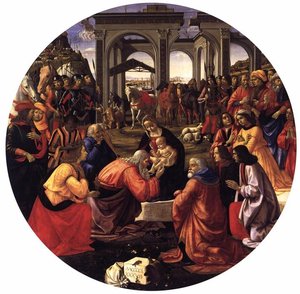
- Adoration of the Magi (Uffizi Gallery, 1487): A vibrant and richly detailed depiction showcasing Ghirlandaio's exceptional command of color, composition, and perspective.