


 Forhåndsvisning
 Send
Send Del med andre
 Vis detaljer

 Last ned bildet
 Liknende objekter
 Røntgenundersøkelse
 Lysbildefremvisning
Portinari Altarpiece, St. Mary Magdalen og St. Margaret med Maria Baroncelli og Datter Margherita Portinari, Høyre Sidepanel
 Northern Renaissance
 1475
1475 253.0 x 141.0 cm
 Galleria degli Uffizi
 Vis hele teksten
Håndlaget oljereproduksjon
Håndmalt olje på lerret i din valgte størrelse og ramme, laget på bestilling av våre kunstnere. ( Kjøp trykk Kjøp bilde)




P118B $10

P118H $10

P118W $10

P438Z $10

P508JH $12

P508YH $12

P805H $10

P805Z $10

P919BZ $10

P919G $10

P919XJ $10

P959ZH $10

P968JZ $12

W106C $8

W218G $10

W218JH $8

W218Y $10

W307PJ $10

W316G $10

W316PJ $8

W316Y $10

W398PJ $8

W4111J $10

W500HY $15

W500JH $15

W692G $12

W849H $8

W940BG $15

W953PJ $8




Velg mellom våre forhåndsdefinerte størrelser som bevarer kunstverkets opprinnelige proporsjoner.

Du kan angi egne mål for å tilpasse en spesifikk ramme eller plass. Dersom den valgte størrelsen ikke samsvarer med originalbildets proporsjoner, vil vi enten beskjære kunstverket eller utvide maleriet med ytterligere håndmalte elementer. En digital mockup vil bli sendt til din godkjenning før produksjonen starter.
Vennligst merk at forhåndsvisningen på skjermen ikke gjenspeiler den faktiske beskjæringen eller utvidelsen. Kun mockuppen vil vise den endelige komposisjonen nøyaktig.
Selv om tilpassede størrelser er tilgjengelige, anbefaler vi å velge et mål fra den forhåndsdefinerte listen for å bevare de originale proporsjonene.
Etter bestilling vil AllPaintingsStore.com-teamet sende e-post til kunden for instruksjoner og sende et utkast (mockup) som forhåndsvisning.
Verdensomspennende levering () på 3–4 uker i stedet for standard 5 uker. (19 August). Ingen kompromisser med kvaliteten.

Gratis ekspressfrakt over hele verden

Lerretsduk av høykvalitets lin

Full forsikring under transport

Garanti for refusjon av toll og importavgifter

Garantert korrekt fargegjengivelse

60 dagers returrett (kun ved feil)

100% pengene tilbake-garanti

Rabatt ved flere kjøp
 Glassalternativet er kun tilgjengelig i størrelser under 110 cm

Portinari Altarpiece, St. Mary Magdalen og St. Margaret med Maria Baroncelli og Datter Margherita Portinari, Høyre Sidepanel
Teknikk for reproduksjon
Størrelse på reproduksjon
-


Endelig pris
$ 258
Beskrivelse av kunstverket
Hugo van der Goes’s Portinari Altarpiece: A Window into Renaissance Faith
Hugo van der Goes’s *The Portinari Altarpiece*, completed around 1475, stands as a monumental achievement of Flemish realism and a cornerstone of Northern Renaissance art. Commissioned by Tommaso di Folco Portinari, a Florentine banker deeply invested in the burgeoning humanist spirit of Italy, this triptych transcends mere depiction; it embodies an ambitious exploration of faith, family piety, and artistic innovation.
- Subject Matter: The artwork portrays St. Mary Magdalen and St. Margaret alongside Maria Baroncelli and her daughter Margherita Portinari—members of a prominent Florentine family who sought to honor God through art. The central panel depicts the Virgin Mary cradling Jesus Christ, while flanking doors showcase scenes from the life of Saint Joseph and Saint Mary Magdalene.
- Style & Technique: Van der Goes’s masterful use of oil paint on panel revolutionized artistic practice. Unlike earlier Flemish painters who favored tempera—a technique that produced muted colors—Van der Goes achieved unparalleled luminosity and textural richness through layering thin glazes of pigment, resulting in a breathtakingly realistic portrayal of drapery, skin tones, and the landscape backdrop.
- Historical Context: Created during a period of intense cultural exchange between Northern Europe and Italy, *The Portinari Altarpiece* reflects the humanist ideals championed by figures like Leonardo da Vinci and Michelangelo. It represents a decisive break from medieval artistic conventions, signaling a shift towards observation and psychological depth—characteristics that would define the Renaissance.
A Symphony of Color and Light
The dominant hue is crimson – a bold choice reflecting both religious devotion and the family’s prestige. Van der Goes skillfully manipulated light to create dramatic effects, illuminating faces and drapery with an ethereal glow. This technique—known as *chiaroscuro*—was groundbreaking for its time, imbuing the figures with palpable emotion and conveying a sense of solemn grandeur.
- Detailed Observation: Van der Goes’s meticulous attention to detail is evident in every aspect of the painting. From the folds of Mary Magdalen's robe to the texture of the barren trees in the landscape, he captured the nuances of naturalism with astonishing accuracy—a hallmark of Flemish art.
- Symbolic Significance: The inclusion of Saint Anthony’s emblem – a tau stick – symbolizes protection against illness and underscores the importance of piety within the family. Furthermore, the Virgin Mary's serene gaze embodies compassion and divine grace, inviting contemplation on themes of faith and redemption.
Legacy & Influence
*The Portinari Altarpiece* profoundly impacted subsequent artists in Florence and beyond. Domenico Ghirlandaio’s *Adoration of the Shepherds*, painted just two years later, demonstrates a direct influence from Van der Goes's groundbreaking technique—specifically, the luminous rendering of drapery and skin tones. This masterpiece cemented Hugo van der Goes’s place as one of the foremost painters of his era, securing his reputation as an innovator who ushered in a new age of artistic expression.
Lignende kunstverk


Om kunstneren
A Pioneer of Flemish Realism: The Life and Art of Hugo van der Goes
Born around 1440 in the vibrant artistic hub of Ghent, Belgium, Hugo van der Goes emerged as a pivotal figure in the Northern Renaissance. Though shrouded in some mystery—details of his early life remain scarce—his impact on the development of painting during the latter half of the 15th century is undeniable. Van der Goes wasn’t merely a painter; he was an innovator who profoundly altered the course of artistic expression, influencing masters both within Flanders and across the burgeoning Italian Renaissance. He entered the Ghent painters' guild in 1467, marking his formal establishment as a master craftsman, yet it was his unique vision—a blend of intense realism, psychological depth, and dramatic composition—that would set him apart. Before Van der Goes, Flemish painting, while technically brilliant, often adhered to established conventions; he dared to break from these traditions, imbuing his work with an unprecedented level of human emotion and tangible reality.Innovation and Artistic Style
Van der Goes’s artistic signature lies in his ability to infuse religious scenes with a startling sense of immediacy and emotional weight. He moved beyond the stylized conventions of earlier Flemish painting, imbuing his figures with a weighty presence and individualized character. His use of color was deliberate and often somber, creating a sense of gravity and spiritual intensity. This wasn’t simply about replicating appearances; it was about conveying inner states—awe, sorrow, reverence—through subtle gestures, expressive faces, and the careful manipulation of light and shadow. His monumental style, characterized by large-scale compositions and imposing figures, further amplified this emotional impact. He didn't shy away from portraying imperfections; his figures often possess a raw, almost unsettling realism that distinguishes them from the more idealized representations common in earlier art. This commitment to depicting humanity in all its complexity was revolutionary for its time, influencing artists who sought to move beyond mere technical skill and explore the depths of human experience. The influence of Jan van Eyck’s meticulous detail is evident, but Van der Goes transcends imitation, forging a style uniquely his own. He pushed the boundaries of oil painting, achieving unprecedented levels of luminosity and texture – techniques that would become hallmarks of Northern Renaissance art.Masterpieces and Lasting Influence
Perhaps Van der Goes’s most celebrated work is the Portinari Altarpiece, commissioned by Tommaso Portinari, an Italian banker residing in Bruges. Completed around 1475, this magnificent triptych—now housed in the Uffizi Gallery in Florence—is a testament to his mastery of composition, color, and psychological insight. The scene depicting the Adoration of the Shepherds is particularly striking, with its dramatic lighting, realistic portrayal of humble figures, and palpable sense of wonder. The altarpiece’s arrival in Italy had a profound effect on Florentine artists, including Domenico Ghirlandaio, who were captivated by its innovative realism and emotional power. Another significant work is The Adoration of the Magi (Monforte Altarpiece), currently residing in Berlin’s Gemäldegalerie. This piece showcases his skill in creating dynamic scenes filled with intricate detail and symbolic meaning. Beyond these iconic works, Van der Goes contributed to numerous civic projects, including heraldic decorations for Charles the Bold’s ceremonial entries into Ghent, demonstrating his versatility as an artist. His influence extended beyond painting; he impacted the development of book illustration through his designs which were disseminated by artists like Alexander Bening.A Life Transformed: From Workshop to Monastery
In a surprising turn of events, at the height of his artistic success in 1477, Van der Goes abruptly closed his bustling workshop and entered the Roode Klooster monastery near Auderghem. This decision remains something of an enigma, though it’s believed to have been driven by a deep spiritual yearning or perhaps a struggle with mental health. Despite taking religious vows as a lay brother, he continued to accept painting commissions, even undertaking the task of evaluating unfinished works by Dieric Bouts for the city of Leuven. However, his final years were marked by increasing bouts of depression and psychological distress. Accounts suggest that he suffered a severe breakdown in 1482, tragically taking his own life shortly thereafter. This poignant end to a brilliant career adds another layer of complexity to the legacy of Hugo van der Goes—a man whose art explored the depths of human emotion while grappling with inner turmoil. The circumstances surrounding his death have fueled speculation for centuries, adding to the mystique that surrounds this remarkable artist.A Legacy Enduring Through Time
Hugo van der Goes’s influence extended far beyond his relatively short lifetime. His innovative techniques and profound psychological insights paved the way for future generations of artists, both in Flanders and Italy. His work can be found today in prestigious museums such as the Musées royaux des Beaux-Arts in Brussels, offering a glimpse into the genius of this pioneering Flemish master. He remains a compelling figure—a testament to the power of art to capture the complexities of the human condition and to transcend cultural boundaries. His legacy continues to inspire awe and admiration, solidifying his place as one of the most important artists of the Northern Renaissance.- His emphasis on realism influenced subsequent generations.
- The Portinari Altarpiece remains a landmark achievement in art history.
- His exploration of psychological depth set a new standard for portraiture and religious painting.

Hugo van der Goes
1440 - 1482 , Belgia
Kort om kunstneren
- Artistic Movement Or Style: Maleri fra tidlig renessanse
- Artists Or Movements Influenced By This Artist: ['Domenico Ghirlandaio']
- Artists Who Influenced This Artist:
- Jan van Eyck
- Dirk Bouts
- Date Of Birth: c. 1440
- Date Of Death: 1482
- Full Name: Hugo van der Goes
- Nationality: Flemish
- Notable Artworks:
- Portinari Altarpiece
- Monforte Altarpiece
- Place Of Birth: Ghent, Belgia
Relaterte artikler
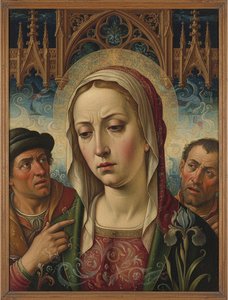
Hugo van der Goes: Devotion, Innovation & the Psychological Depth of Early Netherlandish Painting
Explore the revolutionary art of Hugo van der Goes – a master of Early Netherlandish painting renowned for his dramatic realism, psychological depth & profound influence on Renaissance artists. Discover his iconic works and lasting legacy.

Van Goghs 25 Mesterverk: Kunst, Historie og Inspirasjon til Ditt Hjem
Oppdag Van Goghs 25 mest ikoniske malerier! Fordyp deg i historien, teknikken og følelsene bak mesterverk som Stjernenatt & Solsikker. Finn inspirasjon til ditt hjem med museumskvalitets reproduksjoner på AllPaintingsStore.com.

De 10 Mesterverkene Som Definerte Tidlig Nederlandsk Renessanse | Kunst & Interiør
Utforsk de 10 ikoniske mesterverkene fra tidlig nederlandsk renessanse! Jan van Eyck, Bosch & Van der Weyden – lær om historien og teknikken bak disse flotte oljemaleriene. Finn kunst til ditt hjem på AllPaintingsStore.com.

De 10 Mesterverkene Som Definerte Tidlig Nederlandsk Maleri | Kunst og Interiør
Utforsk de 10 mest ikoniske verkene fra tidlig nederlandsk maleri! Lær om Jan van Eyck, Robert Campin og renessansens mestere. Finn kunsttrykk av høy kvalitet og interiørinspirasjon på AllPaintingsStore.com – ditt hjem fortjener et mesterverk.
Rembrandts Mesterverk: Topp 25 Kunstverk for Din Vegg | AllPaintingsStore.no
Utforsk Rembrandts 25 mest ikoniske kunstverk! Oppdag historiene bak mestermalerier, portretter og bibelske scener fra den nederlandske barokken. Finn museumskvalitets reproduksjoner & interiørinspirasjon på AllPaintingsStore.com.





