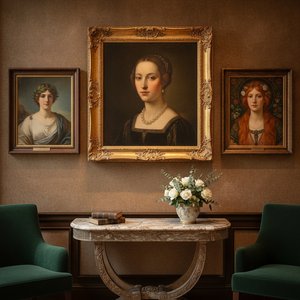
Digital Painting vs. Oil on Canvas: A Professional Procurement Guide for Hotel Designers and Interior Architects
A professional procurement guide for hotel designers comparing digital painting and oil on canvas. Learn to balance tactile impasto textures with digital precision while managing budgets, durability, and large-scale logistics for hospitality art installations.
Introduction: Defining the Mediums for Large-Scale Hospitality Projects
In the high-stakes arena of hospitality design, the selection of wall art is far more than a decorative afterthought; it is a fundamental component of brand identity and spatial atmosphere. For the procurement manager or interior designer tasked with furnishing a new hotel wing or a flagship restaurant, the decision often rests on a complex tension between two distinct worlds: the timeless, tactile allure of oil on canvas and the crisp, limitless precision of digital painting. As we navigate the requirements of modern commercial spaces, understanding these mediums is essential for creating environments that resonate with luxury and permanence. Whether one is seeking the sculptural weight of a hand-painted reproduction or the streamlined efficiency of high-resolution digital imagery, the choice dictates not only the visual narrative of the property but also the long-term operational considerations of maintenance, durability, and aesthetic impact.
Tactile Depth vs. Visual Precision: Evaluating Impasto Oils and Digital Clarity
Impasto is a technique used in painting where paint is laid on an area of the surface thickly, usually thick enough that the brush or painting-knife strokes are visible. Paint can also be mixed right on the canvas. When dry, impasto provides texture;...
To step into a space adorned with traditional oil reproductions is to engage in a physical dialogue with the artwork itself. The true distinction lies in the impasto technique—a method where pigment is applied with such thickness that the brushstrokes or palette knife ridges become architectural elements within the frame. In works such as those by David Moreau or Christian Noiret, the canvas breathes and undulates, creating a landscape of shadows and highlights that shift as guests move through a lobby. This three-dimensional relief offers a sensory anchor in an increasingly two-dimensional world, providing a sense of "soul" and craftsmanship that is difficult to replicate. Conversely, digital painting represents the frontier of mathematical perfection and visual clarity. As seen in the works of visionaries like Jakub Jernajczyk, the digital medium allows for an infinite manipulation of light and color with a precision that transcends the physical resistance of pigment. For designers seeking hyper-realistic detail or complex, algorithmic patterns that integrate seamlessly with modern architectural motifs, the digital realm offers a level of clarity and luminous perfection that serves as a striking counterpoint to the organic, textured chaos of traditional oils.
Durability and Longevity: Assessing Material Integrity in High-Traffic Environments
Oil painting is a painting method involving the procedure of painting with pigments combined with a drying oil as the binder. It has been the most common technique for artistic painting on canvas, wood panel, or copper for several centuries. The adva...
In the demanding ecosystem of a hotel or corporate headquarters, art must withstand the rigors of high-traffic environments without losing its luster. Hand-made oil reproductions, meticulously painted on 10-layer cotton canvas and finished with protective Damar varnish, are engineered for longevity. The use of specialized chemistry—such as flexible gesso to prevent cracking and specific oils like saff라ower to ensure whites remain pristine—ensures that these pieces resist the atmospheric pollutants and moisture fluctuations common in public spaces. For designers prioritizing a permanent legacy, the physical presence of oil paint offers a robust defense against the passage of time. While digital prints and Giclée works offer exceptional color accuracy through archival 12-color inks with a 75–100 year rating, they require different preservation strategies, such as acid-free matting to create an air gap between the print and glass. The procurement professional must weigh the heavy, structural permanence of oil against the high-fidelity, low-maintenance stability of advanced digital printing technologies.
Cost-Efficiency and Scalability: Managing Budgets with Prints, Reproductions, and Commissions
Introduction Step into a gallery where the boundaries of reality dissolve into pixels and light. To contemplate the Top 10 Legendary 'Digital Painting' Masterpieces That Changed Art Forever is to witness a profound metamorphosis in the history of hum...
Effective art procurement requires a strategic approach to budget allocation, balancing the desire for "masterpiece" status with the necessity of volume. For large-scale projects involving dozens of rooms, the scalability of digital prints and Giclée reproductions provides an unparalleled advantage, allowing for consistent aesthetic themes across multiple floors at a predictable price point. However, for focal points such as grand staircases or executive suites, the investment in a Handmade Oil Reproduction offers a significant uplift in perceived value. These bespoke pieces allow for "remixing" art history—transforming a modern photograph into an impressionistic masterpiece in the style of Monet. Furthermore, the ability to utilize multi-panel layouts, splitting a single image across three, four, or five panels, allows designers to cover expansive wall surfaces without the prohibitive costs of a singular, monolithic canvas. This flexibility ensures that even within tight budgetary constraints, a cohesive and luxurious atmosphere can be maintained through a strategic mix of high-impact commissions and scalable reproductions.
Logistics and Implementation: Integration of Custom Sizes, Murals, and Multi-Panel Sets
The success of an art installation is measured by its seamless integration into the architectural plan. For the professional designer, the logistical ease of deployment is as critical as the aesthetic merit. Modern procurement now allows for the creation of large-format murals and ceiling frescoes, painted on massive canvas rolls that can be installed much like high-end wallpaper to recreate historical grandeur. This is complemented by the engineering of custom framing and canvas wraps, where artists continue the painting around the edges of the stretcher bars to create a frameless, contemporary look. The complexity of large-scale projects—often involving group portraits or custom color matching for specific brand palettes—is managed through dedicated Project Coordinators. These professionals ensure that every detail, from the initial digital mockup to the final delivery via secure DHL or FedEx tracking, meets museum-grade standards. This level of operational reliability allows designers to focus on the creative vision, confident that the physical implementation will be executed with precision and speed.
Conclusion: Selecting the Optimal Medium for Your Design Vision
A grand historical scene of Victorian artists deliberating over paintings by Charles West Cope captures the prestigious atmosphere of the 1875 Royal Academy selection, inviting you to explore this masterpiece.
Ultimately, the choice between digital painting and oil on canvas is not a matter of one being superior to the other, but rather which medium best serves the specific architectural intent of the space. A hotel lobby may demand the commanding, sculptural presence of an impasto oil work to establish immediate prestige, while a contemporary corporate lounge might benefit from the clean, vibrant precision of digital art. By understanding the interplay between texture, durability, and logistical scalability, procurement managers can curate collections that are both economically sound and aesthetically profound. Whether through the transformative power of a custom commission or the efficient deployment of high-quality prints, the goal remains the same: to utilize art as a powerful tool for spatial storytelling and brand elevation. For those seeking to explore these possibilities further, AllPaintingsStore.com provides the professional infrastructure necessary to turn these complex design visions into tangible, lasting realities.
Av AllPaintingsStore.com redaksjonen
Eksklusiv kunstnermerkingLaurent Fabre
b. 1967 · Paris, France
Discover the exclusive collection of Laurent Fabre at WahooArt. Explore master-style reproductions of neo-abstract geometric compositions and contemporary color structures.
Oppdag Giotto di Bondone (1267-1337)! Italiensk mester som revolusjonerte kunsten med realisme og følelser. Se hans fresker, inkludert Scrovegni-kapellet.
Master the art of hospitality design with our professional guide to sourcing premium Impressionist reproductions. Discover strategic procurement, multi-panel solutions, and bespoke commissions to elevate hotel interiors with timeless elegance and brand prestige.
Streamline your hospitality art procurement with premium, hand-painted oil reproductions of classic seated portraits. We provide scalable, high-volume solutions for hotel designers and procurement managers, featuring custom sizing, bulk order efficiency, and reliable global shipping.
Elevate hospitality spaces with premium, hand-painted oil reproductions of timeless female portraits. Expert procurement solutions for hotel designers featuring bulk ordering, custom sizing, multi-panel layouts, and reliable global shipping with full VAT support.
A professional procurement guide for hospitality designers sourcing bulk vintage painting reproductions. Discover scalable, high-volume solutions for hotels and corporate interiors, focusing on material durability, brand identity, and streamlined global logistics.
Optimize hospitality and commercial interiors with high-impact oil paintings from APS. We specialize in high-volume art procurement, offering bespoke reproductions, multi-panel layouts, and seamless global logistics for hotel designers and professional procurement managers.


 Impasto
 Oil painting
 10 Legendary Digital Paintings That Revolutionized Modern Art
 The Council of the Royal Academy selecting Pictures for the Exhibition, 1875