Podgląd w skali
 Wyślij jako kartkę
 Udostępnij
 Szczegóły dzieła

 Pobierz
 Podobne obiekty
 RTG
RTG Pokaz slajdów
MaestÓ (back, central panel), The Entry into Jerusalem


 Rozwiń treść
Ręcznie malowana reprodukcja olejowa
Ręcznie malowany obraz olejny na płótnie, wykonany na zamówienie przez naszych artystów w wybranym przez Ciebie wymiarze i oprawie. ( Zamów wydruk Przełącz na obraz)




P118B $10

P118H $10

P118W $10

P438Z $10

P508JH $12

P508YH $12

P805H $10

P805Z $10

P919BZ $10

P919G $10

P919XJ $10

P959ZH $10

P968JZ $12

W106C $8

W218G $10

W218JH $8

W218Y $10

W307PJ $10

W316G $10

W316PJ $8

W316Y $10

W398PJ $8

W4111J $10

W500HY $15

W500JH $15

W692G $12

W849H $8

W940BG $15

W953PJ $8




Wybierz spośród naszych standardowych rozmiarów, które zachowują oryginalne proporcje dzieła sztuki.

Możesz wprowadzić własne wymiary, aby dopasować obraz do konkretnej ramy lub przestrzeni. Jeśli wybrany rozmiar nie będzie odpowiadał proporcjom oryginału, przytniecie dzieło sztuki lub rozszerzymy je o dodatkowe elementy, ręcznie domalowane przez artystę. Przed rozpoczęciem produkcji wyślemy projekt cyfrowy do Twojej akceptacji.
Należy pamiętać, że podgląd na ekranie nie odzwierciedla rzeczywistego przycinania ani rozszerzania obrazu. Tylko projekt dokładnie pokaże ostateczną kompozycję.
Choć oferujemy możliwość zamówienia niestandardowych rozmiarów, zalecamy wybór wymiaru z gotowej listy, aby zachować oryginalne proporcje dzieła.
Po złożeniu zamówienia zespół AllPaintingsStore.com skontaktuje się z klientem drogą mailową w celu uzyskania instrukcji i prześle wizualizację projektu
Dostawa na całym świecie () w ciągu 3–4 tygodni zamiast standardowych 5 tygodni. (9 Sierpień). Bez kompromisów w kwestii jakości.

Bezpłatna ekspresowa wysyłka na cały świat

Wysokiej jakości płótno lniane

Pełne ubezpieczenie przesyłki

Gwarancja zwrotu należności celnych i podatków importowych

Gwarancja wiernego odwzorowania kolorów

Polityka 60-dniowego zwrotu (tylko w przypadku wad)

Gwarancja 100% zwrotu kosztów

Zniżka przy zamówieniu wielu produktów
 Opcja ze szkłem jest dostępna wyłącznie w rozmiarach poniżej 110 cm

MaestÓ (back, central panel), The Entry into Jerusalem
Technika reprodukcji
Wymiary reprodukcji
-


Cena całkowita
$ 258
Opis dzieła
MaestÓ (back, central panel), The Entry into Jerusalem – A Symphony of Faith and Technique
Duccio di Buoninsegna’s “MaestÓ (back, central panel), The Entry into Jerusalem,” painted around 1308-1311 for the high altar of Siena Cathedral, stands as a monumental testament to the burgeoning artistic spirit of the Italian Gothic period. More than just a depiction of a biblical event—the triumphant procession of Christ into Jerusalem—this altarpiece panel embodies a profound understanding of religious symbolism, masterful technique, and an emotional depth rarely seen in contemporary art. It’s a scene brimming with movement, color, and a palpable sense of anticipation—a moment frozen in time that speaks volumes about faith, community, and the arrival of a divine figure.
The panel immediately draws the eye to its central composition: Christ riding on a humble donkey, flanked by his disciples. This seemingly simple image is layered with significance. The deliberate choice of a donkey—a symbol of humility and service—contrasts sharply with the opulent attire of the onlookers, highlighting the narrative’s core message: that salvation comes not through power or prestige, but through grace and compassion. Furthermore, the horse visible in the background, often interpreted as a reference to Jesus's later ride into Jerusalem on a warhorse, subtly foreshadowing his impending sacrifice—a poignant reminder of the duality inherent in Christian theology—adds another layer of complexity.
A Symphony of Color and Technique – Tempera on Wood
Duccio’s genius lies not only in his narrative skill but also in his innovative approach to technique. He masterfully employs *tempera* on wood panel, creating a surface that allows for both delicate detail and vibrant color. This medium—renowned for its luminosity and permanence—was favored by Sienese artists during this period, reflecting the prevailing aesthetic sensibilities of the time. The background is dominated by shimmering gold leaf, a hallmark of Sienese art during this era, lending an ethereal quality to the scene and elevating it beyond mere earthly representation. This use of gold isn’t simply decorative; it symbolizes divine light and glory, drawing the viewer's eye towards Christ and emphasizing his sacred status.
The artist’s meticulous attention to detail is remarkable. Observe the individual faces in the crowd—each expressing a range of emotions: joy, reverence, anticipation—and the intricate folds of the garments worn by both Christ and his followers. Duccio skillfully captures not just physical likeness but also emotional nuance, demonstrating an unparalleled understanding of human psychology within the context of religious iconography.
Historical Context – Siena Cathedral and Holy Week
“The Entry into Jerusalem” marks a pivotal moment in Holy Week—the week leading up to Easter—and thus serves as a powerful reminder of Christ’s sacrifice. The event depicted—the arrival of Jesus in Jerusalem—is not merely a historical record but a symbolic representation of hope, redemption, and the promise of salvation. This panel was part of a larger, more complex work—the *Maestà*—designed to adorn the entire high altar of Siena Cathedral. The intention was to create a comprehensive visual narrative for the faithful—a journey through Christ’s life culminating in his resurrection.
The surrounding panels explored various facets of Jesus's earthly ministry, fostering contemplation and reinforcing the central dogma of Christianity. Duccio’s masterful orchestration of these individual scenes within the overall composition underscores his profound awareness of art as a conduit for spiritual enlightenment—a desire to inspire devotion and convey theological truths.
Symbolism – Humility, Glory, and Foreshadowing Sacrifice
Beyond its visual splendor, “MaestÓ (back, central panel), The Entry into Jerusalem” is rich in symbolic meaning. The donkey represents humility—a deliberate contrast to the grandeur of imperial power—while the gold leaf symbolizes divine glory—illuminating Christ’s figure and conveying his transcendent majesty. The horse, positioned strategically in the background, foreshadows Jesus's future crucifixion—a poignant reminder of the sacrificial atonement that underpins Christian faith.
The artist’s careful consideration of these symbolic elements elevates the panel beyond a simple depiction of an event; it invites viewers to engage in contemplation and grapple with profound theological questions. Duccio’s masterpiece continues to resonate today, captivating audiences with its beauty and conveying timeless truths about faith, compassion, and divine grace.
At AllPaintingsStore, we are proud to offer meticulously crafted, hand-painted reproductions of Duccio di Buoninsegna’s “MaestÓ (back, central panel), The Entry into Jerusalem.” Our skilled artists have painstakingly recreated every detail of this iconic artwork, ensuring that you can enjoy its beauty and significance in the comfort of your own home. This reproduction captures not only the visual splendor but also the emotional depth and spiritual resonance of the original—a testament to Duccio’s enduring legacy.
Explore our collection today and discover other remarkable pieces by Duccio di Buoninsegna, including “MaestÓ (front, central panel), Angels and Saints” and “MaestÓ (front, predella), The Prophet Isaiah.” For a deeper understanding of this extraordinary artist and his contributions to the Sienese School, we invite you to visit AllPaintingsStore or consult resources like Wikipedia: Wikipedia.
Podobne dzieła

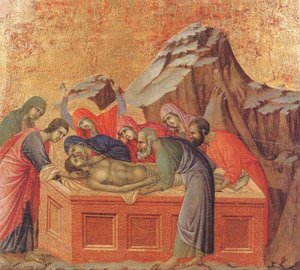


O artyście
The Sienese Luminary: Duccio di Buoninsegna and the Dawn of a New Italian Vision
Duccio di Buoninsegna, born in Siena around 1255, stands as a pivotal figure bridging the stylistic chasm between the Byzantine world and the burgeoning artistic sensibilities of Italy. While biographical details remain frustratingly scarce—the man himself often obscured by the brilliance of his art—his impact on the Sienese School and the trajectory of Italian painting is undeniable. He emerged during a period where religious iconography was deeply entrenched, yet a yearning for greater naturalism and emotional resonance was beginning to stir within artistic circles. Duccio wasn’t merely a painter; he was an innovator who dared to infuse sacred narratives with human feeling, subtly shifting the focus from rigid formality towards a more intimate connection between the divine and the earthly realm. His early training remains somewhat mysterious, though speculation suggests possible influences ranging from Florentine masters to direct exposure to Byzantine artistry—perhaps even travels to Constantinople itself. Whatever his formative experiences, they coalesced into a unique style that would define an era.
A Synthesis of Tradition and Innovation
Duccio’s artistic development wasn't a sudden rupture with the past but rather a graceful evolution. His initial works were deeply rooted in Byzantine conventions: the lavish use of gold leaf to evoke celestial light, stylized figures possessing an ethereal quality, and a meticulous attention to religious symbolism. However, even within these established parameters, Duccio began to subtly introduce elements that foreshadowed his later innovations. He experimented with spatial arrangements, hinting at depth where flatness had previously reigned supreme. His color palettes, while still vibrant, gained a newfound subtlety and harmony. More importantly, he started imbuing his figures with a nascent sense of humanity—a gentle curve of the mouth suggesting a smile, a slight tilt of the head conveying contemplation. This wasn’t a rejection of Byzantine ideals but a refinement, an infusion of life into what had often been static representations. He skillfully blended tradition and innovation, creating a style that was both reverent and remarkably fresh.
Masterpieces of Faith and Artistry
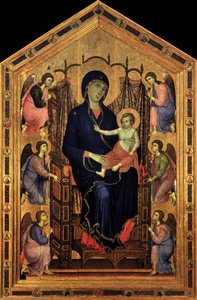
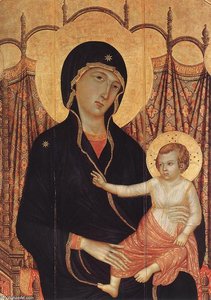
Two works stand as testaments to Duccio’s genius: the *Rucellai Madonna* (1285) and, most famously, the *Maestà* (1308-1311). The *Rucellai Madonna*, commissioned for a chapel in Florence, marked a significant departure from conventional Byzantine iconography. Its composition, while still adhering to traditional forms, displayed a greater sense of spatial organization and a more naturalistic depiction of the Virgin Mary and Child. But it was the *Maestà*—a monumental altarpiece created for Siena Cathedral—that truly cemented Duccio’s legacy. This sprawling masterpiece comprises numerous panels depicting scenes from the life of the Virgin Mary and Christ, each one a miniature work of art in itself. The Maestà is not merely a collection of paintings; it's a visual narrative, unfolding with breathtaking detail and emotional depth. Duccio’s mastery of light and shadow, his ability to convey complex emotions through subtle gestures, and his innovative use of perspective all converge in this single, awe-inspiring work. Beyond these monumental pieces, works like *Polyptych No. 28* demonstrate his continued compositional skill and meticulous attention to detail.
Influences and Artistic Development
Duccio’s artistic journey was shaped by a complex interplay of influences. While undeniably rooted in Byzantine tradition—particularly the luminosity and stylized figures characteristic of that era—he also absorbed elements from contemporary Italian art, most notably the naturalism and emotional intensity of Florentine painting. The influence of Simone Martini, a prominent Sienese artist, is often noted, as is the impact of Giotto’s emerging realism. Some scholars even speculate about Duccio's travels to Paris or Constantinople, where he may have encountered new artistic techniques and ideas. His early works demonstrate a clear adherence to Byzantine conventions—a preference for gold leaf, hierarchical compositions, and symbolic imagery. However, as his career progressed, he gradually moved towards a more naturalistic style, incorporating elements of perspective and human emotion into his paintings. This evolution reflects the broader shift in Italian art during the 14th century, away from the rigid formality of Byzantium and towards a more expressive and individualized approach.
A Lasting Legacy: Shaping the Future of Italian Art
Duccio di Buoninsegna’s influence extended far beyond his lifetime. He revolutionized Italian painting, paving the way for the development of the Sienese School—a distinct artistic tradition characterized by its elegance, refinement, and emotional intensity. His emphasis on naturalism, spatial depth, and human emotion directly impacted subsequent generations of artists, influencing not only those within Siena but also painters in Florence and beyond. While Giotto is often credited with initiating the Renaissance style, Duccio’s contributions were equally crucial, laying the groundwork for the artistic innovations that would define the 14th century and beyond. Despite facing financial hardships during his life, Duccio’s artistic legacy endures. His masterpieces continue to inspire awe and admiration, serving as a powerful reminder of the transformative power of art. He helped define the Trecento art movement, leaving an indelible mark on the history of Western painting.
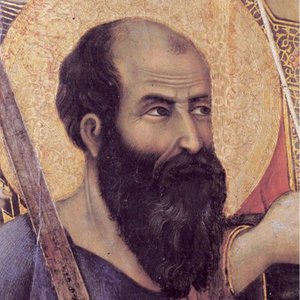
Duccio di Buoninsegna
1255 - 1319 , Włochy
Krótka nota
- Artistic Movement Or Style: Gotyk sienński, Sienese School
- Artists Or Movements Influenced By This Artist:
- Sienese School
- Włoski gotyk
- Artists Who Influenced This Artist: ['Sztuka bizantyjska']
- Date Of Birth: c. 1255
- Date Of Death: 1319
- Full Name: Duccio di Buoninsegna
- Nationality: Włoski
- Notable Artworks:
- Maestà
- Rucellai Madonna
- Place Of Birth: Siena, Italia
Powiązane artykuły
Giotto di Bondone: 25 Arcydzieł Sztuki Niezmieniających Historii | AllPaintingsStore.com
Odkryj 25 arcydzieł Giotta di Bondone – renesansowego mistrza fresków. Poznaj historię, techniki i emocje w jego najsłynniejszych dziełach. Reprodukcje obrazów najwyższej jakości na AllPaintingsStore.com. Eksploruj pełną kolekcję online!

Top 25 Arcydzieł Biennale w Wenecji: Sztuka, Historia i Inspiracje dla Domu
Odkryj 25 arcydzieł Biennale w Wenecji! Poznaj historie artystów, techniki i inspiracje współczesnej sztuki. Reprodukcje obrazów najwyższej jakości – idealne do Twojego wnętrza. AllPaintingsStore.com: Sztuka dla każdego.

Late Medieval Masterpieces: 10 Artworks That Defined an Era | AllPaintingsStore
Journey through 10 defining Late Medieval masterpieces – from Giotto's frescoes to Jan van Eyck’s realism. Explore the stories, techniques & vibrant colors of Gothic art. Find museum-quality reproductions and elevate your home decor with AllPaintingsStore.com! Discover all masterpieces on AllPaintingsStore.com

10 Arcydzieł Tempery na Drewnie, Które Zmieniły Historię Sztuki | AllPaintingsStore
Odkryj 10 arcydzieł tempery na drewnie, które zrewolucjonizowały sztukę! Poznaj historię Giotta, van Eycka i innych mistrzów renesansu. Reprodukcje obrazów najwyższej jakości – inspiracje do wnętrz na AllPaintingsStore.com

Proto-Renensans: 10 Arcydzieł, Które Zdefiniowały Sztukę – AllPaintingsStore.com
Odkryj 10 arcydzieł proto-renesansu! Poznaj historię Giotta, Cimabue i innych mistrzów. AllPaintingsStore.com oferuje reprodukcje obrazów najwyższej jakości – idealne do Twojego wnętrza. Eksploruj pełną kolekcję online!