Sergey Zaryanko (1818 - 1871): Russian Portraitist of Belarusian Origin
Sergey Konstantinovich Zaryanko, a name perhaps less immediately recognized than some of his contemporaries, nevertheless occupies a vital and fascinating position within the landscape of 19th-century Russian art. Born in Mogilev, Belarus (1818), his origins were deeply rooted in the societal constraints of the time – he was born into serfdom on the estate of the Lubomirski family. This humble beginning profoundly shaped his perspective and likely fueled a quiet determination that would characterize his artistic path. The emancipation of his father marked a turning point, allowing the family to relocate to Saint Petersburg and enter service with Alexander Golitsyn, a figure who would later ascend to the role of government minister. It was within this new environment that Zaryanko’s innate artistic talent began to blossom. Early instruction from Vasily Avrorin provided a foundational skillset, but it was a pivotal recommendation by Alexey Venetsianov in 1834 that truly unlocked his potential, granting him access – as an auditor – to the prestigious Imperial Academy of Arts. This opportunity was not merely educational; it was a symbolic liberation, a passage from the constraints of his past towards a future defined by creative expression.Early Artistic Explorations and Influences
Zaryanko’s initial artistic explorations weren't focused on the portraiture for which he would eventually become celebrated. He initially devoted himself to painting interiors, meticulously capturing the atmosphere and detail of domestic spaces. Simultaneously, he studied landscape painting under Maxim Vorobiev, broadening his technical abilities and developing a keen eye for composition and light. This period of experimentation proved crucial in laying the groundwork for his later success. The influence of Vasily Avrorin, who championed Venetsianov’s approach to art, instilled in Zaryanko a dedication to realism and observation—skills that would serve him well throughout his career. Recognition came swiftly; a silver medal in 1836 heralded his emerging talent, marking the beginning of his ascent within the artistic circles of Saint Petersburg. This early acclaim solidified Venetsianov’s belief in Zaryanko's potential and propelled him toward further advancement.The Imperial Academy of Arts: A Catalyst for Artistic Growth
A pivotal moment arrived in 1834 when Alexey Venetsianov, recognizing Zaryanko’s talent, secured his admission as an auditor to the Imperial Academy of Arts. This institution represented more than just a place of learning; it symbolized a liberation from serfdom's limitations and offered access to the highest standards of artistic training. The Academy fostered a collaborative environment where artists honed their skills alongside peers—a tradition that would continue to shape Zaryanko’s artistic development. He diligently pursued his studies, mastering techniques in both landscape painting and portraiture, preparing himself for a distinguished career ahead. Furthermore, he benefited from the mentorship of Maxim Vorobiev, who instilled in him an appreciation for capturing light and atmosphere with precision—a hallmark of Venetsianov's style.From Interiors to Portraits: Developing His Artistic Voice
Zaryanko’s artistic trajectory initially leaned toward interior scenes, reflecting a fascination with capturing the subtleties of domestic life. These paintings showcased his meticulous attention to detail and his ability to convey mood and atmosphere—qualities that would later become central to his portraiture style. However, he quickly recognized the power of portraying human subjects, embarking on a path that would ultimately define his artistic legacy. His decision to study landscape painting alongside Vorobiev broadened his technical repertoire and honed his compositional skills—skills that proved invaluable in crafting compelling portraits. The Academy’s curriculum encouraged experimentation and fostered intellectual discourse, nurturing Zaryanko's artistic vision and preparing him for the challenges of professional practice.Recognition and Legacy: A Portraitist Among Peers
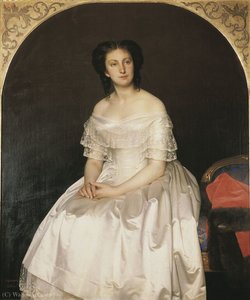
By 1843, Zaryanko achieved “Academician” status—a prestigious honor bestowed upon artists who demonstrated exceptional talent and dedication to their craft. This appointment cemented his position within Russia’s artistic elite and propelled him toward further achievements. He relocated to Moscow, where he established himself as a teacher at the Alexandrov Military Institute and continued to refine his skills as an icon painter—demonstrating versatility that underscored his commitment to artistic excellence. His portraits of General Pyotr Karlovich Lomnovsky (1798-1860) and opera singer Osip Petrov, completed in 1849, established his reputation in the genre, capturing not only physical likeness but also psychological depth and social status with remarkable sensitivity. These works exemplify Zaryanko’s mastery of realism—his ability to convey emotion and intellect through meticulous observation and skillful technique. His influence extended beyond his own paintings; he mentored a generation of artists who would become prominent figures in Russian Realism, shaping the artistic landscape for decades to come. Finally, his portrait of Fyodor Tolstoy earned him the title of “professor,” solidifying his legacy as one of Russia’s most respected educators and artists—a testament to his enduring contribution to the nation's cultural heritage.Pytania i odpowiedzi
Na jakie okresy dzieli się kariera Sergey Konstantinovich Zaryanko?
Kariera Sergey Konstantinovich Zaryanko rozwija się etap po etapie na stronie Osiągnięcia artystyczne: jako pozioma oś czasu dzieł, pogrupowanych w rozdziały odpowiadające poszczególnym okresom twórczości.
Gdzie mogę zobaczyć dzieła Sergey Konstantinovich Zaryanko pogrupowane według nastroju?
Strona Sztuka według nastroju artysty Sergey Konstantinovich Zaryanko pozwala przeglądać dzieła uporządkowane według nastroju.
Czy mogę przeglądać dzieła Sergey Konstantinovich Zaryanko według słów kluczowych?
Dzieła artysty Sergey Konstantinovich Zaryanko można przeglądać według słów kluczowych na stronie Według słów kluczowych. Każde słowo kluczowe grupuje powiązane ze sobą dzieła.