Garantia de Reembolso · 100 dias Entrega gratuita para todo o mundo
612.263obras de arte 52.888artistas 5.406museus 32idiomas
Retrato de Otto Scholderer

As 17 pinturas mais famosas de Otto Scholderer para escolher

Atualizado em Novembro 2026 · classificado pela nossa pontuação de popularidade (pesquisas, visitas e pedidos de cada obra) · 18 obras de Otto Scholderer em nosso catálogo

Resposta rápida

A pintura número um de Otto Scholderer é Boy with dish with vegetables and dead game (1888), cujo original está no Bavarian State Painting Collections, em Munique. Em segundo e terceiro lugar: The Violinist at the Window (1861) e Peaches in a Silver Basket (1869). Nosso catálogo contém 18 obras de Otto Scholderer. Os 17 listados aqui são as mais famosas, em ordem de classificação, com o ano e o museu de cada original.

1834 – 1902, Frankfurt Mais obras: Staatliche Kunsthalle Karlsruhe

As 10 principais: as pinturas mais famosas de Otto Scholderer

1
Boy with dish with vegetables and dead game (1888) de Otto Scholderer

Boy with dish with vegetables and dead game

1888 · Oil On Canvas · Bavarian State Painting Collections, Munique

We are looking at Boy with dish with vegetables and dead game, a work by the German painter Otto Scholderer. This particular piece dates to about 1888, a period when the artist was refining his command over the interplay of light and shadow. It is a quiet, substantial composition that reflects the artist's deep engagement with the realities of the natural world.

Reprodução em óleo pintada à mão de $170 36 × 28 cm Mesmo tamanho da original $328 89 × 71 cm Encomendar no tamanho original →
Escolha um tamanho Ver detalhes
2
The Violinist at the Window (1861) de Otto Scholderer

The Violinist at the Window

1861 · Oil · Städel Museum, Frankfurt

The afternoon sun filters through a windowpane, casting a warm, golden glow across a quiet room. A man sits in a simple chair, his body poised in a moment of deep concentration. His fingers dance across the strings of a violin, creating a melody that seems to hang in the still air. His gaze drifts toward the world outside the glass, yet his spirit remains anchored to the music. A…

Reprodução em óleo pintada à mão de $170 26 × 38 cm Mesmo tamanho da original $593 103 × 150 cm Encomendar no tamanho original →
Escolha um tamanho Ver detalhes
3
Peaches in a Silver Basket (1869) de Otto Scholderer

Peaches in a Silver Basket

1869 · Oil · Staatliche Kunsthalle Karlsruhe, Karlsruhe

In Peaches in a Silver Basket by Otto Scholderer, a collection of ripe fruit rests within and around a polished silver bowl. A large, shallow silver basket anchors the center of the scene, sitting upon a dark, reflective surface that mirrors the quiet arrangement. The background remains muted and neutral, allowing the viewer to focus entirely on the interplay of light and form. Warm, fleshy tones of pink, yellow, and…

Reprodução em óleo pintada à mão de $170 41 × 24 cm Mesmo tamanho da original $175 45 × 27 cm Encomendar no tamanho original →
Escolha um tamanho Ver detalhes
4
Still Life with Snipe and a Hare (1869) de Otto Scholderer

Still Life with Snipe and a Hare

1869 · Oil On Canvas · Staatliche Kunsthalle Karlsruhe, Karlsruhe

In Still Life with Snipe and a Hare, Otto Scholderer organizes the composition around two dead animals laid out against a dark, indistinct background. The arrangement is viewed from a top-down, slightly angled perspective, placing the viewer in immediate proximity to the subjects. A soft light source from the upper left illuminates the scene, catching the textures of the animals' fur and feathers while casting deep shadows that provide volume…

Reprodução em óleo pintada à mão de $170 37 × 27 cm Mesmo tamanho da original $223 61 × 46 cm Encomendar no tamanho original →
Encomende esta pintura Detalhes da pintura
5
Schwarzwaldmühle in Kirnbach bei Schiltach (1868) de Otto Scholderer

Schwarzwaldmühle in Kirnbach bei Schiltach

1868 · Oil On Canvas · Staatliche Kunsthalle Karlsruhe, Karlsruhe

In the painting Schwarzwaldmühle in Kirnbach bei Schiltach, Otto Scholderer organizes a tranquil woodland scene through a vertically oriented composition. The arrangement utilizes a deep perspective that directs the viewer's gaze from a foreground of moss-covered boulders and rocky terrain toward a rustic wooden structure. A cascading stream flows through the center of the scene, moving from the foreground toward the background and connecting the various layers of the landscape.…

Reprodução em óleo pintada à mão de $170 26 × 38 cm Mesmo tamanho da original $603 104 × 152 cm Encomendar no tamanho original →
Encomende esta pintura Detalhes da pintura

Do 11 ao 17: mais pinturas de Otto Scholderer

Pinturas de Otto Scholderer por tema

Os quatro temas mais frequentes neste ranking, com a principal obra de cada um.

Museus que possuem obras originais de Otto Scholderer

Os 6 museus que detêm a maioria das pinturas desta página.

Museus Cidade Obras de Otto Scholderer Pinturas desta lista
Staatliche Kunsthalle Karlsruhe, KarlsruheStaatliche Kunsthalle Karlsruhe Karlsruhe 3 Peaches in a Silver Basket, Still Life with Snipe and a Hare, Schwarzwaldmühle in Kirnbach bei Schiltach
Bavarian State Painting Collections, MuniqueBavarian State Painting Collections Munique 2 Boy with dish with vegetables and dead game, Peonies
Städel Museum, FrankfurtStädel Museum Frankfurt 2 The Violinist at the Window, Still Life with Blue Vase and Mushrooms
National Gallery, LondresNational Gallery Londres 2 Lilac, Portrait of the Artist's Wife
Sheffield City Art Galleries, SheffieldSheffield City Art Galleries Sheffield 1 Man and Hares
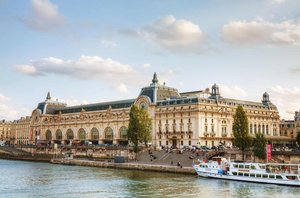
Musée d'Orsay, ParisMusée d'Orsay Paris 1 Marine

A pintura de maior destaque de cada década de Otto Scholderer

Obras por década

Selecione uma década para ver a sua pintura principal.

Pinturas de Otto Scholderer: FAQ

Qual é a obra mais famosa de Otto Scholderer?Ver resposta

Boy with dish with vegetables and dead game (1888), Bavarian State Painting Collections, Munique, ocupa o primeiro lugar, seguido por The Violinist at the Window (1861) e Peaches in a Silver Basket (1869).

Com que idade Boy with dish with vegetables and dead game foi pintada por Otto Scholderer?Ver resposta

Otto Scholderer tinha 54 anos: Boy with dish with vegetables and dead game é datada de 1888, e Otto Scholderer nasceu em 1834.

Quais são as dez pinturas mais famosas de Otto Scholderer?Ver resposta

Boy with dish with vegetables and dead game, The Violinist at the Window, Peaches in a Silver Basket, Still Life with Snipe and a Hare, Schwarzwaldmühle in Kirnbach bei Schiltach, Seestück bei St. Ives, Man and Hares, Still Life with Blue Vase and Mushrooms, Still Life with Peaches and Fig e Oysters. O ano e o museu de cada uma estão no ranking acima.

Quantas pinturas de Otto Scholderer estão listadas?Ver resposta

18 obras de Otto Scholderer estão em nosso catálogo, datadas de 1861 a 1902.

Em quais museus estão os originais mais famosos de Otto Scholderer?Ver resposta

Principalmente em Staatliche Kunsthalle Karlsruhe (Karlsruhe), Bavarian State Painting Collections (Munique) e Städel Museum (Frankfurt). Consulte a tabela de museus acima para a lista completa.

Quando foram feitas as principais pinturas de Otto Scholderer?Ver resposta

Em 1860s: 4 das 17 pinturas classificadas aqui datam dessa época, incluindo The Violinist at the Window.

Quais são as pinturas mais antigas e as mais recentes do(a) famoso(a) Otto Scholderer?Ver resposta

Mais antiga nesta página: The Violinist at the Window (1861). Mais recente: Lilac (1902).

Quais temas aparecem com mais frequência nas pinturas de Otto Scholderer?Ver resposta

Entre as 17 pinturas classificadas aqui: Peaches (2), Fruit (2) e Still life (2).

Qual é a técnica mais comum nas pinturas de Otto Scholderer?Ver resposta

Oil On Canvas, de 3 das 17 pinturas classificadas aqui.

Quais pinturas famosas de Otto Scholderer o Staatliche Kunsthalle Karlsruhe possui?Ver resposta

O Staatliche Kunsthalle Karlsruhe, Karlsruhe detém 3 das pinturas classificadas aqui, incluindo Peaches in a Silver Basket, Still Life with Snipe and a Hare e Schwarzwaldmühle in Kirnbach bei Schiltach.

Posso comprar uma reprodução de uma pintura de Otto Scholderer?Ver resposta

Sim. Todas as pinturas desta página podem ser encomendadas como uma reprodução em óleo pintada à mão ou como uma impressão. Abra a pintura, escolha o tamanho e faça o seu pedido.

Otto Scholderer: o artista por trás das pinturas

The Painter of Light and Shadow: The Life of Otto Scholderer

In the heart of nineteenth-century Germany, a period defined by the shifting tides between Romanticism and the dawn of Impressionism, Otto Franz Scholderer emerged as a master of visual storytelling. Born in Frankfurt am Main on January 25, 1834, Scholderer’s artistic journey was one of profound evolution, marked by a relentless pursuit of capturing the true essence of his subjects. His early years were steeped in the rigorous academic traditions of the Städel Academy of Arts, where he studied under the watchful eyes of art historian Johann David Passavant and the painter Jakob Becker. This foundational training provided him with more than just technical proficiency; it instilled a deep respect for classical composition and a meticulous eye for detail that would remain a hallmark of his work throughout his long and distinguished career.

As Scholderer matured, his artistic horizons expanded far beyond the borders of Germany. His travels to Paris between 1857 and 1858 proved to be a transformative period, exposing him to the radical currents of European art. It was here that he encountered the raw, unvarnished power of Gustave Courbet’s Realism, a movement that encouraged artists to look at the world without the veil of idealized sentimentality. This encounter fundamentally altered his approach to landscape and portraiture, steering him toward a more honest rendering of light, texture, and atmosphere. During this same era, he forged lasting connections with luminaries such as Henri Fantin-Latour and Édouard Manet, whose subtle explorations of light and fleeting moments would leave an indelible imprint on his later, more Impressionistic tendencies.

A Legacy of Intimacy and Observation

Scholderer’s body of work is a testament to his ability to find the extraordinary within the ordinary. Whether he was painting a serene pastoral vista or an intimate domestic scene, there was always a sense of quiet contemplation and profound presence. His connection to the Kronberg painter colony, fostered through his friendship and eventual familial bond with Victor Müller, allowed him to exist within a vibrant community of artists dedicated to capturing the beauty of the Taunus region. This environment nurtured his ability to blend the precise rendering of the Düsseldorf tradition with the atmospheric sensitivity of the burgeoning Impressionist movement.

His repertoire was remarkably diverse, showcasing a mastery over various genres:

  • Portraiture: Scholderer possessed a rare gift for capturing the psychological depth of his sitters, imbuing them with a sense of living breath and character.
  • Still Life: In works such as "The Flower Arrangement" and "Lilac," he demonstrated an exquisite command over color and texture, turning simple botanical subjects into meditations on beauty and decay.
  • Landscape: His landscapes often eschewed the dramatic for the subtle, focusing instead on the interplay of light across a field or the soft glow of an afternoon sun through a window.
  • Genre Painting: Pieces like "The Violinist at the Window" exemplify his ability to weave narratives of solitude and creativity, inviting the viewer into a private, melodic sanctuary.

By the time of his passing in 1902, Otto Scholderer had established himself as a cornerstone of German painting. His significance lies not only in his technical brilliance but in his role as a bridge between eras. He carried the weight of classical tradition into the modern age, proving that even as styles shifted from the structured to the ephemeral, the fundamental human desire to capture truth through light and shadow remained eternal. Today, his works continue to resonate, offering a window into a vanished world of grace, precision, and quiet emotion.