


 Visualizar em escala
 Enviar
 Compartilhar
 Ver detalhes
 Guia
Guia

 Baixar imagem
 Semelhantes
 Raio X
 Apresentação de slides
 Estatísticas
Агнес Миякэва


 Ver mais
Reprodução em Óleo Feita à Mão
Óleo sobre tela pintado à mão no tamanho e moldura de sua escolha, feito sob encomenda pelos nossos artistas. ( Alternar para Impressão Ver Imagem Digital)




P118B $10

P118H $10

P118W $10

P438Z $10

P508JH $12

P508YH $12

P805H $10

P805Z $10

P919BZ $10

P919G $10

P919XJ $10

P959ZH $10

P968JZ $12

W106C $8

W218G $10

W218JH $8

W218Y $10

W307PJ $10

W316G $10

W316PJ $8

W316Y $10

W398PJ $8

W4111J $10

W500HY $15

W500JH $15

W692G $12

W849H $8

W940BG $15

W953PJ $8




Escolha entre os nossos tamanhos pré-definidos que respeitam as proporções originais da obra de arte.

Pode inserir as suas próprias dimensões para se adequar a uma moldura ou espaço específico. Se o tamanho selecionado não corresponder às proporções da imagem original, iremos cortar a obra de arte ou estender a pintura com elementos adicionais pintados à mão. Um esboço digital será enviado para sua aprovação antes do início da produção.
Tenha em atenção que a pré-visualização no ecrã não reflete o corte ou extensão real. Apenas o esboço mostrará com precisão a composição final.
Embora tamanhos personalizados estejam disponíveis, recomendamos selecionar uma dimensão da lista predefinida para preservar as proporções originais.
Após o pedido, a equipa AllPaintingsStore.com enviará um e-mail ao cliente para solicitar instruções e fornecer uma prévia do esboço.
Entrega mundial () em 3 a 4 semanas, em vez das 5 semanas padrão. (22 Setembro). Sem comprometer a qualidade.

Envio expresso gratuito para todo o mundo

Tela de Linho Premium

Seguro de transporte total

Garantia de Reembolso de Impostos Alfandegários

Garantia de Fidelidade de Cor

Política de Devolução em 100 Dias (Apenas para Defeitos)

Garantia de reembolso de 100%

Desconto para múltiplas unidades
 A opção de vidro está disponível apenas para tamanhos inferiores a 110 cm

Агнес Миякэва
Técnica de Reprodução
Dimensões da Reprodução
-


Preço Total
$ 258
Agnes Miyakawa – Uma Sinfonia de Elegância Japonesa em Preto e Branco
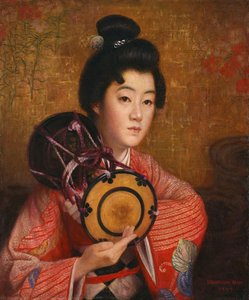
A obra apresenta uma imagem em preto e branco do retrato de Agnes Miyakawa, capturada aproximadamente em 1931. Ela transmite uma atmosfera de formalidade e sofisticação característica da época, refletindo o espírito artístico do período inicial do século XX. O artista Alban Maria Johannes Berg, influenciado pela escola vienense liderada por Arnold Schoenberg, empregou técnicas tradicionais de fotografia para preservar a beleza da figura feminina em um contexto histórico significativo.- Título: Agnes Miyakawa
- Descrição: Sacramento Japantown nativa Agnes Miyakawa (1911-1995) deixou seu lar para estudar canto em Paris. Em 1931 aos 19 anos, ela fez sua estreia na Ópera Comique. Sua performance como Cio-Cio San na ópera Madame Butterfly conquistou aclamação crítica e popular. Ela continuou a se apresentar no Japão, Los Angeles e em outros lugares. Também apareceu em filmes e no rádio.
- Foto Descrição: Uma impressão em preto e branco de retrato de Agnes Miyakawa, provavelmente capturada cerca de 1931. A imagem apresenta um ambiente estúdio formal com foco no rosto e corpo superior da modelo. Há uma sensação de clássico, ligeiramente envelhecido que é característico da fotografia inicial do século XX.
Composição e Estética: Uma Busca pela Harmonia Formal
A composição é centrada, colocando Miyakawa diretamente no meio do quadro. Seu olhar está direcionado ao espectador, criando uma conexão direta que transmite confiança e força. Ela segura um abajur aberto parcialmente obscurecendo seu corpo inferior e adicionando interesse visual à direita da imagem. O fundo permanece desfocado e indistinto, mantendo o foco firme na figura principal. Berg empregou técnicas tradicionais de fotografia para capturar a beleza da modelo em um contexto histórico significativo. A escola vienense liderada por Schoenberg influenciou profundamente seu estilo artístico, buscando uma síntese entre o lirismo romântico e o método dodecafônico inovador.- Elementos Visuais: O retrato é composto por linhas suaves que dominam a imagem, especialmente no rosto e cabelo da modelo. Um abajur adiciona linhas curvas que contrastam com os elementos estruturados do kimono.
- Formas e Texturas: Predominantemente formas orgânicas definem a composição – as curvas do rosto, a forma arredondada do abajur e o tecido fluído do kimono. Pequenas áreas de textura revelam detalhes sobre o material utilizado na impressão fotográfica e contribuem para uma sensação geral de autenticidade.
- Iluminação: A iluminação é suave e difusa, típica da fotografia estúdio. Ela destaca os traços faciais da modelo sem criar sombras fortes. Uma leve gradação tonal cria uma atmosfera calma e elegante.
Contexto Histórico e Simbolismo: Madame Butterfly e Além
A obra reflete o impacto da ópera Madame Butterfly de Giacomo Puccini na vida artística de Agnes Miyakawa, uma soprano japonesa nascida em Sacramento Japantown. Berg explorou temas como amor, perda e beleza através da linguagem musical do método dodecafônico, buscando transmitir emoções profundas ao público. O retrato captura um momento específico da carreira profissional da artista, simbolizando o desejo por reconhecimento artístico e a busca pela perfeição estética. Além disso, ele evoca uma sensação de formalidade, graça e talvez uma pitada de melancolia, refletindo as tradições culturais japonesas da época.Reprodução em Alta Qualidade: Uma Escolha Inspiradora
Uma reprodução meticulosamente elaborada desta obra permite apreciar os detalhes da imagem original em preto e branco, capturando a beleza da figura feminina e o espírito artístico do período inicial do século XX. Disponível em tamanho padrão ou personalizado para se adaptar às suas necessidades de decoração, esta impressão oferece uma oportunidade única para trazer um toque de elegância clássica ao seu espaço residencial ou comercial. Uma obra-prima da fotografia que celebra a arte e a cultura japonesa.Obras Relacionadas




Biografia do Artista
A Life Immersed in Sound and Emotion
Alban Maria Johannes Berg, born February 9, 1885, in Vienna, Austria, was a composer whose relatively brief life yielded a body of work that profoundly reshaped the landscape of 20th-century music. Though initially drawn to literature, a path he seriously considered pursuing, Berg’s destiny lay within the realm of sound. His father, Konrad Berg, managed a successful export business, providing a comfortable upbringing that allowed for early musical exploration – though largely self-directed at first. He began composing at fifteen, receiving piano lessons from his sister's governess, but it was a pivotal encounter in 1904 with Arnold Schoenberg that irrevocably altered the course of his artistic development. This mentorship wasn’t merely instructional; it was an immersion into a new musical language, one built on principles of developing variation and, later, the revolutionary twelve-tone technique. A complex personal life unfolded alongside his burgeoning career, including the birth of a daughter, Albine, in 1902 to Marie Scheuchl, a family maid – a circumstance that speaks to the societal complexities of the time. In 1911 he married Helene Nahowski, a union that brought both joy and social challenges.Forging a Unique Musical Voice
Berg’s genius wasn't in simply adopting Schoenberg’s innovations but in *transforming* them. He didn’t merely apply the twelve-tone technique as an intellectual exercise; he infused it with a deeply Romantic sensibility, a lyrical expressiveness that distinguished his work from that of his mentor and fellow Second Viennese School member, Anton Webern. His early compositions – five drafts for piano sonatas and a collection of songs including the evocative *Seven Early Songs* (first publicly performed in 1907) – already hinted at this unique blend. The Piano Sonata, Op. 1, completed around 1908-1909, stands as a remarkably mature debut, demonstrating an astonishing mastery of musical structure and foreshadowing the emotional depth that would characterize his later works. Berg wasn’t isolated in his artistic pursuits; he thrived within Vienna's vibrant cultural circle, associating with figures like Alexander von Zemlinsky, the iconic Gustav Klimt, and the incisive writer Karl Kraus. These interactions undoubtedly enriched his perspective and fueled his creative fire. He absorbed influences from Mahler and Wagner, retaining a connection to the Romantic tradition even as he ventured into atonality.Landmark Operas and Chamber Masterpieces
Berg’s most enduring legacy lies in his operas and chamber works. *Wozzeck* (1924), a landmark achievement of 20th-century opera, is a harrowing portrayal of a soldier exploited and driven to despair. Its fragmented scenes, dissonant harmonies, and intensely psychological characterizations broke with operatic conventions and established Berg as a major force in the genre. The *Lyric Suite* (1926), a chamber work for string sextet, showcases his ability to distill profound emotions into concise forms, revealing layers of meaning through subtle motivic development. The Violin Concerto (1935), dedicated to Louis Krasner, is a fascinating synthesis of twelve-tone technique and tonal references, incorporating elements of Bach chorales and Carinthian folk songs – a testament to Berg’s ability to bridge seemingly disparate musical worlds. Perhaps his most ambitious undertaking was *Lulu*, an opera exploring themes of sexuality, power, and societal corruption. Tragically unfinished at his death in 1935, it was later completed by Friedrich Cerha, allowing audiences to experience the full scope of Berg’s vision. The Chamber Concerto (1925) further exemplifies his skill in weaving diverse musical elements into a cohesive and emotionally resonant whole.A Lasting Impact on Modern Music
Alban Berg's untimely death on December 24, 1935, from sepsis following an insect bite robbed the world of a composer at the height of his powers. Yet, despite his relatively short life, he left behind a musical legacy that continues to resonate today. He profoundly influenced the development of modern music, demonstrating the expressive potential of atonality and twelve-tone techniques while simultaneously retaining a commitment to emotional depth and humanism. As a key member of the Second Viennese School, alongside Schoenberg and Webern, Berg contributed to a revolutionary shift in musical aesthetics. His operas, particularly *Wozzeck* and *Lulu*, remain staples of the operatic repertoire, frequently performed worldwide and captivating audiences with their dramatic intensity and psychological insight. His works are not merely studied by musicologists; they continue to inspire composers seeking new ways to express complex emotions through innovative musical structures. Theodor W. Adorno’s observation – that Berg believed “everything was supposed to develop out of something else and yet be intrinsically different” – encapsulates the essence of his compositional philosophy, a principle that continues to guide musicians today. Berg's music stands as a powerful testament to the enduring power of artistic expression in a rapidly changing world.
Alban Maria Johannes Berg
1885 - 1935 , Austria
Informações Rápidas
- Artistic Movement Or Style: Expressionism, Atonal music
- Artists Or Movements Influenced By This Artist:
- Modern music
- Second Viennese School
- Artists Who Influenced This Artist:
- Arnold Schoenberg
- Mahler
- Wagner
- Date Of Birth: February 9, 1885
- Date Of Death: December 24, 1935
- Full Name: Alban Maria Johannes Berg
- Nationality: Austrian
- Notable Artworks:
- Wozzeck
- Lulu
- Lyric Suite
- Violin Concerto
- Place Of Birth: Vienna, Austria
Artigos Relacionados

Timeless Contrast: A Professional Guide to Black and White Photography for Large-Scale Hotel Decor
A professional guide for hotel designers on utilizing black and white photography for large-scale decor. Learn to master scale, texture, and monochrome contrast to create impactful, high-end hospitality environments through efficient, bulk art procurement solutions.

The Lens of Truth: A Cultural History of the Evolution of Documentary Photography
Explore the profound evolution of documentary photography through an art-historical lens. Discover how legendary photographers captured truth, urban life, and human resilience, shaping our cultural understanding of history and the enduring power of the visual narrative.


