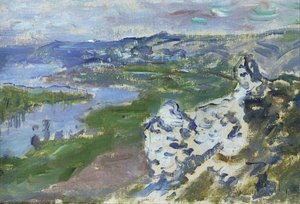
To approach a rural landscape is to witness a slow, deliberate arrangement of earth and sky. There is no sudden shock of color here, only the gradual recognition of boundaries defined by use and season. The eye moves across patchwork fields, where the geometry of cultivation meets the irregularity of nature. These divisions are not mere lines on a map; they are records of labor, marking where one crop ends and another begins under the weight of the sun.
The perspective shifts as one draws nearer to the edges of these plots. One notices how the texture of the soil changes, from the heavy, dark loam of freshly turned earth to the pale, dry stalks of a summer harvest. This is a view that requires patience, an acceptance of the slow pace at a landscape that does not seek to impress through speed, but through its steady, rhythmic presence.
The Weight of History: Weathered Wood and Iron
Moving further into the scene, the eye settles upon the structures that anchor the land. Outbuildings, worn by decades of wind and rain, provide a sense of permanence. These are not pristine monuments; they are functional objects, their surfaces etched with the history of the seasons. Rusty farm equipment sits in the shade of eaves, its iron oxidized into deep ochres and burnt umbers, mirroring the tones of the earth itself.
There is a specific gravity to these objects. John Caggiano once encountered an early 19th-century John Deere working wagon on a ranch during En Plein Air Texas, noting the presence of unidentified mechanical attachments and saws that spoke of a much older era of utility. Such artifacts remind us that the landscape is a living archive. The decay of wood and the corrosion of metal are not signs of neglect, but rather evidence of a long-standing dialogue between human industry and the elements.
Morning Light: The Dew on the Harvest
As the light shifts toward the early hours, the atmosphere of the countryside undergoes a subtle transformation. Before the heat of the day settles, there is a period of profound stillness. Poppy Balser observed this specific clarity when painting hay damp with dew in the early morning. In these moments, the moisture clings to the stalks, softening the edges of the landscape and mutative the colors into something more muted and silvered.
This light is difficult to capture because it is fleeting. The dampness of the hay makes it a poor time for baling, yet it offers the painter a window of unparalleled clarity. By sunset, the work of the day has often moved the hay into the barn, leaving only the memory of that morning mist on the canvas. It is a reminder that the landscape is never static; it is in a constant state of becoming and receding.
The Human Hand: Tools and Agricultural Labor
While the figures of laborers may not always occupy the center of the frame, their presence is felt in every furrow and every fence line. The landscape is a product of intention. Every tool, from the heavy wrench to the simplest spade, represents a physical interaction with the environment. The art of pastoralism lies in documenting this intersection of human will and natural growth.
The work is often communal and cyclical. The seasonal necessity of haying season brings a collective focus to the fields, where the rhythm of the task dictates the movement of the people within it. To look closely at a rural painting is to see the traces of this effort—the way a path has been worn into the grass or how a gate has been greased for ease of use. The landscape is shaped by hands that understand the necessity of persistence.
The Horizon Line: Fences and Boundary Marks
Defining the limits of the view, white picket fence lines and weathered post-and-rail boundaries provide the structural framework for the horizon. These lines guide the viewer’s gaze, preventing it from wandering aimlessly into the distance. They act as the skeletal structure of the pastoral scene, separating the managed domestic space from the wilder reaches of the meadow.
These boundaries are often composed of materials that are themselves subject to the landscape's slow erosion. A fence is a declaration of ownership and care, a way of imposing order upon the sprawling expanse of the countryside. As one follows these lines toward the horizon, the distinction between the cultivated and the uncultivated begins to blur, leaving only the suggestion of a limit.
A Final View: The Enduring Rural Spirit
To conclude this walk through the countryside is to realize that the beauty of the rural landscape lies in its refusal to be hurried. It is found in the rust, the dew, and the weathered grain of an old wagon. These elements do not demand attention through spectacle; they earn it through their endurance. The landscape remains a place where time is measured not by the clock, but by the slow accumulation of seasons and the steadying influence of tradition.
For those seeking to bring this sense of permanence into their own spaces, AllPaintingsStore.com offers a wide range of hand-painted reproductions and professional services. Whether through custom commissions that transform personal memories into oil paintings or the acquisition of large-scale murals for corporate environments, we provide the means to integrate these enduring themes into modern architecture. Our commitment to academic excellence ensures that every brushstroke respects the weight of the history it seeks to represent.
Mergulhe no século XIX com 10 obras de arte icônicas! Explore Monet, Renoir e Van Gogh. Descubra a história, técnica e emoção por trás dos mestres do Impressionismo e Realismo. Encontre reproduções de alta qualidade em AllPaintingsStore.com.