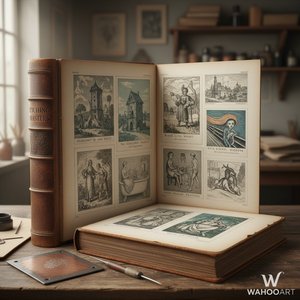
The Ethereal Spirit of the Dutch Landscape
Cornelis Brandenburg stands as a profound chronicler of the Dutch soul, particularly through his evocative captures of Amsterdam and its surrounding vistas. His work possesses an uncanny ability to transform the mundane into the magnificent, inviting the viewer into a world where every ripple in a canal and every silhouette against the twilight sky tells a story of temporal beauty.Through a masterful manipulation of light and shadow, Brandenburg infused his subjects with a palpable atmosphere. Whether he was depicting the bustling energy of city streets or the quiet, reflective stillness of a landscape at dusk, his vision remained anchored in an unwavering dedication to capturing the true essence of his subjects. His technique allowed him to achieve a remarkable textural richness, where color and tone worked in harmony to heighten the visual impact of every composition.
A Journey of Craft and Academic Rigor
Born in Wormerveer, Brandenburg’s artistic path was one of continuous refinement and diverse experimentation. His early years were marked by a deep immersion in the tactile world of ceramics, serving as a painter at the renowned de Distel factory. This period of craftsmanship likely informed the meticulous precision that would later define his graphic works.His formal education at the Rijksakademie van Beeldende Kunsten and the Teekenschool voor Kunstambachten in Amsterdam provided the technical foundation for his evolution. Under the guidance of esteemed masters such as August Allebé, Antoon Derkinderen, Pieter Dupont, and Georg Rueter, he honed a mastery of observation that became the hallmark of his oeuvre. As his career unfolded against the backdrop of Impressionism and Expressionism, he successfully navigated these influential movements, blending classical technical discipline with a modern, emotive sensibility.
The Mastery of the Etched Line
Perhaps nowhere is Brandenburg’s genius more evident than in his mastery of etching. His ability to translate the grandeur of architecture into the delicate language of copperplate engraving remains unparalleled. A quintessential example is his 1920 work, Dom Utrecht, which captures the imposing majesty of St. Maartens Cathedral with breathtaking clarity and precision.As a distinguished member of the prestigious Arti et Amicitiae, Brandenburg’s presence in the Dutch art scene was both significant and enduring. His legacy lives on through his ability to capture the fleeting essence of a moment, leaving behind a visual record of a bygone era that continues to resonate with collectors and art enthusiasts worldwide. Through his etchings and paintings, he remains a luminary of the Dutch landscape, a master of light, and a true poet of the cityscape.