Garantia de Reembolso · 30 dias Entrega gratuita para todo o mundo
446.261obras de arte 30.640artistas 4.753museus 32idiomas
País
Moeda
Idioma
Ateliê · Desde 2015 · Paris, França
AllPaintingsStore
allpaintingsstore.com
Minha conta Lista de desejos Carrinho

David Teniers o Jovem

1610 - 1690

Resumo Biográfico

  • Also known as:
    • David Teniers II
    • Teniers o Jovem
  • Movements: baroque
  • Copyright status: Public domain
  • Best occasions:
    • peça central
    • acento de cor
  • Mediums:
    • acrílico sobre tela
    • óleo sobre tela
  • Top 3 works:
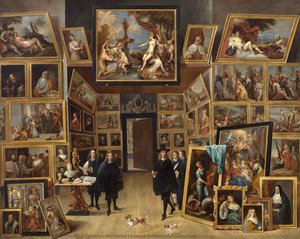
    • Archduke Leopold Wilhelm in his Gallery
    • The Musette-Player
    • A Village Festival on St George’s Day
  • Art period: Idade Moderna Inicial
  • Museums on APS:
    • English Heritage
    • English Heritage
    • English Heritage
    • English Heritage
    • English Heritage
  • Lifespan: 80 years
  • Gift suitability: other-none
  • Works on APS: 188
  • Ver mais…
  • Room fit: sala de estar
  • Typical colors:
    • noz
    • madeira de deriva
  • Emotional tone: reflexivo
  • Died: 1690
  • Top-ranked work: Archduke Leopold Wilhelm in his Gallery
  • Creative periods: mature period
  • Born: 1610, Antuérpia, Bélgica
  • Vibe: calmo
  • Color intensity:
    • equilibrado
    • vívido
  • Nationality: Bélgica

Teste de Arte

Cada pergunta possui apenas uma resposta correta.

Pergunta 1:
David Teniers the Younger é mais conhecido por suas pinturas que retratam qual tema principal?
Pergunta 2:
Qual movimento artístico a qual David Teniers the Younger pertence?
Pergunta 3:
David Teniers the Younger serviu como pintor de corte e curador para qual figura proeminente?
Pergunta 4:
Qual era um tema comum explorado nas pinturas de 'Kermess' de Teniers?
Pergunta 5:
David Teniers the Younger também esteve envolvido na fundação de qual importante instituição em Antuérpia?

David Teniers the Younger: A Master of Flemish Life

David Teniers the Younger, born in Antwerp on December 15th, 1610, was a pivotal figure in the vibrant artistic landscape of 17th-century Flanders. His life and career were inextricably linked to his family’s rich artistic heritage – his father, David Teniers the Elder, was himself a respected painter, and several siblings followed suit into the world of art. From an early age, young David received invaluable training under his father's tutelage, absorbing not only painting techniques but also the stylistic nuances that would define his own distinctive approach. The family’s financial circumstances were often precarious, leading to a pragmatic solution: David began producing meticulous copies of older masterworks – a testament to both his skill and his family’s resourcefulness. This early experience undoubtedly honed his observational abilities and deepened his understanding of artistic principles.

A Painter Shaped by Rubens and Bruegel

Teniers' artistic development was profoundly influenced by two towering figures: Peter Paul Rubens and Jan Brueghel the Elder. His marriage to Anna Brueghel, daughter of Jan Brueghel, brought him into close contact with Rubens, who served as a witness at their wedding – an event that cemented a lasting connection between the artists. Rubens’ dynamic compositions, masterful use of color, and dramatic lighting undoubtedly left an indelible mark on Teniers' style. Simultaneously, he absorbed the spirit of Jan Brueghel the Elder, particularly in his early works, which often featured smaller-scale cabinet paintings depicting idyllic scenes of rural life. This combination of influences – Rubens’ grandeur and Brueghel’s earthy realism – formed the bedrock of Teniers’ artistic vision. He skillfully blended these elements, creating a unique style characterized by both elegance and warmth.

The Rise of Genre Painting: Peasant Festivals and Tavern Scenes

Teniers distinguished himself as one of the foremost practitioners of genre painting in Flanders during his era. Rather than focusing on grand historical narratives or religious subjects, he turned his attention to the everyday lives of ordinary people – peasants, farmers, tavern patrons, and village residents. His paintings are brimming with life, capturing the boisterous energy of peasant festivals (kermesses), the convivial atmosphere of taverns, and the simple pleasures of rural existence. These scenes were rendered with remarkable detail and a keen eye for human behavior; he wasn’t merely depicting events but conveying the spirit and character of his subjects. The “Flemish Kermess” series stands as a prime example of this style – vibrant colors, intricate compositions, and a palpable sense of joy and merriment. He also excelled at capturing the details of tavern interiors, portraying them with an honesty that revealed both the beauty and the rough edges of these vital community spaces.

Court Painter and Curator: A Patron’s Vision

Teniers' artistic reputation reached its zenith when he was appointed as a court painter and curator for Archduke Leopold Wilhelm, the powerful Governor General of the Spanish Netherlands. This appointment marked a significant turning point in his career, providing him with access to considerable wealth and influence. As curator, he was entrusted with managing the Archduke’s vast collection of art, meticulously cataloging and documenting each piece. This role not only enhanced his artistic skills but also exposed him to a wider range of influences and techniques. He further solidified his position by establishing the Antwerp Academy of Fine Arts in 1680, an institution dedicated to training young artists in the traditions of Flemish painting – a bold initiative aimed at reviving the region’s artistic heritage after a period of decline following the deaths of Rubens and Van Dyck.

A Lasting Legacy: Influence and Artistic Significance

David Teniers the Younger remains one of the most celebrated figures in Flemish Baroque art. His prolific output, encompassing a diverse range of subjects – from historical scenes to landscapes to portraits – demonstrates his versatility as an artist. His work profoundly influenced subsequent generations of Northern European painters, including those working in the Rococo style, such as Antoine Watteau, who admired his ability to capture fleeting moments and evoke a sense of atmosphere. Teniers’ legacy extends beyond his individual works; he embodies the spirit of Flemish painting during a crucial period of transition, bridging the gap between the Mannerist and Baroque eras. He died in Antwerp on April 25th, 1690, leaving behind a rich artistic heritage that continues to captivate viewers today – a testament to his skill, vision, and enduring contribution to the world of art.