A Maestro of Eastern Echoes: The Life and Legacy of Tyrus Wong
Tyrus Wong (October 25, 1910 – December 30, 2016), born in Taishan, Guangdong Province, China, stands as a singular figure in the annals of 20th-century art—a testament to resilience, artistic vision and an unwavering embrace of Eastern aesthetics within the burgeoning landscape of American modernism. His journey from humble beginnings marked by displacement and hardship to international acclaim exemplifies the transformative power of creativity and cultural exchange.
Early Life & Immigration: Wong’s formative years unfolded amidst the turbulent backdrop of China's decline under imperial rule and the subsequent wave of emigration driven by economic opportunity. Forced into exile at just nine years old during the Angel Island Immigration Station ordeal—a poignant symbol of prejudice faced by Chinese immigrants—he nonetheless nurtured his passion for painting, fueled by a father who recognized and fostered his innate talent. The influence of calligraphy, practiced diligently with rudimentary tools on repurposed newspapers, instilled in Wong a foundational understanding of Eastern artistic principles: simplicity, balance, and the deliberate suppression of extraneous detail. This meticulous approach to brushstrokes and color palettes would become a hallmark of his distinctive style—a conscious departure from Western conventions that prioritized realism and precision.
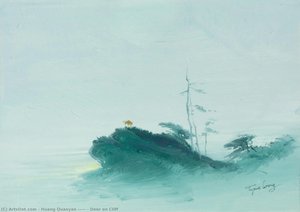
Education & Artistic Awakening: Despite academic struggles, Wong’s determination shone through as he secured a scholarship to Otis Art Institute, where his exposure to European masters like Picasso and Matisse solidified his artistic sensibilities. His studies at the Central Library in Los Angeles proved equally crucial, immersing him in the serene beauty of Sung Dynasty landscapes—a visual vocabulary that would profoundly shape his distinctive style. These landscapes served as inspiration for Wong’s exploration of color theory and compositional balance—elements he skillfully incorporated into his paintings and animations.
Hollywood Collaboration & Disney’s Bambi: Wong's career took an extraordinary turn when he joined Walt Disney Productions in 1938. His contribution to *Bambi* remains arguably his most celebrated achievement, capturing the essence of Eastern artistic tradition—specifically the concept of “Qi”—through a masterful blend of watercolor and ink wash techniques. This stylistic choice wasn’t merely aesthetic; it represented Wong's deliberate rejection of Western realism in favor of conveying emotion and atmosphere through evocative imagery. He envisioned Bambi’s forest as a living, breathing organism—a symphony of color and texture designed to evoke feelings of wonder and compassion. The film’s visual style owes much to Wong’s profound understanding of Eastern artistic principles.
Prolific Filmmaker & Diverse Artistic Pursuits: Beyond Disney, Wong collaborated extensively with Warner Bros., MGM and Hanna-Barbera, serving as a set designer and storyboard artist on iconic films like *Rio Bravo*, *The Music Man* and *PT 109*. He also ventured into ceramics and kite making, demonstrating his versatility as an artist. His work extended beyond the screen—he designed greeting cards and created stunning California dinnerware—reflecting his commitment to artistic exploration across various mediums. Wong’s dedication to capturing fleeting moments of beauty and emotion—whether on film or in a ceramic vessel—underscored his belief that art should transcend technical skill and connect with viewers on an emotional level.
Recognition & Legacy: Wong’s enduring influence on animation and visual storytelling is undeniable. He received numerous awards, including the Winsor McCay Award in 2005 and the Disney Legends Award in 2001—honors recognizing his contribution to American art history. More importantly, Wong's unwavering belief in artistic integrity and his ability to distill complex emotions into simple yet profoundly beautiful images cemented his place as a visionary artist whose legacy continues to inspire generations of creatives. His work stands as a powerful reminder that true artistry lies not just in mastering technique but in conveying universal human experiences with grace and sensitivity.