The Life and Identity of J Bourjinon
In the bustling era of the Kingdom of the Netherlands, a painter named J Bourjinon sought to capture the quiet abundance of the physical world. His presence in the annals of art is marked by a steady activity that spanned the latter half of the seventeenth century, specifically between 1660 and 1700. He moved through a landscape of shifting names and identities, a common occurrence for those who labored in the studios of the time. Some records speak of him as J. Bourginon, while others suggest the name J. Bourgeois. Even the way his signature appears on a canvas can vary, sometimes appearing to the eye as J Bourgien f, leaving historians to trace the lineage of his hand through these subtle variations.
The life of this artist was rooted in the traditions of his homeland, where the mastery of light and the depiction of material textures were held in high regard. He belonged to a generation of painters who found purpose in the meticulous observation of nature. While the specific details of his personal struggles or his early training remain obscured by the passage of centuries, his identity is firmly tied to this period of Dutch creativity. He was a man of his time, working within a framework of established customs to bring order and beauty to the domestic scenes of his era.
Key Works and Artistic Subjects
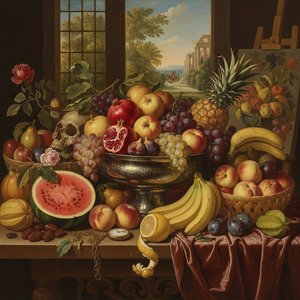
The artist found his calling in the quiet, meticulous study of the objects that graced the tables of the affluent. He possessed a keen eye for the textures of abundance, focusing his brush on the textures of food and the fine vessels that held them. In his hands, a simple arrangement of sustenance became a study of light and shadow, designed to stir the senses of those who viewed it. He sought to capture the very essence of a meal, turning the fleeting moment of a feast into a permanent visual delight.
One such work, Still life with fruit and shellfish, offers a glimpse into this preoccupation. Painted in about 1657, this oil on canvas presents a precarious display of exotic delicacies and fine tableware. The composition rests upon sumptuous draperies, which provide a soft, heavy contrast to the hard surfaces of the vessels. Within this arrangement, lobsters and crayfish are laid out, their forms rendered with a precision that invites a mouth-watering anticipation of flavours. The scale of the work, measuring 789 x 1143 mm, allows the viewer to linger upon the details of the shell and the fruit, feeling the weight of the abundance he so carefully composed.
Perguntas e Respostas
Onde posso encontrar estatísticas sobre as obras de J Bourjinon?
As estatísticas sobre as obras de J Bourjinon estão disponíveis na página de Estatísticas do artista.
Como a carreira de J Bourjinon é dividida em períodos?
A trajetória de J Bourjinon desenrola-se período a período na página Linha do tempo do artista: uma linha do tempo horizontal das obras, agrupadas em capítulos por fases da carreira.
De onde é J Bourjinon?
J Bourjinon nasceu em Kingdom of the Netherlands.
Quantas obras de J Bourjinon estão disponíveis para explorar?
Você pode explorar 1 obras de arte obras de J Bourjinon na página Todas as obras.