Johannes Vermeer: Life and Legacy
Early Life and Background
- Born in Delft, Netherlands, in October 1632, Johannes Vermeer (also known as Jan Vermeer) entered a world steeped in artistic and commercial activity.
- His father, Reijnier Janszoon, was an art dealer and innkeeper, providing young Johannes with early exposure to the art market.
- Family History: Vermeer’s mother, Digna Baltens, came from a family with connections to Antwerp, a significant artistic center.
- He was baptized within the Reformed Church, reflecting the religious climate of Delft at the time.
Artistic Development and Style
- Vermeer began his artistic career relatively late, around 1653, after taking over his father’s business.
- Genre Painting: He specialized in genre painting – scenes from everyday life, particularly domestic interiors.
- Master of Light: Vermeer is renowned for his exceptional use of light, creating a luminous and realistic quality in his paintings.
- His technique involved meticulous detail, subtle color palettes, and careful observation of perspective.
- He worked slowly and deliberately, often using expensive pigments to achieve the desired effects.
Major Works and Themes
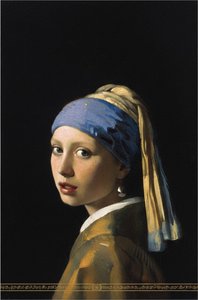
- Girl with a Pearl Earring (c. 1665): Perhaps his most famous work, celebrated for its enigmatic subject and masterful rendering of light.
- The Milkmaid (c. 1657-1658): A quintessential example of Vermeer’s domestic scenes, showcasing everyday life with dignity and grace.
- View of Delft (c. 1660-1661): A cityscape that demonstrates his skill in capturing atmospheric perspective and the unique character of Delft.
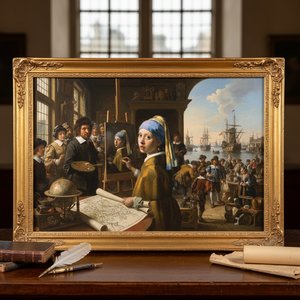
- The Art of Painting (c. 1666-1668): An allegorical work reflecting on the art of painting itself, featuring a model posing for an artist.
- Recurring Themes: His paintings often depict women engaged in quiet activities – reading letters, pouring milk, playing music – offering glimpses into 17th-century Dutch life.
Influences and Artistic Context
- Dutch Golden Age: Vermeer worked during the Dutch Golden Age, a period of unprecedented prosperity and artistic innovation in the Netherlands.
- He was influenced by contemporary painters such as Pieter de Hooch and Gerard ter Borch, who also specialized in genre scenes.
- Camera Obscura: Some scholars suggest Vermeer may have used a camera obscura – an optical device that projects images onto a surface – to aid his compositions and achieve accurate perspective.
- The emphasis on realism and detail in his work reflects the scientific spirit of the age.
Historical Significance and Rediscovery
- Despite producing relatively few paintings (around 34 are universally attributed to him), Vermeer’s work has had a lasting impact on art history.
- Posthumous Obscurity: After his death in 1675, Vermeer fell into obscurity for nearly two centuries.
- His rediscovery began in the 19th century thanks to the efforts of art historians like Gustav Friedrich Waagen and Théophile Thoré-Bürger.
- Enduring Legacy: Today, Vermeer is celebrated as one of the greatest painters of all time, admired for his technical skill, artistic vision, and ability to capture the beauty of everyday life.