Early Life and Inspiration
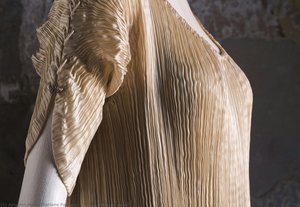
Mariano Fortuny, a name synonymous with theatrical innovation and opulent textiles, was born on May 11, 1871, in Granada, Spain – a city steeped in history and artistic tradition. His early life was profoundly shaped by the sudden loss of his father, Mariano Fortuny y Marsal, a respected genre painter, when the young boy was just three years old. This tragic event propelled his family to Paris, France, where his mother, Cecilia de Madrazo, exposed him to the vibrant world of Parisian fashion and textiles. It was within this environment that Fortuny’s artistic sensibilities truly began to blossom, nurtured by a diverse collection of fabrics and materials – a legacy inherited from his father's own passion for collecting.
From a remarkably young age, Fortuny demonstrated an extraordinary aptitude for various art forms: painting, photography, sculpting, architecture, etching, and even theatrical stage lighting design. His innate curiosity and inventive spirit quickly led him to experiment with new techniques and materials, foreshadowing the revolutionary contributions he would later make to the world of theatre. The influence of his mother’s textile collection proved particularly formative, sparking a lifelong fascination with patterns, textures, and the interplay of light and color – elements that would become central to his artistic vision.
Artistic Talents and Revolutionary Inventions
Fortuny's artistic talents weren’t confined to traditional painting; he was a true polymath, driven by an insatiable desire to innovate and push the boundaries of creative expression. He quickly established himself as a skilled craftsman and inventor, developing over twenty patented inventions between 1901 and 1934 – a testament to his remarkable ingenuity. Perhaps his most significant invention was the “fortuny cyclorama dome,” a quarter-dome structure constructed from plaster or cloth designed to create seamless transitions between scenes in theatrical productions. This ingenious device utilized indirect lighting, manipulating reflected light off various surfaces to dramatically alter color, intensity, and overall effect – a groundbreaking technique that fundamentally changed the way stage sets were illuminated.
Fortuny’s treatise, “Eclairage Scenique” (1904), meticulously documented his discoveries regarding the properties of light, detailing how it could be harnessed and transformed to achieve unprecedented visual depth and realism on stage. This work established him as a pioneer in theatrical lighting design, earning him international recognition within the artistic community. Beyond the cyclorama dome, Fortuny’s inventive mind produced numerous other innovations, including specialized fabrics, lighting fixtures, and even a unique suction fan system for maintaining the tautness of his domes – demonstrating a relentless pursuit of technological advancement to serve his artistic goals.
Notable Collaborations and Artistic Influences
Fortuny's work quickly gained widespread acclaim in the 1920s, attracting the attention of influential figures across Europe and America. He forged significant collaborations with prominent artists and cultural icons, including Richard Wagner, the renowned German composer, whose operas deeply inspired Fortuny’s dramatic stage designs. His contributions to the premiere of Wagner's *Tristan und Isolde* at the Scala opera house in Milan were particularly noteworthy, as he adapted his dome system for the theater’s vast space and devised a clever suction fan mechanism to maintain its structural integrity – a testament to his engineering prowess.
Fortuny also worked closely with the celebrated Italian opera singer Eleonora Duse, designing elaborate sets and costumes for her performances, further solidifying his reputation as a visionary artist. His designs were coveted by leading figures in the theatre world, including Isadora Duncan and Ellen Terry, demonstrating the broad appeal of his innovative aesthetic. The influence of Fortuny extended beyond the stage; he was deeply inspired by the art and culture of ancient civilizations, particularly those of Egypt, Greece, and Persia – a fascination that informed his use of rich colors, intricate patterns, and dramatic compositions.
Legacy and Lasting Influence
Mariano Fortuny passed away on May 3, 1949, in Venice, Italy, leaving behind a remarkable legacy that continues to resonate today. His work profoundly influenced the French novelist Marcel Proust, who drew inspiration from Fortuny’s artistic vision and his exploration of memory and sensory experience in *In Search of Lost Time*. Fortuny's life story was also depicted in Pere Gimferrer’s novel *Fortuny*, further cementing his place in literary history.
Despite his untimely death, Fortuny’s impact on the world of theatrical design remains undeniable. His innovations revolutionized stage lighting and set construction, setting new standards for visual spectacle and immersive storytelling. Today, his designs continue to be studied and admired by artists, designers, and theatre professionals worldwide – a testament to the enduring power of his creative genius. Explore more about Mariano Fortuny's inventions and designs at AllPaintingsStore’s collection. Discover the impact of his work on theatrical lighting in the museum destroyed by fire (united states), a story of an unfortunate event that shaped american art history, available at AllPaintingsStore’s blog.