Garantia de Reembolso · 100 dias Entrega gratuita para todo o mundo
646.446obras de arte 53.409artistas 5.406museus 32idiomas
Portrait of Eugène Fromentin

Shop the 69 Most Famous Eugène Fromentin Paintings

Updated Outubro 2026 · ranked by our popularity score (searches, visits and orders for each work) · 69 works by Eugène Fromentin in our catalogue

Quick answer

Women of the Ouled Nayls (1867) is Eugène Fromentin's best-known painting; the original belongs to the Art Institute of Chicago, Chicago. Souvenir of Ezneh, Upper Egypt (1876) ranks second, Moorish Burial (1853) third. Our catalogue has 69 works by Eugène Fromentin; here are the 69 most famous, ranked, with the year and museum of each, to help you pick the one to order.

1820 – 1876, La Rochelle Orientalism Most works: Musée d'Orsay

Eugène Fromentin: the 10 top-ranked paintings

1
Women of the Ouled Nayls (1867) by Eugène Fromentin

Women of the Ouled Nayls

1867 · Oil On Canvas · Art Institute of Chicago, Chicago

In this 1867 oil on canvas, we find ourselves within an enclosed Algerian courtyard, observing a group of Ouled Nayls women during a moment of repose. The composition uses the high, rugged walls of the setting to create a sense of deep enclosure, pulling the viewer into a private, shadowed space. Light enters the scene with a heavy, directional quality, characteristic of late afternoon or twilight. This light catches the…

2
Souvenir of Ezneh, Upper Egypt (1876) by Eugène Fromentin

Souvenir of Ezneh, Upper Egypt

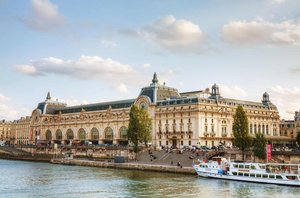
1876 · Oil On Canvas · Musée d'Orsay, Paris

This work, titled Souvenir of Ezneh, Upper Egypt, was painted by Eugène Fromentin in 1876. It is a piece that captures a specific moment of observation, reflecting the artist's deep engagement with the landscapes and people of the region. The composition focuses on a quiet scene along the riverbank, rendered with a sense of stillness that defines much of Fromentin's output from this period.

Eugène Fromentin, ranks 11 to 69

11The country's thirst (1869) by Eugène FromentinThe country's thirst1869 · Musée d'Orsay 12The Arab Falconer (1864) by Eugène FromentinThe Arab Falconer1864 · Metropolitan Museum of Art 13Orientals (1872) by Eugène FromentinOrientals1872 · Minneapolis Institute of Art 14At the Well (1875) by Eugène FromentinAt the Well1875 · Walters Art Museum 15Arabs Watering Their Horses (1872) by Eugène FromentinArabs Watering Their Horses1872 16Arabs Crossing a Ford (1873) by Eugène FromentinArabs Crossing a Ford1873 · Metropolitan Museum of Art 17Arabian Horses (1850) by Eugène FromentinArabian Horses1850 · Art Institute of Chicago 18A Fantasia, Algeria (1869) by Eugène FromentinA Fantasia, Algeria1869 · Musée d'Orsay 19Arabian Encampment (1847) by Eugène FromentinArabian Encampment1847 · Yale University Art Gallery 20North African Landscape (1847) by Eugène FromentinNorth African Landscape1847 · Museu de Belas Artes de Boston 21Horsemen at the Foot of the Chiffa Cliffs (1850) by Eugène FromentinHorsemen at the Foot of the Chiffa Cliffs1850 · Museum of Fine Arts Ghent (MSK) 22Farmyard with Cattle, Eugène Fromentin-Dupeux, 1849 (1849) by Eugène FromentinFarmyard with Cattle, Eugène Fromentin-Dupeux, 18491849 · Rijksmuseum 23Moroccan Combat Scene (1863) by Eugène FromentinMoroccan Combat Scene1863 · Cantor Arts Center at Stanford University 24Arabs Watering Their Horses (1870) by Eugène FromentinArabs Watering Their Horses1870 · Museum of Art 25Crossing the Ford, Algeria (1869) by Eugène FromentinCrossing the Ford, Algeria1869 · National Gallery of Ireland 26Lion hunting (1867) by Eugène FromentinLion hunting1867 · Museum of Fine Arts Ghent (MSK) 27On the Nile, Near Philae (1871) by Eugène FromentinOn the Nile, Near Philae1871 · Art Institute of Chicago 28African scene (1871) by Eugène FromentinAfrican scene1871 29Arabs on the Way to the Pastures of the Tell (1866) by Eugène FromentinArabs on the Way to the Pastures of the Tell1866 · High Museum of Art 30The Arab Falconer (1864) by Eugène FromentinThe Arab Falconer1864 31An Encampment in the Atlas Mountains (1865) by Eugène FromentinAn Encampment in the Atlas Mountains1865 · Walters Art Museum 32Scene in the Desert (1868) by Eugène FromentinScene in the Desert1868 33Falcon Hunt ('Algeria Remembered') (1874) by Eugène FromentinFalcon Hunt ('Algeria Remembered')1874 · National Gallery of Ireland 34An Arabian Camp (1873) by Eugène FromentinAn Arabian Camp1873 · Minneapolis Institute of Art 35Arabs Crossing a Ford (1873) by Eugène FromentinArabs Crossing a Ford1873 36La Caravane (Scene of Nomads) (1875) by Eugène FromentinLa Caravane (Scene of Nomads)1875 37Head of an Old Woman by Eugène FromentinHead of an Old WomanThe New Art Gallery Walsall 38scenery with trees by Eugène Fromentinscenery with trees 39Falkenjagd In Der Sahara by Eugène FromentinFalkenjagd In Der SaharaMusée Condé 40Arabs Fording A Mountain Stream by Eugène FromentinArabs Fording A Mountain Stream 41Night Robbers by Eugène FromentinNight Robbers 42Tents of the Smalah of Si-Hamed-Bel-Hadj - Sahara by Eugène FromentinTents of the Smalah of Si-Hamed-Bel-Hadj - Sahara 43Arabs Resting by Eugène FromentinArabs Resting 44Les bords du Nil by Eugène FromentinLes bords du NilNational Gallery 45Felucca au bord du nil by Eugène FromentinFelucca au bord du nil 46Arabs Hunting with a Falcon by Eugène FromentinArabs Hunting with a FalconMusée des Beaux-Arts 47Khan in Algiers by Eugène FromentinKhan in AlgiersMuseu de Belas Artes de Boston 48An Encampment in the Atlas Mountains by Eugène FromentinAn Encampment in the Atlas Mountains 49Une Rue A El-aghouat by Eugène FromentinUne Rue A El-aghouat 50The Bab-El-Gharbi Road by Eugène FromentinThe Bab-El-Gharbi Road 51Arab Horsemen by Eugène FromentinArab Horsemen 52Falcon Hunting In Algeria by Eugène FromentinFalcon Hunting In Algeria 53Departing For The Hunt by Eugène FromentinDeparting For The Hunt 54A Falcon Hunt in Algeria by Eugène FromentinA Falcon Hunt in Algeria 55Arab Horsemen Resting in the Forest by Eugène FromentinArab Horsemen Resting in the ForestMusée d'Orsay 56Rider Bunch In The Paying Sandstorm by Eugène FromentinRider Bunch In The Paying Sandstorm 57The Land of Thirst by Eugène FromentinThe Land of Thirst 58Muleteers stopped - algiers by Eugène FromentinMuleteers stopped - algiers 59Ville d-Algérie by Eugène FromentinVille d-Algérie 60Interior of the Workshop of an Arab Tailor by Eugène FromentinInterior of the Workshop of an Arab Tailor 61Departing For The Hunt - by Eugène FromentinDeparting For The Hunt - 62Abreuvoir à Laghouat, en Algerie by Eugène FromentinAbreuvoir à Laghouat, en Algerie 63Cavaliers au bord de l'eau by Eugène FromentinCavaliers au bord de l'eau 64Jeunes filles arabes by Eugène FromentinJeunes filles arabes 65Arab Camp by Eugène FromentinArab Camp 66The Land of Thirst (1869) by Eugène FromentinThe Land of Thirst1869 67Kabyle Shepherd (Shepherd: High Plateau of Kabylia) (1861) by Eugène FromentinKabyle Shepherd (Shepherd: High Plateau of Kabylia)1861 · Philadelphia Museum of Art 68Falconry in Algeria: the kill (1863) by Eugène FromentinFalconry in Algeria: the kill1863 · Musée d'Orsay 69Coup de vent dans les plaines d'Alfa (1864) by Eugène FromentinCoup de vent dans les plaines d'Alfa1864

Eugène Fromentin paintings by subject

The four most frequent subjects in this ranking, with the top painting for each.

Museums holding Eugène Fromentin's originals

The 8 museums that hold the most of the paintings on this page.

Museum City Works by Eugène Fromentin Paintings from this list
Musée d'Orsay, ParisMusée d'Orsay Paris 5 Souvenir of Ezneh, Upper Egypt, The country's thirst, A Fantasia, Algeria
Art Institute of Chicago, ChicagoArt Institute of Chicago Chicago 3 Women of the Ouled Nayls, Arabian Horses, On the Nile, Near Philae
Museu de Belas Artes de Boston, BostonMuseu de Belas Artes de Boston Boston 3 Standard Bearer, North African Landscape, Khan in Algiers
National Gallery of Ireland, DublinNational Gallery of Ireland Dublin 3 L'Incendie, Crossing the Ford, Algeria, Falcon Hunt ('Algeria Remembered')
Metropolitan Museum of Art, Nova YorkMetropolitan Museum of Art Nova York 2 The Arab Falconer, Arabs Crossing a Ford
Minneapolis Institute of Art, MinneapolisMinneapolis Institute of Art Minneapolis 2 Orientals, An Arabian Camp
Walters Art Museum, BaltimoreWalters Art Museum Baltimore 2 At the Well, An Encampment in the Atlas Mountains
Museum of Fine Arts Ghent (MSK), GanteMuseum of Fine Arts Ghent (MSK) Gante 2 Horsemen at the Foot of the Chiffa Cliffs, Lion hunting

Top Eugène Fromentin painting by decade

Works per decade

Select a decade to see its top painting.

What to know about Eugène Fromentin paintings

Which famous Eugène Fromentin painting tops the ranking?Show answer

Women of the Ouled Nayls (1867), Art Institute of Chicago, Chicago, ranks first, followed by Souvenir of Ezneh, Upper Egypt (1876) and Moorish Burial (1853).

How old was Eugène Fromentin in the year of Women of the Ouled Nayls?Show answer

Eugène Fromentin was 47: Women of the Ouled Nayls is dated 1867, and Eugène Fromentin was born in 1820.

Which Eugène Fromentin paintings make the top 10?Show answer

Women of the Ouled Nayls, Souvenir of Ezneh, Upper Egypt, Moorish Burial, Falconry in Algeria, Standard Bearer, The Arab Chief, Stop of Arab Riders in the Plain, Centaurs, L'Incendie and Before the Race: Fantasia or The Halt in the Desert. Year and museum for each are in the ranking above.

How many Eugène Fromentin works does your catalogue list?Show answer

69 works by Eugène Fromentin are in our catalogue, dated 1847 to 1876.

Where can the originals of Eugène Fromentin's famous paintings be seen?Show answer

Mainly in Musée d'Orsay (Paris), Art Institute of Chicago (Chicago) and Museu de Belas Artes de Boston (Boston). See the museum table above for the full list.

In which years did Eugène Fromentin paint the top-ranked works?Show answer

In 1860s: 21 of the 69 paintings ranked here date from that time, including Women of the Ouled Nayls.

Which famous Eugène Fromentin paintings are the earliest and the latest?Show answer

Earliest on this page: Arabian Encampment (1847). Latest: Souvenir of Ezneh, Upper Egypt (1876).

What are Eugène Fromentin's most frequent subjects?Show answer

Among the 69 paintings ranked here: Landscape (8), Sky (5) and Horse (4).

Which medium did Eugène Fromentin use most often?Show answer

Oil On Canvas, for 5 of the 69 paintings ranked here.

Which art movement is Eugène Fromentin part of?Show answer

Orientalism and Romanticism, based on the paintings ranked on this page.

Which Eugène Fromentin paintings are held by the Musée d'Orsay?Show answer

The Musée d'Orsay, Paris holds 5 of the paintings ranked here, including Souvenir of Ezneh, Upper Egypt, The country's thirst and A Fantasia, Algeria.

Do you sell reproductions of Eugène Fromentin paintings?Show answer

Yes. Every painting on this page can be ordered as a hand-painted oil reproduction or a print. Open the painting, choose the size and place your order.

Eugène Fromentin: life and career

O Visionário do Saara: A Vida e o Legado de Eugène Fromentin

Eugène Fromentin destaca-se como uma figura fundamental na pintura orientalista francesa, mas o seu legado estende-se muito além da mera representação visual. Nascido em La Rochelle, França, em 1820, ele embarcou numa jornada artística marcada pela exposição precoce à pintura de paisagem sob a orientação de Louis Cabat. Esta formação fundamental impulsionou-o em direção a um envolvimento profundo com a vibrante cultura da Argélia — uma fascinação que definiria tanto a sua obra quanto as suas buscas intelectuais. Mais do que apenas capturar vistas pitorescas, Fromentin procurou destilar a essência da vida argelina, fundindo a observação meticulosa com pinceladas expressivas para criar imagens imbuídas de uma atmosfera palpável e pulsante.

O grande triunfo artístico de Fromentin surgiu em 1847 com “Les gorges de la Chiffa,” uma tela monumental que imediatamente conquistou aclamação no Salão de Paris e o estabeleceu como um dos principais intérpretes da topografia dramática da Argélia. A sua ligação ao Norte de África não era meramente académica; através de viagens como a sua missão de 1852, acompanhando uma expedição arqueológica, ele alcançou um conhecimento íntimo da terra. Esta experiência direta permitiu-lhe capturar a beleza rústica do deserto do Saara com uma precisão notável, documentando a sua flora, fauna e os hábitos matizados do seu povo. A sua obra serve frequentemente como uma janela para um mundo de luz e sombra, onde o calor do deserto e a resiliência da vida humana são retratados com um realismo impressionante.

A Maestria da Luz e o Realismo Orientalista

O brilho da técnica de Fromentin reside na sua capacidade de fundir elementos do Orientalismo e do Romantismo. As suas pinturas, como “The Arab Falconer” e “Arabs Crossing a Ford,” exemplificam um estilo distintivo caracterizado por paletas de cores luminosas e composições dinâmicas. Profundamente influenciado pelo fervor romântico de Eugène Delacroix, Fromentin utilizou a luz para criar profundidade e tridimensionalidade, tornando as paisagens áridas quase táteis. O seu uso de cores vibrantes nunca foi meramente decorativo; servia para intensificar o drama e a tensão inerentes às cenas de sobrevivência e existência quotidiana.

Uma das suas obras mais comoventes, “The Land of Thirst,” pintada em 1869, demonstra a sua mestria da narrativa através da paisagem. Nesta peça, o artista retrata uma cena dramática de pessoas a lutar pela sobrevivência num ambiente desértico implacável. Através de detalhes intrincados e um poderoso sentido de atmosfera, ele captura a essência da resiliência humana perante a adversidade. Esta capacidade de infundir representações realistas com um profundo peso emocional é o que separa Fromentin de muitos dos seus contemporâneos, que se focavam apenas no exotismo do Oriente.

O Pintor-Erudito: Crítica de Arte e Eminência Literária

Contudo, a contribuição de Fromentin para a história da arte transcende a estética puramente visual. Ele emergiu como um crítico de arte e escritor pioneiro, possuindo uma perspetiva única que combinava o olhar de um praticante com a alma de um filósofo. A sua obra seminal, “Les maîtres d’autrefois” (Os Mestres de Outrora), publicada em 1876, permanece como uma peça influente da literatura de arte. Neste empreendimento ambicioso, ele forneceu uma análise abrangente da pintura flamenga primitiva e dos mestres do Barroco do Norte, incluindo lendas como Rubens e Rembrandt.

O que tornou a sua crítica tão revolucionária foi a sua abordagem pessoal; ele não se limitava a oferecer uma exposição erudita, mas partilhava reflexões profundamente pessoais sobre a conquista artística. Ele via os Velhos Mestres através da lente de um artista, considerando as suas emoções e os contextos social, político e económico em que criaram as suas obras-primas. As suas percepções foram tão profundas que até o renomado crítico Bernhard Berenson falou da necessidade de ler Fromentin para compreender verdadeiramente as pinturas que ele criticava. Através da sua identidade dual como pintor e homem de letras, Eugène Fromentin deixou uma marca indelével no panorama intelectual do século XIX, unindo o mundo visível do deserto à profunda história da arte europeia.

All 69 works by Eugène Fromentin →