Garantia de Reembolso · 100 dias Entrega gratuita para todo o mundo
646.446obras de arte 53.409artistas 5.406museus 32idiomas
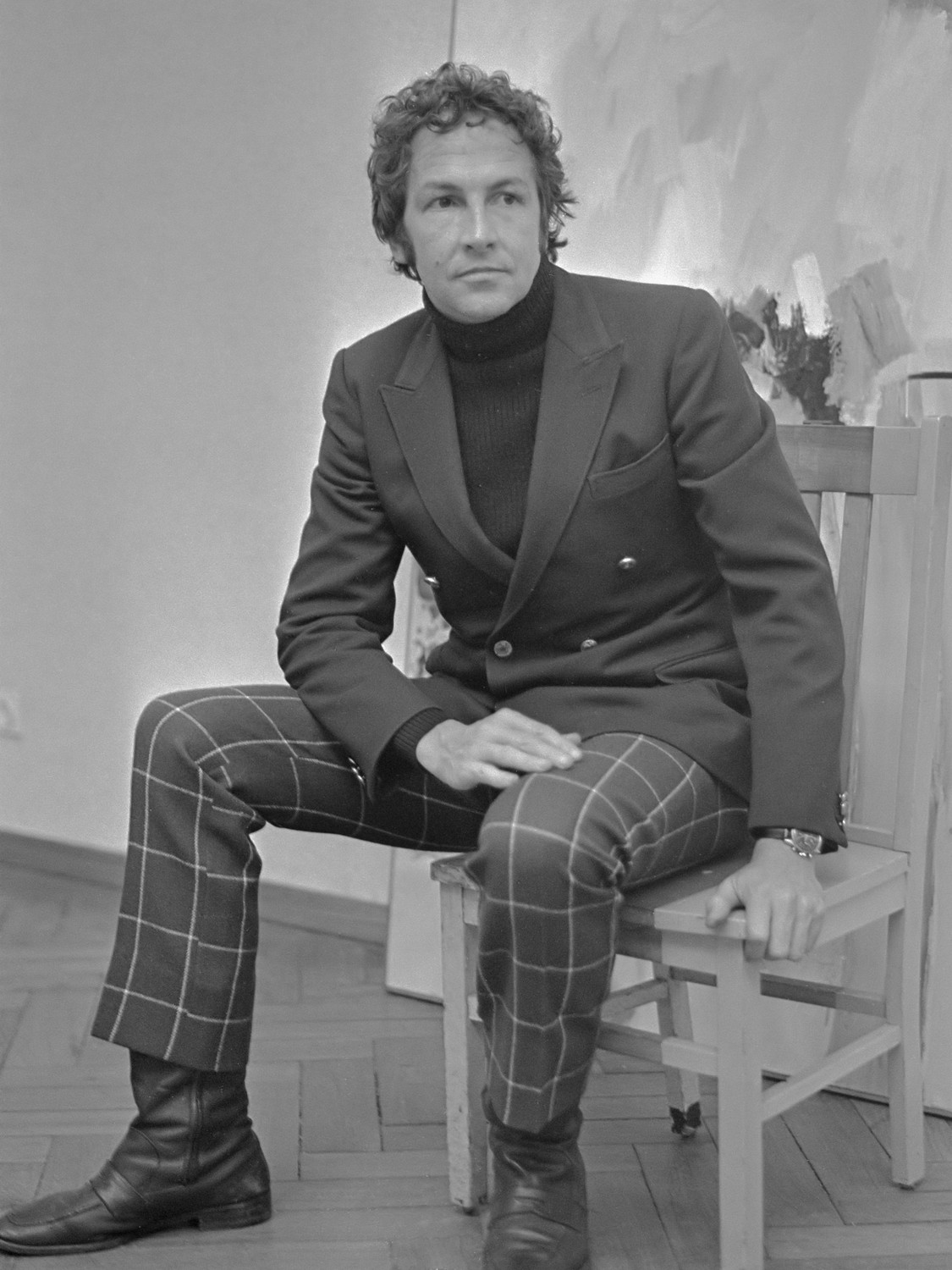
Portrait of Robert Rauschenberg

The 100 Most Famous Robert Rauschenberg Paintings to Choose From

Updated Outubro 2026 · ranked by our popularity score (searches, visits and orders for each work) · 109 works by Robert Rauschenberg in our catalogue

Quick answer

Number one among Robert Rauschenberg's paintings is Patrimônio (1963). In second and third place: Signs (1970) and Barge (1963). Our catalogue holds 109 works by Robert Rauschenberg. The 100 listed here are the most famous, in rank order, with the year and museum of each original.

1925 – 2008, Port Arthur Pop art Most works: Bavarian State Painting Collections

The top 10: Robert Rauschenberg's most famous paintings

1
Patrimônio (1963) by Robert Rauschenberg

Patrimônio

1963 · Mixed Media

Robert Rauschenberg’s *Estate* (1963) é uma exploração vibrante e cativante da vida urbana moderna, que combina habilmente formas abstratas com elementos reconhecíveis retirados da paisagem urbana – placas de rua, fragmentos arquitetônicos e sugestões de atividade frenética. Esta obra mista não apenas retrata uma cidade; ela a incorpora, capturando sua energia caótica e as complexidades subjacentes, tornando-se um ponto focal impressionante para qualquer coleção de arte contemporânea ou design de…

2
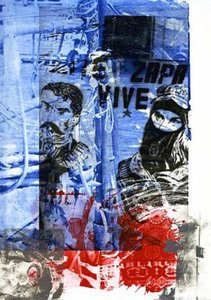
Signs (1970) by Robert Rauschenberg

Signs

1970 · Screenprint

In the landscape of twentieth-century art, few works possess the visceral, haunting power of Robert Rauschenberg’s Signs. Created in 1970, this masterful screenprint serves as a profound visual eulogy for the 1960s, a decade defined by both unprecedented social progress and staggering tragedy. As a prominent figure in the Pop Art movement, Rauschenberg moved beyond mere representation, instead utilizing a complex, layered montage to capture the fragmented psyche of an…

3
Barge (1963) by Robert Rauschenberg

Barge

1963 · Oil On Canvas · Museu Guggenheim Bilbao, Bilbao

Robert Rauschenberg completed Barge in 1963. This large-scale work is the largest of seventy-nine screenprint paintings produced by the artist between 1962 and 1964. The canvas measures 203 x 980 cm.

4
Odalisk (1958) by Robert Rauschenberg

Odalisk

1958 · Mixed Media · Museum Ludwig, Colônia

Robert Rauschenberg created Odalisk in 1958. This mixed media installation exists as a Combine, a term for his specific approach to merging the boundaries of sculpture and painting. It occupies a space between the painted surface and the physical object, pulling fragments of the everyday into a singular, structured presence.

5
Bed (1955) by Robert Rauschenberg

Bed

1955 · Mixed Media · MoMA - Museu de Arte Moderna, Nova York

is a work by Robert Rauschenberg created in 1955. It is recognized as one of the first of the artist's Combines, a series of works that blurred the boundaries between painting and sculpture by incorporating found objects into the composition.

6
Erased de Kooning (1953) by Robert Rauschenberg

Erased de Kooning

1953 · Óleo sobre tela

Robert Rauschenberg’s “Erased de Kooning” (1953) transcende a mera aparência de uma pintura desbotada e quase espectral. É um marco na história da arte, desafiando conceitos tradicionais sobre autoria, originalidade e até mesmo o próprio significado de uma obra artística. Esta peça inovadora não se concentra no que é representado, mas sim no ato da apagamento em si – uma ação deliberadamente conceitual que se tornou um símbolo da liberdade…

7
Collection (1955) by Robert Rauschenberg

Collection

1955 · Mixed Media · San Francisco Museum of Modern Art, São Francisco

In the mid-1950s, the art world was gripped by the intense, often brooding emotionalism of Abstract Expressionism. Yet, amidst this era of heavy shadows and singular gestures, Robert Rauschenberg emerged with a vision that refused to be contained by the edges of a traditional canvas. His 1955 masterpiece, “Collection,” serves as a breathtaking manifesto of this new era—a work that does not merely sit upon a wall but breathes with…

9
Tracer (1964) by Robert Rauschenberg

Tracer

1964

Introduction to the Artist and his Work Robert Rauschenberg, born in 1925, was an American painter and sculptor who played a significant role in the Pop Art movement. He is known for his innovative use of materials and techniques, often incorporating everyday objects and images into his work. One of his most notable series is the silkscreen paintings, which he created between 1963 and 1964, including the painting 'Tracer'. The…

Ranks 11 to 100: more Robert Rauschenberg paintings

11Express by Robert RauschenbergExpress 12Estate (1963) by Robert RauschenbergEstate1963 13Bed by Robert RauschenbergBed 14Persimmon (1964) by Robert RauschenbergPersimmon1964 15Study for Currents #26 (1970) by Robert RauschenbergStudy for Currents #261970 16Cupule (Spread) (1979) by Robert RauschenbergCupule (Spread)1979 17Doric Circus (1979) by Robert RauschenbergDoric Circus1979 18Individual (From 7 Characters) (1982) by Robert RauschenbergIndividual (From 7 Characters)1982 19Wall-Eyed Carp/ROCI JAPAN (1987) by Robert RauschenbergWall-Eyed Carp/ROCI JAPAN1987 20Altar Peace/ROCI MEXICO (1985) by Robert RauschenbergAltar Peace/ROCI MEXICO1985 21Jungle Watch (Borealis) (1991) by Robert RauschenbergJungle Watch (Borealis)1991 · Bavarian State Painting Collections 22SSS (Seed Sack Stack) (Runt) (2007) by Robert RauschenbergSSS (Seed Sack Stack) (Runt)2007 23Untitled (Runt) (2008) by Robert RauschenbergUntitled (Runt)2008 24Untitled (Runt) (2008) by Robert RauschenbergUntitled (Runt)2008 25Retroactive by Robert RauschenbergRetroactive 26Soviet American Array VI by Robert RauschenbergSoviet American Array VI 27Express by Robert RauschenbergExpress 28Piece for tropic by Robert RauschenbergPiece for tropic 29Exhibitimg by Robert RauschenbergExhibitimg 30Should Love Come First (1951) by Robert RauschenbergShould Love Come First1951 31Black Painting (1952) by Robert RauschenbergBlack Painting1952 32Untitled (1955) by Robert RauschenbergUntitled1955 · Art Institute of Chicago 33Odalisk (1955) by Robert RauschenbergOdalisk1955 34Interview (1955) by Robert RauschenbergInterview1955 35Untitled (formerly titled Collage with Horse) (1957) by Robert RauschenbergUntitled (formerly titled Collage with Horse)1957 36Untitled (1955) by Robert RauschenbergUntitled1955 37Winter Pool (1959) by Robert RauschenbergWinter Pool1959 38Pilgrim (1960) by Robert RauschenbergPilgrim1960 39Studio Painting (1961) by Robert RauschenbergStudio Painting1961 40Third Time Painting (1961) by Robert RauschenbergThird Time Painting1961 41Canyon (1959) by Robert RauschenbergCanyon1959 42First Landing Jump (1961) by Robert RauschenbergFirst Landing Jump1961 43Vault (1962) by Robert RauschenbergVault1962 · Bavarian State Painting Collections 44Round Sum (1964) by Robert RauschenbergRound Sum1964 · Toledo Museum of Art 45Retroactive (1964) by Robert RauschenbergRetroactive1964 46Monogram (1955) by Robert RauschenbergMonogram1955 47Stop (1963) by Robert RauschenbergStop1963 48Trophy V (for Jasper Johns) (1962) by Robert RauschenbergTrophy V (for Jasper Johns)1962 49Creek (1964) by Robert RauschenbergCreek1964 50Sky Garden (Stoned Moon) (1968) by Robert RauschenbergSky Garden (Stoned Moon)1968 51Bande de Sureté Twin City Nipples (Cardboard) (1971) by Robert RauschenbergBande de Sureté Twin City Nipples (Cardboard)1971 52Watermark (1973) by Robert RauschenbergWatermark1973 53Night Hutch (Hoarfrost) (1976) by Robert RauschenbergNight Hutch (Hoarfrost)1976 · Dallas Museum of Art 54Hoarfrost Tiger (1975) by Robert RauschenbergHoarfrost Tiger1975 · Museu de Israel 55Recital (Spread) (1980) by Robert RauschenbergRecital (Spread)1980 56Dart (Signal) (1980) by Robert RauschenbergDart (Signal)1980 57Balcone Glut (Neapolitan) (1987) by Robert RauschenbergBalcone Glut (Neapolitan)1987 58No Wake Glut (1986) by Robert RauschenbergNo Wake Glut1986 59Copperhead Grande/ROCI CHILE (1985) by Robert RauschenbergCopperhead Grande/ROCI CHILE1985 60Cuban Acre/ROCI CUBA (1988) by Robert RauschenbergCuban Acre/ROCI CUBA1988 61Yellow Visor Glut (1989) by Robert RauschenbergYellow Visor Glut1989 62Twilight Shippers (Scenario) (2005) by Robert RauschenbergTwilight Shippers (Scenario)2005 63Local Color (Scenario) (2006) by Robert RauschenbergLocal Color (Scenario)2006 64Soar (Runt) (2007) by Robert RauschenbergSoar (Runt)2007 65Ground Rules (Runt) (2006) by Robert RauschenbergGround Rules (Runt)2006 66Untitled (Runt) (2008) by Robert RauschenbergUntitled (Runt)2008 67Untitled (Runt) (2008) by Robert RauschenbergUntitled (Runt)2008 68Wooden Gallop by Robert RauschenbergWooden GallopChrysler Museum of Art 69Untitled (Small oil on canvas 4) by Robert RauschenbergUntitled (Small oil on canvas 4) 70Untitled (3) by Robert RauschenbergUntitled (3) 71Untitled (2) by Robert RauschenbergUntitled (2) 72Harbor by Robert RauschenbergHarbor 73Port of entry by Robert RauschenbergPort of entry 74Stop by Robert RauschenbergStop 75Kip up by Robert RauschenbergKip up 76Untitled by Robert RauschenbergUntitled 77Trophy II by Robert RauschenbergTrophy II 78Kennedy by Robert RauschenbergKennedy 79Self portrait at Black Mountain College by Robert RauschenbergSelf portrait at Black Mountain College 80Brace by Robert RauschenbergBrace 81Water stop by Robert RauschenbergWater stop 82Subtotal (from Stoned Moon series) by Robert RauschenbergSubtotal (from Stoned Moon series) 83Choke by Robert RauschenbergChokeGaleria Nacional Húngara 84Windward by Robert RauschenbergWindward 85Gospel yodel by Robert RauschenbergGospel yodel 86First time painting by Robert RauschenbergFirst time painting 87Epic (Ground Rules) by Robert RauschenbergEpic (Ground Rules) 88Untitled by Robert RauschenbergUntitled 89Collection by Robert RauschenbergCollection 90Fig by Robert RauschenbergFig 91Mirthday man by Robert RauschenbergMirthday man 92Quarry by Robert RauschenbergQuarry 93Metropolitan museum of art by Robert RauschenbergMetropolitan museum of art 94Bach’s rocks by Robert RauschenbergBach’s rocks 95Co existence by Robert RauschenbergCo existence 96K 24976 S by Robert RauschenbergK 24976 S 97Skyway by Robert RauschenbergSkyway 98Booster (1967) by Robert RauschenbergBooster1967 99Untitled (1964) by Robert RauschenbergUntitled1964 100Vacation Mirage (Borealis) by Robert RauschenbergVacation Mirage (Borealis)

Robert Rauschenberg paintings by period

Mid-Career

1952 – 1959 · 3 works in this list

Robert Rauschenberg paintings by subject

The four most frequent subjects in this ranking, with the top painting for each.

Museums holding Robert Rauschenberg's originals

The 8 museums that hold the most of the paintings on this page.

Museum City Works by Robert Rauschenberg Paintings from this list
Bavarian State Painting Collections, MuniqueBavarian State Painting Collections Munique 2 Jungle Watch (Borealis), Vault
Museu Guggenheim Bilbao, BilbaoMuseu Guggenheim Bilbao Bilbao 1 Barge
Museum Ludwig, ColôniaMuseum Ludwig Colônia 1 Odalisk
MoMA - Museu de Arte Moderna, Nova YorkMoMA - Museu de Arte Moderna Nova York 1 Bed
San Francisco Museum of Modern Art, São FranciscoSan Francisco Museum of Modern Art São Francisco 1 Collection
Art Institute of Chicago, ChicagoArt Institute of Chicago Chicago 1 Untitled
Toledo Museum of Art, ToledoToledo Museum of Art Toledo 1 Round Sum
Dallas Museum of Art, DallasDallas Museum of Art Dallas 1 Night Hutch (Hoarfrost)

Each decade's top Robert Rauschenberg painting

Works per decade

Select a decade to see its top painting.

Robert Rauschenberg paintings: FAQ

Which is Robert Rauschenberg's most famous work?Show answer

Patrimônio (1963) ranks first, followed by Signs (1970) and Barge (1963).

At what age was Patrimônio painted by Robert Rauschenberg?Show answer

Robert Rauschenberg was 38: Patrimônio is dated 1963, and Robert Rauschenberg was born in 1925.

What are the ten most famous Robert Rauschenberg paintings?Show answer

Patrimônio, Signs, Barge, Odalisk, Bed, Erased de Kooning, Collection, Big Pile of Bones (Scenario), Tracer and Coca Cola Plan. Year and museum for each are in the ranking above.

How many paintings by Robert Rauschenberg are listed?Show answer

109 works by Robert Rauschenberg are in our catalogue, dated 1951 to 2008.

Which museums hold Robert Rauschenberg's most famous originals?Show answer

Mainly in Bavarian State Painting Collections (Munique), Museu Guggenheim Bilbao (Bilbao) and Museum Ludwig (Colônia). See the museum table above for the full list.

When were the top Robert Rauschenberg paintings made?Show answer

In 1960s: 18 of the 100 paintings ranked here date from that time, including Patrimônio.

What are the oldest and the most recent famous Robert Rauschenberg paintings?Show answer

Earliest on this page: Should Love Come First (1951). Latest: Untitled (Runt) (2008).

Which subjects appear most in Robert Rauschenberg's paintings?Show answer

Among the 100 paintings ranked here: Collage (9), Assemblage (5) and Decay (3).

Which medium is most common in Robert Rauschenberg's paintings?Show answer

Mixed Media, for 4 of the 100 paintings ranked here.

What movement do Robert Rauschenberg's paintings belong to?Show answer

Pop art and Neo-dada, based on the paintings ranked on this page.

Which famous Robert Rauschenberg paintings does the Bavarian State Painting Collections have?Show answer

The Bavarian State Painting Collections, Munique holds 2 of the paintings ranked here, including Jungle Watch (Borealis) and Vault.

Robert Rauschenberg: the artist behind the paintings

Uma Vida Forjada na Transição

Robert Rauschenberg, nascido Milton Ernest Rauschenberg em 1925 no seio das paisagens ricas em petróleo de Port Arthur, Texas, foi um artista cuja própria existência parecia ecoar a energia dinâmica e o espírito transformador que trouxe ao mundo da arte. Sua infância não foi definida por um único local; a profissão de seu pai exigia um estilo de vida nômade, percorrendo diversos terrenos que sutilmente lhe incutiram uma receptividade a estímulos visuais variados e uma disposição para abraçar a mudança. Essa exposição precoce fomentou uma sensibilidade atenta às texturas e ritmos da vida americana – uma corrente subterrânea que moldou profundamente suas explorações artísticas. Embora inicialmente atraído pela farmacologia na Universidade do Texas, o caminho de Rauschenberg desviou-se rapidamente, levando-o à arte – primeiro por necessidade durante o serviço militar na Marinha, depois com estudos focados no Kansas City Art Institute e, crucialmente, no Black Mountain College na Carolina do Norte. Foi nesse cadinho de pensamento vanguardista, ao lado de luminárias como Josef Albers, Merce Cunningham, John Cage e Cy Twombly, que seu espírito experimental realmente se acendeu. Este ambiente não era meramente educativo; era um crisol forjando uma nova sensibilidade artística, lançando as bases para uma abordagem fundamentalmente desafiadora das normas estabelecidas.

O Nascimento dos “Combines”

O legado mais duradouro de Rauschenberg reside em seus revolucionários "Combines", obras que borraram deliberadamente as fronteiras entre pintura, escultura e assemblage. Estes não eram simplesmente pinturas *ou* esculturas; eram construções complexas incorporando objetos encontrados – tudo, desde detritos cotidianos como pneus e sucata de madeira até fotografias, recortes de jornais, até mesmo animais taxidermizados. Esta radical partida não se tratava de novidade por si só; era um questionamento fundamental do que constituía a arte em si. Seu estilo evoluiu como uma rejeição consciente da estética predominante do Expressionismo Abstrato, abraçando, em vez disso, as imagens e a energia da cultura popular e os restos descartados da vida moderna. Influenciado pela postura anti-arte do Dada e pelos *ready-mades* de Marcel Duchamp, Rauschenberg desafiou a noção de que o mérito artístico residia unicamente na habilidade técnica ou concepção original. Ele acreditava em incorporar o acaso, a espontaneidade e o inesperado em seu processo criativo, permitindo que as qualidades inerentes dos objetos encontrados contribuíssem com suas próprias narrativas para a obra de arte. Monogram, com sua justaposição chocante de uma cabeça de bode empalhada montada sobre um pneu de automóvel, é talvez o exemplo mais icônico – uma declaração provocativa sobre a cultura do consumo, a decadência e a colisão entre elementos orgânicos e industriais. Essa disposição para abraçar o não convencional não era meramente estética; era filosófica, refletindo uma mudança cultural mais ampla questionando os valores e hierarquias tradicionais. Os “Combines” não eram apenas objetos; eram declarações – fragmentos de um mundo em rápida transformação remontados em algo novo e desafiador.

Expandindo Horizontes: Serigrafia, Performance e Além

As explorações artísticas de Rauschenberg não permaneceram confinadas aos "Combines". Ele continuamente ultrapassou limites, experimentando novas técnicas e materiais. Seu envolvimento com a serigrafia no início dos anos 1960, exemplificado por obras como Retroactive I & II, permitiu-lhe incorporar imagens de jornais e revistas, refletindo as ansiedades políticas e sociais da época e antecipando o abraço da Pop Art à imagem popular. A Overseas Tech Series (1964), criada usando técnicas de transferência durante viagens na Itália e França, explorou temas de intercâmbio cultural e globalização combinando fotografias tiradas no exterior com imagens serigrafadas. Mas sua influência se estendeu além das artes visuais; suas colaborações com o coreógrafo Merce Cunningham foram igualmente significativas. Essas parcerias resultaram em peças performáticas inovadoras que integraram perfeitamente dança e arte visual, borrando ainda mais as linhas disciplinares e criando experiências imersivas desafiando noções convencionais de expressão artística. Ele não estava simplesmente criando objetos ou imagens; ele estava construindo ambientes, orquestrando eventos – uma abordagem holística da criação artística antecipando as instalações multimídia das gerações posteriores. Esse espírito colaborativo sublinhou sua crença no potencial da arte para transcender as fronteiras tradicionais e envolver um público mais amplo.

Um Legado Duradouro

O impacto de Robert Rauschenberg na arte americana é inegável. Ele desempenhou um papel crucial em preencher a lacuna entre o Expressionismo Abstrato e a Pop Art, abrindo caminho para artistas subsequentes que abraçaram a apropriação, a colagem e as mídias mistas. Seus “Combines” redefiniram fundamentalmente a própria definição de arte, desafiando noções tradicionais de pintura e escultura e expandindo exponencialmente as possibilidades da expressão artística. Ele não estava simplesmente criando objetos; ele estava construindo ambientes refletindo as complexidades e contradições da vida moderna. A disposição de Rauschenberg para experimentar materiais, seu abraço às operações do acaso e seu envolvimento com a cultura popular serviram de poderosa inspiração para inúmeros artistas que o seguiram. Seu trabalho continua sendo exibido em importantes museus em todo o mundo, servindo como uma fonte vital de inspiração para artistas contemporâneos explorando a interseção entre arte, tecnologia e vida cotidiana. Ele deixou para trás não apenas um corpo de trabalho, mas um legado de inovação, desafiando-nos a reconsiderar nossas suposições sobre o que a arte pode ser e como ela interage com o mundo ao nosso redor. Sua influência ressoa hoje no trabalho de artistas que continuam a ultrapassar limites e explorar novas formas de expressão criativa, solidificando seu lugar como uma das figuras mais importantes e influentes da arte do século XX.

Temas e Influências Chave

  • Dada & Marcel Duchamp: O uso de objetos encontrados por Rauschenberg e a rejeição dos valores artísticos tradicionais foram diretamente influenciados pela postura anti-arte do movimento Dada e pelo conceito de “ready-mades” de Duchamp.
  • O Pós-Expressionismo Abstrato: Ele se afastou conscientemente da intensidade emocional e da expressão subjetiva do Expressionismo Abstrato, buscando uma abordagem mais objetiva e inclusiva para a criação artística.
  • Cultura Popular & Mídia de Massa: Rauschenberg abraçou imagens de jornais, revistas e publicidade, refletindo a crescente influência da mídia de massa na sociedade americana.
  • Colaboração & Interdisciplinaridade: Suas colaborações com Merce Cunningham e John Cage demonstraram sua crença no poder do intercâmbio artístico e no desfoque das fronteiras disciplinares.
  • Acaso & Espontaneidade: Ele incorporou elementos de acaso em seu processo criativo, permitindo justaposições inesperadas e um senso de abertura a novas possibilidades.

All 109 works by Robert Rauschenberg →