Garantia de Reembolso · 100 dias Entrega gratuita para todo o mundo
646.446obras de arte 53.409artistas 5.406museus 32idiomas
Portrait of Simão Vouet

Shop the 100 Most Famous Simão Vouet Paintings

Updated Outubro 2026 · ranked by our popularity score (searches, visits and orders for each work) · 166 works by Simão Vouet in our catalogue

Quick answer

Venus e Adonis (1642) is Simão Vouet's best-known painting; the original belongs to the J. Paul Getty Museum, Los Angeles. The Muses of Urania and Calliope (1634) ranks second, Annunciation (1640) third. Our catalogue has 166 works by Simão Vouet; here are the 100 most famous, ranked, with the year and museum of each, to help you pick the one to order.

1590 – 1649, Paris French baroque Most works: Museu do Louvre

Simão Vouet: the 10 top-ranked paintings

1
Venus e Adonis (1642) by Simão Vouet

Venus e Adonis

1642 · Acrílico sobre tela · J. Paul Getty Museum, Los Angeles

Venus and Adonis: A Baroque Symphony of Desire and Mortality Simon Vouet’s “Venus and Adonis,” completed in 1642, transcends mere depiction; it embodies the very essence of French Baroque art—a masterful fusion of Italian influences and profound emotional resonance. This iconic scene from Ovid's *Metamorphoses* captures the pivotal moment where Venus attempts to persuade Adonis to abandon his pursuit of hunting, foreshadowing his tragic fate. Vouet doesn’t simply portray mythology;…

2
The Muses of Urania and Calliope (1634) by Simão Vouet

The Muses of Urania and Calliope

1634 · Acrylic On Canvas · National Gallery of Art, Washington

Simon Vouet’s “The Muses Urania and Calliope”: A Symphony of Baroque Grace Simon Vouet (1590-1649) stands as a pivotal figure in the artistic landscape of 17th-century France, marking the decisive transition from Mannerism to the opulent grandeur of the Baroque style. His legacy resides not merely in his prolific output but also in his unwavering dedication to mastering Italian influences—a pursuit that fundamentally reshaped French painting and cemented Vouet’s place…

3
Annunciation (1640) by Simão Vouet

Annunciation

1640 · Oil On Canvas · Galleria degli Uffizi, Florença

Simon Vouet's "Annunciation," painted in 1640, is more than just a religious depiction; it’s a masterful orchestration of light, shadow, and human emotion. This captivating work transports the viewer to an intimate interior space, where the momentous announcement of Mary’s divine conception unfolds with breathtaking drama. The painting immediately draws the eye to the kneeling figure of the Virgin Mary, bathed in a warm, golden glow emanating from the right…

4
The Fortuneteller (detail) (1617) by Simão Vouet

The Fortuneteller (detail)

1617 · Oil On Canvas · Galleria Nazionale d'Arte Antica, Roma

In the heart of 1617, amidst the vibrant and transformative atmosphere of Roman artistic circles, Simon Vouet captured a moment of profound human connection in his masterpiece, The Fortuneteller. This work, particularly when viewed in its intimate details, serves as much more than a mere portrait; it is an emblem of the burgeoning Baroque style that was beginning to reshape the visual landscape of Europe. The scene unfolds with a…

5
Sleeping Venus (1630) by Simão Vouet

Sleeping Venus

1630 · Acrylic On Canvas · Szépművészeti Múzeum, Budapeste

Simon Vouet's "Sleeping Venus," painted around 1630, is not merely a depiction of a reclining nude; it’s an exquisite distillation of Renaissance ideals and the burgeoning Baroque aesthetic. This captivating work transcends simple portraiture, offering instead a profound meditation on beauty, repose, and the delicate balance between earthly pleasure and spiritual contemplation. The painting immediately draws the viewer into a world of hushed tranquility, inviting us to share in the…

6
Allegory of Virtue (1634) by Simão Vouet

Allegory of Virtue

1634 · Acrylic On Canvas · Museu do Louvre, Paris

Simon Vouet’s “Allegory of Virtue,” completed around 1634, stands as a testament to the burgeoning Baroque aesthetic infiltrating French artistic circles during Louis XIII's reign. More than just a portrait—though it undeniably depicts a woman radiating grace and authority—the painting delves into profound philosophical concepts rooted in humanist ideals prevalent at the time.

7
The Entombment (1638) by Simão Vouet

The Entombment

1638 · Oil On Canvas · Museu Fitzwilliam, Cambridge

Simon Vouet's "The Entombment," painted in 1635–1638, is not merely a depiction of a biblical scene; it’s an exquisitely rendered meditation on grief, faith, and the profound dignity of sacrifice. This monumental work, currently residing within the collection of the Fitzwilliam Museum in Cambridge, transcends its subject matter to become a powerful testament to the Baroque era's ability to evoke intense emotion through masterful technique and carefully considered symbolism. Vouet,…

8
Angels with Attributes of the Passion: Angel Holding the Vessel and Towel for washing the hands of Pontius Pilate (1624) by Simão Vouet

Angels with Attributes of the Passion: Angel Holding the Vessel and Towel for washing the hands of Pontius Pilate

1624 · Oil · Minneapolis Institute of Art, Minneapolis

A single celestial figure emerges from a deep, near-black void, commanding the space with an intimate and monumental presence. This angel, caught in a moment of profound spiritual devotion, gazes upward with eyes full of soulful contemplation or sorrow. The light descends from the upper left, carving the figure out of the darkness and casting soft, tender shadows across a face etched with emotion. Every detail feels immediate, from the…

9
Saint John (1623) by Simão Vouet

Saint John

1623 · Oil On Canvas · Philadelphia Museum of Art, Filadélfia

A young man turns his face toward a light that remains unseen. His eyes, wide and searching, catch a glimmer that pulls his gaze upward, away from the dark, murky depths of the background. Thick, dark curls frame a pale face, creating a sharp contrast against the heavy shadows that swallow the space around him. He is caught in a moment of sudden, quiet realization. The light does not merely…

10
Virgin and Child, with an Angel (1642) by Simão Vouet

Virgin and Child, with an Angel

1642 · Oil On Panel · Philadelphia Museum of Art, Filadélfia

The light falls softly upon the skin of the Virgin Mary, catching the curve of her cheek and the small, smooth hands of the Christ Child. They sit within a triangular arrangement that anchors the composition, surrounded by the deep shadows of a dense woodland. An angel leans into this intimate circle, its robes glowing with warm yellows and golds that contrast against the heavy, dark trees behind them. At…

Simão Vouet, ranks 11 to 100

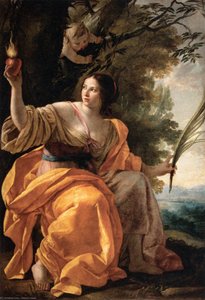
11Madonna with Child (1625) by Simão VouetMadonna with Child1625 · Museu Hermitage 12Time Discovering the Love of Venus and Mars (1640) by Simão VouetTime Discovering the Love of Venus and Mars1640 · John and Mable Ringling Museum of Art 13The Rapture of Saint Theodore (1627) by Simão VouetThe Rapture of Saint Theodore1627 · Staatliche KunstSammlungen Dresden 14Heavenly Charity (1640) by Simão VouetHeavenly Charity1640 · Museu do Louvre 15Allegory (1640) by Simão VouetAllegory1640 · Museus Capitolinos 16Parnassus or Apollo and the Muses (1640) by Simão VouetParnassus or Apollo and the Muses1640 · Szépművészeti Múzeum 17Sacrifice of Isaac (1642) by Simão VouetSacrifice of Isaac1642 · Milwaukee Art Museum 18Angels with Attributes of the Passion, the Superscription from the Cross (1624) by Simão VouetAngels with Attributes of the Passion, the Superscription from the Cross1624 · Minneapolis Institute of Art 19The Holy Family with the Infant Saint John the Baptist (1626) by Simão VouetThe Holy Family with the Infant Saint John the Baptist1626 · Fine Arts Museums of San Francisco 20Ceres and Harvesting Cupids (1634) by Simão VouetCeres and Harvesting Cupids1634 · National Gallery 21Suicide of Lucrece (1625) by Simão VouetSuicide of Lucrece1625 · National Gallery Prague 22The Muse Clio (1640) by Simão VouetThe Muse Clio1640 · Staatliche Kunsthalle Karlsruhe 23Allegory with Venus, Mars, Cupid, and Time (1626) by Simão VouetAllegory with Venus, Mars, Cupid, and Time1626 · John and Mable Ringling Museum of Art 24Vanitas (1621) by Simão VouetVanitas1621 · Museu Nacional de Varsóvia 25Lovers (1614) by Simão VouetLovers1614 · Museu Estatal Pushkin de Artes Visuais 26Martyrdom of Saint Catherine (1620) by Simão VouetMartyrdom of Saint Catherine1620 · Musée des Beaux-Arts de Strasbourg 27The Halberdier (1617) by Simão VouetThe Halberdier1617 · Instituto de Arte de Dayton 28Saint Jerome (c.347–420) (1620) by Simão VouetSaint Jerome (c.347–420)1620 · National Library of Wales 29self-portrait (1620) by Simão Vouetself-portrait1620 30Saint Agnes (1618) by Simão VouetSaint Agnes1618 · Blanton Museum of Art 31Annunciation to Mary (1617) by Simão VouetAnnunciation to Mary1617 · Gemäldegalerie 32Psyche and Cupid (1626) by Simão VouetPsyche and Cupid1626 · Museu de Belas Artes de Lyon 33The Nativity (1632) by Simão VouetThe Nativity1632 34Squire-at-arms - Saint Guillaume d'Aquitaine (1625) by Simão VouetSquire-at-arms - Saint Guillaume d'Aquitaine1625 · Art Museum Riga Bourse 35The Entombment (1635) by Simão VouetThe Entombment1635 · Fitzwilliam Museum 36Saint Catherine (1625) by Simão VouetSaint Catherine1625 · Slovak National Gallery 37Saint Sebastian (1625) by Simão VouetSaint Sebastian1625 · Museum of Fine Arts 38Model for Altarpiece in St. Peter's (1625) by Simão VouetModel for Altarpiece in St. Peter's1625 · Museu de Arte do Condado de Los Angeles 39Model for Altarpiece in St. Peter's (1625) by Simão VouetModel for Altarpiece in St. Peter's1625 · Museu de Arte do Condado de Los Angeles 40Saint Cecilia (1626) by Simão VouetSaint Cecilia1626 · Blanton Museum of Art 41Portrait of Virginia da Vezzo (1625) by Simão VouetPortrait of Virginia da Vezzo1625 · Gemäldegalerie 42The Charity (1635) by Simão VouetThe Charity1635 43Saint Sebastian (1623) by Simão VouetSaint Sebastian1623 44Christ at the Column (1637) by Simão VouetChrist at the Column1637 45The Holy Family with Saint Elizabeth and the young Saint John (1642) by Simão VouetThe Holy Family with Saint Elizabeth and the young Saint John1642 46The Four Seasons (1644) by Simão VouetThe Four Seasons1644 · National Gallery of Ireland 47Head of a Bearded Man (1639) by Simão VouetHead of a Bearded Man1639 · Hatchlands Park 48The Entombment (1637) by Simão VouetThe Entombment1637 · Musée d'Art Roger-Quilliot 49Artemisia Building the Mausolaeum (1640) by Simão VouetArtemisia Building the Mausolaeum1640 · Nationalmuseum 50Allegory of Prudence (1645) by Simão VouetAllegory of Prudence1645 · Musée Fabre 51The Rest of the Holy Family (1650) by Simão VouetThe Rest of the Holy Family1650 · Musée de Grenoble 52Christ Appearing to Saint Anthony Abbot, Falsely Called Christ Healing a Possessed Person (1650) by Simão VouetChrist Appearing to Saint Anthony Abbot, Falsely Called Christ Healing a Possessed Person1650 · Musée de Grenoble 53The Virgin Taking the Society of Jesus Under Her Protection (1650) by Simão VouetThe Virgin Taking the Society of Jesus Under Her Protection1650 54Olivier de Clisson (1650) by Simão VouetOlivier de Clisson1650 · Musée Départemental Dobrée 55The Muses Urania and Calliope (1634) by Simão VouetThe Muses Urania and Calliope1634 · National Gallery of Art 56Time Vanquished by Love, Hope and Fame, 1640-1645 by Simão VouetTime Vanquished by Love, Hope and Fame, 1640-1645Grand Palais 57Portrait of a Young Man (Le Spadassin) (1617) by Simão VouetPortrait of a Young Man (Le Spadassin)1617 · Herzog Anton Ulrich Museum 58POLYMNIE, MUSE DE L'ELOQUENCE by Simão VouetPOLYMNIE, MUSE DE L'ELOQUENCEMuseu do Louvre 59Angel with dice and tunic (1620) by Simão VouetAngel with dice and tunic1620 · Museo di Capodimonte 60Saint Catherine of Alexandria (1620) by Simão VouetSaint Catherine of Alexandria1620 · Museu Nacional de Arte Ocidental 61Mary Adoring the Christ child (1623) by Simão VouetMary Adoring the Christ child1623 · Museum Boijmans Van Beuningen 62The Virgin and Child (of the Column) (1640) by Simão VouetThe Virgin and Child (of the Column)1640 · Museu Ashmolean de Arte e Arqueologia 63Parnassus or Apollo and the Muses (detail) (1640) by Simão VouetParnassus or Apollo and the Muses (detail)1640 · Szépművészeti Múzeum 64Toilet of Venus (1628) by Simão VouetToilet of Venus1628 · Art Museum 65Self-Portrait (1615) by Simão VouetSelf-Portrait1615 · Musée Réattu 66LA VICTOIRE by Simão VouetLA VICTOIREMuseu do Louvre 67The Rape of Europa (1640) by Simão VouetThe Rape of Europa1640 · Museu Thyssen-Bornemisza 68Sophonisba Recebendo o Cálice Envenenado (1623) by Simão VouetSophonisba Recebendo o Cálice Envenenado1623 · Staatliche Museen 69St Catherine (1614) by Simão VouetSt Catherine1614 · Palazzo del Quirinale 70Prince Marcantonio Doria (1621) by Simão VouetPrince Marcantonio Doria1621 · Museu do Louvre 71The Holy Family with Sts Elizabeth, John the Baptist and Catherine (1614) by Simão VouetThe Holy Family with Sts Elizabeth, John the Baptist and Catherine1614 · Museu do Prado 72Diana on the Hunt (1619) by Simão VouetDiana on the Hunt1619 · Bavarian State Painting Collections 73The Last Supper (1615) by Simão VouetThe Last Supper1615 · Palazzo Apostolico 74Birth of the Virgin (1620) by Simão VouetBirth of the Virgin1620 · San Francesco a Ripa 75The Triumph of Galatea (1642) by Simão VouetThe Triumph of Galatea1642 · Galeria Nacional do Canadá 76Virgem e Filho by Simão VouetVirgem e FilhoMusée des Beaux-Arts de Lyon 77Saturn, Conquered by Amor, Venus and Hope (1645) by Simão VouetSaturn, Conquered by Amor, Venus and Hope1645 · Musée du Berry 78Self-Portrait (1699) by Simão VouetSelf-Portrait1699 · Museum de Fundatie 79The Holy Family (1630) by Simão VouetThe Holy Family1630 · Kunsthalle Bremen 80Madonna and Child (1633) by Simão VouetMadonna and Child1633 · National Gallery of Art 81LA MISE AU TOMBEAU by Simão VouetLA MISE AU TOMBEAUMuseu do Louvre 82Allegory of Peace (1627) by Simão VouetAllegory of Peace1627 · Galleria Nazionale d'Arte Antica 83Allegory of Wealth (1630) by Simão VouetAllegory of Wealth1630 · Museu do Louvre 84Eight Satyrs Admiring the Anamorphosis of an Elephant (1625) by Simão VouetEight Satyrs Admiring the Anamorphosis of an Elephant1625 · Hessisches Landesmuseum 85LA PRESENTATION AU TEMPLE by Simão VouetLA PRESENTATION AU TEMPLEMuseu do Louvre 86Parnassus or Apollo and the Muses (detail) (1640) by Simão VouetParnassus or Apollo and the Muses (detail)1640 · Szépművészeti Múzeum 87The Fortune Teller (1618) by Simão VouetThe Fortune Teller1618 · Galeria Nacional do Canadá 88Saint Guillaume d'Aquitaine ( ) by Simão VouetSaint Guillaume d'Aquitaine ( )Museu do Louvre 89Apollo and the Muses (1875) by Simão VouetApollo and the Muses1875 · Bratislava City Gallery 90LA PRUDENCE AMENE LA PAIX ET L'ABONDANCE by Simão VouetLA PRUDENCE AMENE LA PAIX ET L'ABONDANCEMuseu do Louvre 91Gaucher de Châtillon, Connétable (1632) by Simão VouetGaucher de Châtillon, Connétable1632 · Museu do Louvre 92Caritas Romana by Simão VouetCaritas RomanaMuseu Nacional de Varsóvia 93St Jerome and the Angel (1622) by Simão VouetSt Jerome and the Angel1622 · National Gallery of Art 94The Fortune Teller (1617) by Simão VouetThe Fortune Teller1617 · Galleria Nazionale d'Arte Antica 95LE CHRIST EN CROIX by Simão VouetLE CHRIST EN CROIXMuseu do Louvre 96Adoration of the Shepherds (Adoration des bergers) by Simão VouetAdoration of the Shepherds (Adoration des bergers)La Sauvegarde de l'Art Français 97David with the head of Goliath by Simão VouetDavid with the head of GoliathPalazzo Bianco 98The Continence of Scipio by Simão VouetThe Continence of ScipioShipley Art Gallery 99Phaethon in His Chariot with Time by Simão VouetPhaethon in His Chariot with TimeManchester Art Gallery 100The Conversion of the Magdalen by Simão VouetThe Conversion of the MagdalenThe Hunterian Museum and Art Gallery

Simão Vouet paintings by period

Simão Vouet paintings by subject

The four most frequent subjects in this ranking, with the top painting for each.

Museums holding Simão Vouet's originals

The 8 museums that hold the most of the paintings on this page.

Museum City Works by Simão Vouet Paintings from this list
Museu do Louvre, ParisMuseu do Louvre Paris 20 Allegory of Virtue, Heavenly Charity, POLYMNIE, MUSE DE L'ELOQUENCE
Szépművészeti Múzeum, BudapesteSzépművészeti Múzeum Budapeste 5 Sleeping Venus, Parnassus or Apollo and the Muses, Parnassus or Apollo and the Muses (detail)
National Gallery of Art, WashingtonNational Gallery of Art Washington 4 The Muses of Urania and Calliope, The Muses Urania and Calliope, Madonna and Child
Galleria Nazionale d'Arte Antica, RomaGalleria Nazionale d'Arte Antica Roma 4 The Fortuneteller (detail), Allegory of Peace, The Fortune Teller
Museu Nacional de Varsóvia, VarsóviaMuseu Nacional de Varsóvia Varsóvia 4 Vanitas, Caritas Romana
Museu de Arte do Condado de Los Angeles, Los AngelesMuseu de Arte do Condado de Los Angeles Los Angeles 3 Model for Altarpiece in St. Peter's, Model for Altarpiece in St. Peter's
Minneapolis Institute of Art, MinneapolisMinneapolis Institute of Art Minneapolis 2 Angels with Attributes of the Passion: Angel Holding the Vessel and Towel for washing the hands of Pontius Pilate, Angels with Attributes of the Passion, the Superscription from the Cross
Philadelphia Museum of Art, FiladélfiaPhiladelphia Museum of Art Filadélfia 2 Saint John, Virgin and Child, with an Angel

Top Simão Vouet painting by decade

Works per decade

Select a decade to see its top painting.

What to know about Simão Vouet paintings

Which famous Simão Vouet painting tops the ranking?Show answer

Venus e Adonis (1642), J. Paul Getty Museum, Los Angeles, ranks first, followed by The Muses of Urania and Calliope (1634) and Annunciation (1640).

How old was Simão Vouet in the year of Venus e Adonis?Show answer

Simão Vouet was 52: Venus e Adonis is dated 1642, and Simão Vouet was born in 1590.

Which Simão Vouet paintings make the top 10?Show answer

Venus e Adonis, The Muses of Urania and Calliope, Annunciation, The Fortuneteller (detail), Sleeping Venus, Allegory of Virtue, The Entombment, Angels with Attributes of the Passion: Angel Holding the Vessel and Towel for washing the hands of Pontius Pilate, Saint John and Virgin and Child, with an Angel. Year and museum for each are in the ranking above.

How many Simão Vouet works does your catalogue list?Show answer

166 works by Simão Vouet are in our catalogue, dated 1614 to 1645.

Where can the originals of Simão Vouet's famous paintings be seen?Show answer

Mainly in Museu do Louvre (Paris), Szépművészeti Múzeum (Budapeste) and National Gallery of Art (Washington). See the museum table above for the full list.

In which years did Simão Vouet paint the top-ranked works?Show answer

In 1620s: 31 of the 100 paintings ranked here date from that time, including Angels with Attributes of the Passion: Angel Holding the Vessel and Towel for washing the hands of Pontius Pilate.

Which famous Simão Vouet paintings are the earliest and the latest?Show answer

Earliest on this page: Lovers (1614). Latest: Allegory of Prudence (1645).

What are Simão Vouet's most frequent subjects?Show answer

Among the 100 paintings ranked here: Woman (15), Renaissance (11) and Man (9).

Which medium did Simão Vouet use most often?Show answer

Oil On Canvas, for 40 of the 100 paintings ranked here.

Which art movement is Simão Vouet part of?Show answer

French baroque, based on the paintings ranked on this page.

Which Simão Vouet paintings are held by the Museu do Louvre?Show answer

The Museu do Louvre, Paris holds 12 of the paintings ranked here, including Allegory of Virtue, Heavenly Charity and POLYMNIE, MUSE DE L'ELOQUENCE.

Do you sell reproductions of Simão Vouet paintings?Show answer

Yes. Every painting on this page can be ordered as a hand-painted oil reproduction or a print. Open the painting, choose the size and place your order.

Simão Vouet: life and career

Simon Vouet: O Pioneiro da Pintura Barroca Francesa

Simon Vouet emerge como uma figura crucial na transição da pintura francesa do Maneirismo para o vibrante estilo Barroco. Nascido em Paris, em 1590, numa família já dedicada às artes – seu pai, Laurent, era pintor e seu irmão, Aubin, também trilhou esse caminho artístico – Vouet recebeu uma formação inicial sólida que lançou as bases para sua futura ascensão. A continuidade da tradição familiar seria assegurada por seu neto, Ludovico Dorigny, perpetuando o legado artístico da família.

Os Primeiros Passos e a Influência Italiana (1608-1627)

A carreira de Vouet floresceu inicialmente através do retrato, demonstrando um talento precoce para capturar a essência dos seus modelos. Aos meros 14 anos, já se aventurava por terras estrangeiras, viajando para a Inglaterra a convite para pintar um retrato encomendado, sinalizando o reconhecimento crescente de seu nome. Em 1611, acompanhou o Barão de Sancy, embaixador francês no Império Otomano, numa jornada que o levou através de Constantinopla e, posteriormente, à encantadora Veneza em 1612. Roma, contudo, provou ser um ponto de inflexão transformador em sua trajetória artística. Durante os treze anos que passou na cidade, imergiu-se no fervilhante cenário artístico do período Barroco nascente.

Sua estadia italiana foi uma verdadeira imersão em diversas influências artísticas. Vouet estudou avidamente as técnicas inovadoras de iluminação dramática de Caravaggio, abraçou elementos do Maneirismo italiano e analisou meticulosamente as paletas de cores e a perspectiva di sotto in su (perspectiva caputexta) magistralmente utilizada por Paolo Veronese. A inspiração também veio das obras dos irmãos Carracci, Guercino, Lanfranco e Guido Reni, sintetizando essas diversas influências num estilo único e pessoal.

A Formação de um Estilo Distintivo

O reconhecimento de Vouet em Roma culminou com sua eleição como presidente da prestigiosa Accademia di San Luca em 1624, uma prova incontestável de sua habilidade e prestígio no mundo da arte italiana. Seu estilo se caracterizava pela capacidade singular de absorver e refinar diversas influências artísticas, não apenas copiando, mas integrando-as numa estética Barroca distintamente italianizante. Ao retornar à França em 1627, desempenhou um papel crucial na introdução do estilo Barroco italiano à pintura francesa, impactando profundamente a paisagem artística do país.

O Auge e o Legado

A nomeação como Premier peintre du Roi (Primeiro Pintor do Rei) coroou sua carreira, conferindo-lhe prestígio e influência consideráveis. Vouet manteve um ateliê vasto e ativo, formando inúmeros artistas que moldariam a geração seguinte de pintores franceses. Entre seus alunos mais influentes destacam-se Charles Le Brun (que posteriormente organizou toda a pintura decorativa em Versalhes), Valentin de Boulogne, Charles Alphonse du Fresnoy, Pierre Mignard, Eustache Le Sueur e Claude Mellan. Sua influência se estende além de suas próprias obras; seus alunos disseminaram seu estilo e técnicas por toda a França, estabelecendo uma escola de pintura barroca distintamente francesa. A marca de Vouet é particularmente evidente nos grandiosos esquemas decorativos encomendados por Luís XIV.

Significado Histórico

O legado de Simon Vouet reside em seu papel fundamental como ponte entre a arte italiana e a francesa. Ele conseguiu importar com sucesso o dinamismo e a grandiosidade do Barroco italiano, transformando-o num estilo que ressoava com os gostos da corte e da aristocracia francesas. Sua influência é inegável no desenvolvimento da pintura francesa durante o século XVII, e suas contribuições continuam sendo reconhecidas por historiadores de arte até hoje.

All 166 works by Simão Vouet →