Garantia de Reembolso · 100 dias Entrega gratuita para todo o mundo
646.446obras de arte 53.409artistas 5.406museus 32idiomas
Retrato de William Brymner

As 34 pinturas mais famosas de William Brymner para escolher

Atualizado em Outubro 2026 · classificado pela nossa pontuação de popularidade (pesquisas, visitas e pedidos de cada obra) · 34 obras de William Brymner em nosso catálogo

Resposta rápida

A pintura número um de William Brymner é Champ-de-Mars, Winter (1892). Em segundo e terceiro lugar: Crazy Patchwork (1886) e The old spinner, île d'Orléans (1883). Nosso catálogo contém 34 obras de William Brymner. Os 34 listados aqui são as mais famosas, em ordem de classificação, com o ano e o museu de cada original.

1855 – 1925, Greenock Impressionism Mais obras: Galeria Nacional do Canadá

As 10 principais: as pinturas mais famosas de William Brymner

1
Champ-de-Mars, Winter (1892) de William Brymner

Champ-de-Mars, Winter

1892 · Oil On Canvas

Snow blankets the Champ-de-Mars, turning the urban landscape into a soft, white expanse that swallows the harsh edges of the city. The air feels heavy with a quiet chill, yet there is a palpable sense of life moving through the frost. People gather in small clusters, their figures softened by the winter light, seeking warmth in each other's company. Some hold umbrellas aloft, not just to ward off falling flakes,…

2
Crazy Patchwork (1886) de William Brymner

Crazy Patchwork

1886 · Oil On Canvas · Galeria Nacional do Canadá, Ottawa

There is a profound stillness in this 1886 oil on canvas, a moment captured in the soft, filtered light of a domestic interior. A young girl, identified as the artist's own sister, sits nestled within the deep folds of a large, upholstered armchair. She is absorbed in the rhythmic, solitary task of sewing, her white gown catching the gentle illumination that spills from a window on the left. The scene…

Do 11 ao 34: mais pinturas de William Brymner

Pinturas de William Brymner por tema

Os quatro temas mais frequentes neste ranking, com a principal obra de cada um.

Museus que possuem obras originais de William Brymner

Os 3 museus que detêm a maioria das pinturas desta página.

Museu Cidade Obras de William Brymner Pinturas desta lista
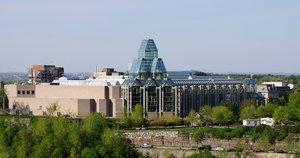
Galeria Nacional do Canadá, OttawaGaleria Nacional do Canadá Ottawa 15 Crazy Patchwork, Young Lady, Four Girls in a Meadow, Baie-Saint-Paul
Musée national des beaux-arts du Québec, Cidade de QuébecMusée national des beaux-arts du Québec Cidade de Québec 8 The old spinner, île d'Orléans, In County Cork, Ireland, In the shade of the apple tree
The Robert McLaughlin Gallery, OshawaThe Robert McLaughlin Gallery Oshawa 1 Mount Cheops from Rogers Pass

A pintura de maior destaque de cada década de William Brymner

Obras por década

Selecione uma década para ver a sua pintura principal.

Pinturas de William Brymner: FAQ

Qual é a obra mais famosa de William Brymner?Ver resposta

Champ-de-Mars, Winter (1892) ocupa o primeiro lugar, seguido por Crazy Patchwork (1886) e The old spinner, île d'Orléans (1883).

Com que idade Champ-de-Mars, Winter foi pintada por William Brymner?Ver resposta

William Brymner tinha 37 anos: Champ-de-Mars, Winter é datada de 1892, e William Brymner nasceu em 1855.

Quais são as dez pinturas mais famosas de William Brymner?Ver resposta

Champ-de-Mars, Winter, Crazy Patchwork, The old spinner, île d'Orléans, Young Lady, Four Girls in a Meadow, Baie-Saint-Paul, With Dolly at the Sabot-makers, In County Cork, Ireland, The Picture Book, In the shade of the apple tree e Haying near Quegec, Beaupré. O ano e o museu de cada uma estão no ranking acima.

Quantas pinturas de William Brymner estão listadas?Ver resposta

34 obras de William Brymner estão em nosso catálogo, datadas de 1883 a 1921.

Em quais museus estão os originais mais famosos de William Brymner?Ver resposta

Principalmente em Galeria Nacional do Canadá (Ottawa), Musée national des beaux-arts du Québec (Cidade de Québec) e The Robert McLaughlin Gallery (Oshawa). Consulte a tabela de museus acima para a lista completa.

Quando foram feitas as principais pinturas de William Brymner?Ver resposta

Em 1880s: 9 das 34 pinturas classificadas aqui datam dessa época, incluindo Crazy Patchwork.

Quais são as pinturas mais antigas e as mais recentes do(a) famoso(a) William Brymner?Ver resposta

Mais antiga nesta página: The old spinner, île d'Orléans (1883). Mais recente: Martigues (1921).

Quais temas aparecem com mais frequência nas pinturas de William Brymner?Ver resposta

Entre as 34 pinturas classificadas aqui: Landscape (4) e Summer (2).

Qual é a técnica mais comum nas pinturas de William Brymner?Ver resposta

Oil On Canvas, de 4 das 34 pinturas classificadas aqui.

A que movimento pertencem as pinturas de William Brymner?Ver resposta

Impressionism, com base nas pinturas classificadas nesta página.

Quais pinturas famosas de William Brymner o Galeria Nacional do Canadá possui?Ver resposta

O Galeria Nacional do Canadá, Ottawa detém 15 das pinturas classificadas aqui, incluindo Crazy Patchwork, Young Lady e Four Girls in a Meadow, Baie-Saint-Paul.

Posso comprar uma reprodução de uma pintura de William Brymner?Ver resposta

Sim. Todas as pinturas desta página podem ser encomendadas como uma reprodução em óleo pintada à mão ou como uma impressão. Abra a pintura, escolha o tamanho e faça o seu pedido.

William Brymner: o artista por trás das pinturas

A Pioneer Forging a Canadian Vision

William Brymner, born in Greenock, Scotland in 1855, stands as a pivotal figure in the development of Canadian art—a bridge between the established traditions of academic painting and the burgeoning currents of modernism. His life’s journey, marked by both rigorous training and an adventurous spirit, ultimately shaped a uniquely Canadian artistic identity. The Brymner family's emigration to Melbourne, Lower Canada (present-day Quebec) in 1857, and their subsequent move to Montreal in 1864, planted the seeds of his connection to the land that would become central to his artistic vision. Initially drawn to architecture, a practical pursuit reflecting his father’s stable career as Dominion Archivist, Brymner soon discovered his true calling lay within the realm of painting. This pivotal shift led him to Paris in 1878, where he enrolled at the prestigious Académie Julian, immersing himself in the world of fine art under the tutelage of William-Adolphe Bouguereau and Tony Robert-Fleury. These masters, renowned for their ‘grand manner’ naturalism, instilled in Brymner a foundation of technical skill and compositional understanding that would remain with him throughout his career.

Parisian Influences and Artistic Development

The Parisian art scene proved transformative for the young artist. While mastering academic techniques—particularly Bouguereau's meticulous realism—Brymner simultaneously absorbed the influence of Jean-Louis Ernest Meissonier, whose detailed depictions of historical scenes captivated him. He deliberately rejected grand narratives and mythological subjects, opting instead for intimate domestic scenes and evocative landscapes—a conscious decision to portray the world around him with honesty and sensitivity. This period witnessed Brymner skillfully balancing academic rigor with the emerging Impressionistic tendencies dominating the artistic landscape. His style began to evolve, demonstrating a growing awareness of light’s subtle nuances and its ability to shape perception. Pieces like “Two Girls Reading” (1898) exemplify this early mastery, showcasing his capacity to capture fleeting moments and imbue them with quiet emotion. He wasn't merely replicating what he saw; he was interpreting it through a lens informed by both tradition and innovation—a hallmark of his distinctive artistic approach.

Returning to Canada: Teacher and Innovator

In 1886, Brymner returned to Montreal after nearly seven years of intermittent residence in Paris, establishing himself as a prominent art teacher and significantly impacting the next generation of Canadian artists. He became Director of the Art Association of Montreal school from 1886 to 1921, fostering an environment that encouraged experimentation and challenged conventional norms. His landscapes frequently depicted scenes around Quebec and the Maritimes, capturing the natural beauty of Canada with a growing Impressionistic flair. Works like “In the Orchard (Spring)” (1892) and his paintings of Ile aux Coudres demonstrate this evolving aesthetic—a loosening of brushwork, heightened color palettes, and an emphasis on conveying atmosphere rather than simply representing physical form. Brymner’s influence extended beyond his individual canvases; he was shaping a movement—one that would propel Canadian art into the modern era.

Major Works & Continued Influence

Brymner's oeuvre encompasses a diverse range of subjects, reflecting both his academic training and his embrace of Impressionistic ideals. Notable paintings include “Frontenac Receiving Sir William Philip’s Envoy,” which skillfully blends historical accuracy with atmospheric perspective; “Summer Landscape,” capturing the serene beauty of Quebec’s countryside; and “The Weaver,” portraying everyday life with remarkable detail and emotional resonance. His dedication to teaching and his willingness to champion new artistic ideas cemented his legacy as a catalyst for Canadian modernism. He mentored numerous artists who would become instrumental in shaping the visual culture of Canada—most notably Emily Coonan, whose work embodies Brymner’s Impressionistic vision. Furthermore, he served as Vice-President of the Royal Canadian Academy of Arts (RCA) from 1907 to 1916 and was awarded the Companion of the Order of St Michael and St George in recognition of his contributions to the arts—a testament to his enduring influence on Canadian artistic history. Brymner’s impact transcends mere stylistic innovation; he instilled a belief in artistic freedom and encouraged his students to explore their own creative impulses. His paintings continue to be exhibited and celebrated as exemplary representations of late 19th-century Canadian art, reminding us of his unwavering commitment to preserving and advancing the nation's cultural heritage. He remains a cornerstone of Canadian artistic identity—a visionary who bridged tradition and modernity, leaving behind an indelible mark on the landscape of Canadian painting.

Todas as 34 obras de William Brymner →