



The Rich Origins and History of Lacock Abbey
Lacock Abbey began in 1232 when Ela, Countess of Salisbury, laid the first stone. Established as a nunnery of the Augustinian order, the site functioned as a religious retreat and a monastery for centuries. The community of Augustinian canonesses resided here, finding a sense of purpose within the stone walls of the early 13th century. This monastic existence defined the site's early character, shaping the quietude that remains present in the surrounding landscape.
The religious life of the abbey changed during the 16th century. In 1539, the institution was seized by the crown during the dissolution of the monasteries under Henry VIII. Following this transition, the property was sold to Sir William Sharington for £783. He began the process of converting the former convent into a residence, altering the purpose of the site from a place of prayer to a private home.
The lineage of the estate eventually passed into the hands of the Talbot family. This transition marked the beginning of a new chapter for the house, moving away from its origins as a religious institution and toward its later identity as a family seat. The layers of history remain visible in the very foundations of the building, where the monastic past meets the domestic history of the families who occupied it.
The Architecture and Structure of the Building
Lacock Abbey is a Grade I listed country house situated in the village of Lacock, Wiltshire, England. The current structure is a remodelling and extension of the original abbey's cloister court. Its architectural character is defined by a layering of styles, including Romanesque, Gothic, and Tudor elements. This convergence of eras reflects the site's long evolution from a religious institution to a private residence.
The medieval Cloister remains a central feature, existing as a peaceful, golden space within the complex. While the abbey church was demolished by Sir William Sharington after 1539, the remaining fabric of the building preserves the memory of its monastic origins. During the English Civil War, the site took on a more defensive character when it was fortified by Royalists with earthworks.
The house is owned by the National Trust and maintains its historical integrity through its specific structural arrangement. The transition from a nunnery to a domestic space is visible in the way the Tudor and Gothic details interact with the earlier foundations. The building's presence is defined by these physical shifts in purpose and form.
The Fox Talbot Museum and Photography
The abbey serves as the home of William Henry Fox Talbot, a figure central to the origins of photography. It was within these walls that he began to investigate how chemicals sensitive to light might record an image on paper. This scientific inquiry led to his creation of the calotype, or "Talbotype," a paper negative process that was commercially introduced in 1841. The site remains significant for the pioneering work conducted here during the 1830s.
In 1835, Henry Fox Talbot produced a photographic camera negative, an achievement that marked a fundamental shift in how light is captured. The Fox Talbot Museum, housed within the abbey, celebrates these technical breakthroughs and the scientific legacy of his discoveries. The presence of the museum allows for a direct connection to the early experiments that paved the way for modern photographic processes.
- Lacock Abbey, Wiltshire (photograph), ca. 1839
Masterpieces of the Art Collection
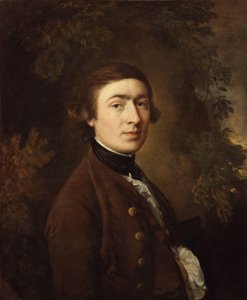
The collection within these walls offers a quiet encounter with the lineage of the Talbot family and the shifting styles of English portraiture. One finds a presence in the portrait of John Talbot, painted in 1760 by Thomas Gainsborough. Nearby, the likeness of Sir John Talbot, an MP, rendered by Peter Lely in 1687, provides a steady gaze from the seventeenth century. These works do not merely represent individuals; they occupy the space with the weight of their specific histories.
The portraits of women in the collection capture various stages of life and social standing. Godfrey Kneller’s 1677 depiction of Barbara Talbot, Viscountess Longueville, as a girl, offers a glimpse into a youthful past, while the same subject appears in a later, more mature context. Jan van der Vaart’s 1687 portrait of the Viscountess also remains a significant presence. These paintings, alongside the work of Enoch Seeman, which includes portraits of John Mytton of Halston from 1738 and Mary Elizabeth Davenport, Mrs John Mytton from 1729, create a visual record of the people who once moved through the abbey.
Religious and character studies add further depth to the assembly. Orazio Samacchini’s Madonna and Child with a Female Saint and Angels, possibly the Mystic Marriage of Saint Catherine, brings a different spiritual focus to the room. The collection is rounded out by several other notable works:
- An Unknown Man, 1640 - Jan Weesop
- The Continence of Scipio, 1649 - Victor Wolfvoet
- The Reconciliation of the Romans and Sabines, 1649 - Victor Wolfvoet
- The Rape of the Sabines, 1649 - Victor Wolfvoet
Major Donations and National Trust Ownership
The preservation of the estate is owed to the lineage of the Talbot family. In 1916, Matilda Gilchrist-Clark inherited the estate from Charles Henry Fox Talbot. This continuity of ownership eventually led to a significant transition for the property and its surrounding landscape. In 1944, Matilda Theresa Talbot gave the house and the village of Lacock to the National Trust.
Today, the National Trust maintains stewardship over the site. The village itself is owned almost in its entirety by the Trust, ensuring the character of the settlement remains intact. The abbey and the village exist as a preserved part of the English landscape, held in trust for the future. This stewardship ensures that the physical presence of the abbey and its grounds remains unchanged.