Previzualizare
 Trimite
 Distribuie
 Detalii despre lucrare

 Descarcă
 Produse similare
 Radiografie
 Diapozitive automate
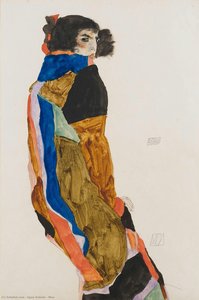
Seated Girl Facing Front


 Vezi mai mult
Reproducere pictată manual în ulei
Pictură în ulei pe pânză, realizată manual de artiștii noștri la dimensiunea și ramele dorite de dumneavoastră, pe comandă. ( Comandă versiunea tipărită Comută la imagine)




P118B $10

P118H $10

P118W $10

P438Z $10

P508JH $12

P508YH $12

P805H $10

P805Z $10

P919BZ $10

P919G $10

P919XJ $10

P959ZH $10

P968JZ $12

W106C $8

W218G $10

W218JH $8

W218Y $10

W307PJ $10

W316G $10

W316PJ $8

W316Y $10

W398PJ $8

W4111J $10

W500HY $15

W500JH $15

W692G $12

W849H $8

W940BG $15

W953PJ $8




Alegeți dintre dimensiunile noastre prestabilite, care respectă proporțiile originale ale operei de artă.

Puteți introduce propriile dimensiuni pentru a se potrivi unui anumit cadru sau spațiu. Dacă dimensiunea selectată nu corespunde proporțiilor imaginii originale, vom decupa opera de artă sau vom extinde pictura cu elemente suplimentare pictate manual. O simulare digitală vă va fi trimisă pentru aprobare înainte de începerea producției.
Vă rugăm să rețineți că previzualizarea de pe ecran nu reflectă decuparea sau extinderea reală. Doar macheta va arăta cu exactitate compoziția finală.
Deși sunt disponibile dimensiuni personalizate, vă recomandăm să selectați o dimensiune din lista predefinită pentru a păstra proporțiile originale.
După plasarea comenzii, echipa AllPaintingsStore.com va contacta clientul prin e-mail pentru instrucțiuni și îi va furniza o previzualizare a machetei
Livrare în întreaga lume () în 3-4 săptămâni, în loc de cele 5 săptămâni standard. (10 August). Fără compromisuri în ceea ce privește calitatea.

Livrare expres gratuită la nivel mondial

Pânză de in de înaltă calitate

Asigurare completă pentru transport

Garanție de rambursare a taxelor vamale

Garanția fidelității culorilor

Politica de retur în 60 de zile (doar pentru defecte)

Garanție de rambursare 100%

Ofertă pentru comenzi multiple
 Opțiunea cu sticlă este disponibilă doar pentru dimensiuni de sub 110 cm

Seated Girl Facing Front
Tehnică de reproducere
Dimensiune reproducere
-


Preț total calculat
$ 258
Descriere operă de artă
A Portrait of Quiet Intensity: Egon Schiele’s *Seated Girl Facing Front*
Egon Schiele's 1911 watercolor on paper, *Seated Girl Facing Front*, isn’t merely a depiction of a young woman; it’s an intimate glimpse into the soul. Created during a period of intense personal struggle and artistic experimentation for the Austrian Expressionist, this work embodies his signature style – a raw honesty that confronts viewers with vulnerability and a profound sense of introspection. The painting immediately draws us in with its subject's direct gaze, a challenge to our own perceptions and emotions. It’s a moment frozen in time, suggesting a private contemplation held within the confines of a simple pose.
The Language of Line and Color: Schiele’s Distinctive Technique
Schiele's approach to watercolor was revolutionary for his time. He didn’t shy away from layering paint, building up textures with multiple washes that create an almost sculptural quality. Notice the delicate shading around the girl’s face – a subtle manipulation of color that emphasizes her features and contributes to the overall mood. The elongated limbs, characteristic of Schiele's style, aren’t simply stylistic flourishes; they speak to a sense of unease, perhaps reflecting his own anxieties about mortality and the human condition. The use of muted tones—primarily browns, grays, and hints of red in her dress—further enhances the painting’s melancholic atmosphere, creating a visual resonance that lingers long after you've looked away.
Echoes of Loss and Longing: Historical Context and Personal Influence
To understand *Seated Girl Facing Front*, it’s crucial to consider the context in which Schiele was working. His early life was marked by profound loss – the death of his father at fourteen, followed later by his sister Elvira. These experiences undoubtedly shaped his artistic vision, fueling a preoccupation with themes of mortality, fragility, and the search for meaning. The influence of Gustav Klimt, a mentor who encouraged Schiele’s experimentation, is also evident in the painting's sensual undertones, though Schiele pushes beyond Klimt’s decorative style to explore deeper psychological complexities. The subtle suggestion of sadness in the girl’s posture and averted gaze hints at a hidden story, inviting speculation about her inner world.
Symbolism and Emotional Resonance: A Window into the Human Psyche
The girl's crossed legs and forward-facing position are not accidental. They represent a deliberate choice to engage with the viewer directly, creating an immediate connection. Her posture suggests both vulnerability and defiance – she is exposed yet resolute. The red dress, a striking element against the muted background, could symbolize passion, vitality, or perhaps even a hint of danger. Schiele’s masterful use of watercolor allows for a remarkable subtlety in conveying emotion; it's not about grand gestures but rather the quiet intensity of a single moment. *Seated Girl Facing Front* is a powerful testament to Schiele’s ability to capture the complexities of human experience, offering viewers an intimate and deeply moving encounter with art.
Explore a meticulously crafted reproduction of this iconic work at /en/art/show/art-6whkl3-en/ and discover the beauty of owning a piece of art history.
Opere similare


Biografie artist
A Life Forged in Expression
Egon Schiele’s life, a whirlwind of artistic passion and profound personal hardship, unfolded from his birth in Tulln an der Donau, Austria, in 1890. His early years were steeped in sorrow; the loss of his father, a railway station master, due to syphilis when Egon was just fourteen cast a long shadow, fueling within him a haunting preoccupation with mortality and the fragility of human existence. Raised initially by his mother and later under the watchful eye of his uncle Leopold Czihaczek, Schiele’s childhood lacked the stability common to many, yet it fostered an independent spirit—a crucial element in shaping his artistic vision. From a young age, he displayed an intense fascination with trains – a motif that would subtly reappear throughout his work – and a burgeoning talent for drawing, though this was often met with disapproval from his father who viewed it as a distraction from more practical pursuits. The untimely death of his sister Elvira further deepened the emotional landscape of his youth, imbuing his art with an undercurrent of melancholy and vulnerability. These formative experiences—loss, isolation, and a yearning for self-expression—became the bedrock upon which Schiele’s unique artistic voice was built, constantly grappling with themes of life, death, and the complexities of the human condition.The Crucible of Vienna: Artistic Development
Schiele's formal artistic training began at the Kunstgewerbeschule (School of Arts and Crafts) in Vienna, but he quickly found himself stifled by its conservative approach—a rigid adherence to tradition that clashed with his burgeoning creative spirit. Seeking a more stimulating environment, he transferred to the Akademie der bildenden Künste (Academy of Fine Arts), only to discover further disillusionment with its academic constraints. This dissatisfaction led him to abandon formal training altogether, choosing instead to forge his own path – a bold decision reflecting his unwavering artistic conviction and determination to express himself on his own terms. A pivotal influence during these early years was Gustav Klimt, the celebrated Secessionist painter. Schiele deeply admired Klimt’s decorative style and his exploration of symbolism, even receiving mentorship from the established artist. However, Schiele soon diverged significantly from Klimt's aesthetic, developing a distinctly individual voice characterized by its stark honesty, psychological intensity, and unflinching portrayal of human vulnerability. He became a founding member of the *Neues Wiener Kunstgruppe* (New Viennese Art Group) in 1909, alongside other progressive artists who challenged the prevailing artistic norms of the time. This group provided a space for experimentation and innovation, allowing Schiele to refine his style and explore new avenues of expression. His early works—often unsettling portraits and self-portraits—began to emerge as powerful statements of emotional turmoil, featuring distorted figures, elongated limbs, and a palpable sense of unease. These paintings were not merely representations of physical form but explorations of the inner landscape—the anxieties, desires, and fears that haunted the human psyche. He sought to depict not what he *saw*, but what he *felt*.Raw Emotion and Unflinching Truth
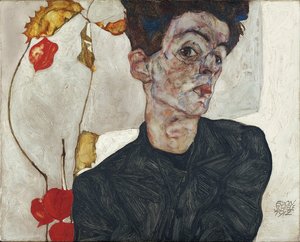
Egon Schiele’s art is immediately recognizable for its raw honesty and psychological depth. He fearlessly confronted themes often considered taboo – sexuality, death, anxiety, isolation – with an unflinching gaze. His distinctive style features elongated figures, contorted poses, and expressive lines that convey a sense of unease and emotional intensity. The human form, particularly the nude, became his primary subject, not as an object of idealized beauty but as a vessel for exploring the complexities of human experience. Self-portraits constitute a significant portion of his oeuvre, offering intimate glimpses into his inner world—a world often marked by loneliness and self-doubt. He didn’t shy away from depicting himself in unflattering or vulnerable poses, revealing a profound level of self-awareness and introspection. Beyond self-portraiture, Schiele created numerous portraits of others, capturing their likenesses with an unsettling realism that seemed to penetrate beneath the surface. His landscapes, while less central to his work than his figurative paintings, demonstrate his mastery of form and color, often reflecting the same emotional intensity as his portraits. The use of line is particularly striking in Schiele’s work; it's not merely a tool for defining shape but an expressive force that conveys emotion and psychological tension. Recurring motifs like the *Physalis* plant – symbolizing death and transience with its delicate, papery husk – further underscore this preoccupation with mortality. The influence of Symbolism is also evident in his use of color and symbolism, adding layers of meaning to his compositions.A Legacy Cut Short: Achievements & Significance
Despite facing censorship and legal challenges—including a brief imprisonment for allegedly corrupting minors with his art—Schiele gained recognition within Vienna’s avant-garde circles. His work challenged the conventions of the time, provoking both admiration and outrage. By the time of his untimely death during the Spanish flu pandemic in 1918 at the age of twenty-eight, he had established himself as a leading figure in Austrian Expressionism. Significant works such as *Self-Portrait with Physalis*, *Couple Embracing*, and *Field Landscape (Kreuzberg near Krumau)* stand as testaments to his artistic genius. His influence on subsequent generations of artists is undeniable, particularly those interested in exploring psychological themes and challenging conventional artistic norms. Schiele’s bold approach to form and subject matter continues to resonate with audiences today, making him one of the most important and influential figures in early 20th-century art. His paintings are now held in major museum collections worldwide, including the Leopold Museum in Vienna and the Egon Schiele Art Centrum in Český Krumlov, ensuring his artistic legacy endures. He left behind a body of work that is not merely aesthetically compelling but profoundly human—a testament to the power of art to confront the complexities of existence with honesty, courage, and unwavering vision.- Key Themes: Mortality, sexuality, isolation, psychological turmoil.
- Influences: Gustav Klimt, Viennese Secession, personal trauma.
- Style Characteristics: Elongated figures, contorted poses, expressive lines, raw emotion.
Egon Schiele
1890 - 1918 , Austria
Detalii rapide
- Artistic Movement Or Style: Expressionism
- Artists Or Movements Influenced By This Artist: ['Secession']
- Artists Who Influenced This Artist: ['Klimt']
- Date Of Birth: 1890
- Date Of Death: 1918
- Full Name: Egon Schiele
- Nationality: Austrian
- Notable Artworks:
- Self-Portrait
- Couple
- Peisaj
- Place Of Birth: Tulln, Austria
Articole similare

Watercolor Art Guide: Mastering Transparency and Light for Professional Hospitality Decor
Elevate hospitality interiors with our professional guide to watercolor art. Discover how transparency and light enhance hotel decor through expert selection of high-quality, custom reproductions and large-scale murals tailored for designers and procurement managers.