


 Vezi în context
 Trimite
 Distribuie
 Detalii
 Guide
Guide

 Descarcă
 Produse similare
 Radiografie
 Diaporama
 Statistici
Panele Flămale
 Acrilic pe pânză întinsă
- Artă de perete
- Early Netherlandish Renaissance
 1430
1430 61.0 x 148.0 cm
 Muzeul Städel
 Citește mai mult
Reproducere pictată manual în ulei
Pictură în ulei pe pânză, realizată manual de artiștii noștri la dimensiunea și ramele dorite de dumneavoastră, pe comandă. ( Comută pe versiunea Print Treci la imagine digitală)




P118B $10

P118H $10

P118W $10

P438Z $10

P508JH $12

P508YH $12

P805H $10

P805Z $10

P919BZ $10

P919G $10

P919XJ $10

P959ZH $10

P968JZ $12

W106C $8

W218G $10

W218JH $8

W218Y $10

W307PJ $10

W316G $10

W316PJ $8

W316Y $10

W398PJ $8

W4111J $10

W500HY $15

W500JH $15

W692G $12

W849H $8

W940BG $15

W953PJ $8




Alegeți dintre dimensiunile noastre prestabilite, care respectă proporțiile originale ale operei de artă.

Puteți introduce propriile dimensiuni pentru a se potrivi unui anumit cadru sau spațiu. Dacă dimensiunea selectată nu corespunde proporțiilor imaginii originale, vom decupa opera de artă sau vom extinde pictura cu elemente suplimentare pictate manual. O simulare digitală vă va fi trimisă pentru aprobare înainte de începerea producției.
Vă rugăm să rețineți că previzualizarea de pe ecran nu reflectă decuparea sau extinderea reală. Doar macheta va arăta cu exactitate compoziția finală.
Deși sunt disponibile dimensiuni personalizate, vă recomandăm să selectați o dimensiune din lista predefinită pentru a păstra proporțiile originale.
După plasarea comenzii, echipa AllPaintingsStore.com va contacta clientul prin e-mail pentru instrucțiuni și îi va furniza o previzualizare a machetei
Livrare în întreaga lume () în 3-4 săptămâni, în loc de cele 5 săptămâni standard. (21 Septembrie). Fără compromisuri în ceea ce privește calitatea.

Livrare expres gratuită la nivel mondial

Pânză de in premium

Asigurare completă pentru transport

Garanție de rambursare a taxelor vamale

Garanția fidelității culorilor

Politica de retur în 100 de zile (doar pentru defecte)

Garanție de rambursare 100%

Reducere pentru comenzi multiple
 Opțiunea cu sticlă este disponibilă doar pentru dimensiuni de sub 110 cm

Panele Flămale
Tip de reproducere
Dimensiune reproducere
-


Preț total
$ 258
Robert Campin (Master of Flémalle): A Window into Medieval Compassion
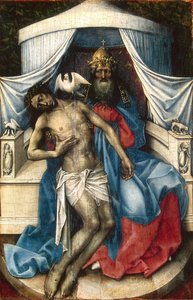
The “Flémalle Panels,” attributed to the enigmatic Master of Flémalle – Jean-Baptiste Mongeau – represent a remarkable achievement in early Netherlandish painting, offering a poignant glimpse into the artistic sensibilities of the Burgundian court during the mid-15th century. Painted circa 1430, this diptych depicts two men engaged in an intimate tableau, capturing a moment of profound tenderness and concern that transcends its time.
- Subject Matter: The scene portrays a father and son – likely representing Saint John the Baptist and his infant son – sharing a quiet contemplation. This depiction wasn’t merely decorative; it was imbued with theological significance, reflecting the burgeoning humanist interest in portraying human emotion alongside religious iconography.
- Style & Technique: Campin's mastery lies in his meticulous realism combined with innovative oil painting techniques. Unlike his contemporaries who favored tempera paint—known for its durability but less vibrant colors—Campin pioneered the use of oil pigments, allowing for subtle gradations of tone and achieving a luminosity previously unattainable. This breakthrough technique is particularly evident in the depiction of drapery folds and skin textures.
- Historical Context: The Flémalle Panels emerged during a period of significant artistic experimentation within the Burgundian Netherlands. Jean Clouet, Campin’s workshop assistant, was instrumental in establishing a new visual language that prioritized psychological depth and emotional resonance. This stylistic evolution mirrored broader cultural shifts toward valuing human experience alongside spiritual contemplation.
Symbolism & Emotional Impact: Beyond its literal representation, the painting speaks volumes about medieval piety and familial devotion. The downward gaze of both figures symbolizes humility and introspection—a deliberate choice to convey a sense of solemn reverence for the divine presence. Campin’s masterful composition directs the viewer's eye inward, fostering empathy and prompting reflection on themes of compassion and paternal care.
- Notable Features: The subtle interplay of light and shadow contributes significantly to the painting’s emotional impact, creating a palpable atmosphere of intimacy. Campin’s meticulous attention to detail—from the folds of clothing to the expression on each man's face—demonstrates an unparalleled commitment to capturing human psychology.
- Influence & Legacy: The Flémalle Panels stand as a cornerstone of Early Netherlandish art, influencing subsequent generations of painters and establishing Campin’s workshop as a center for artistic innovation. Its enduring appeal lies in its ability to evoke universal emotions—love, tenderness, and contemplation—making it a timeless masterpiece.
A reproduction of “The Flémalle Panels” offers an exceptional opportunity to bring this evocative artwork into your home or interior design project. AllPaintingsStore’s high-quality reproductions faithfully capture the original painting's luminosity and textural richness, allowing you to appreciate Campin’s genius for years to come.
Opere similare




Biografie artist
The Shadowed Canvas: Exploring the Life and Art of Jean-Baptiste Mongeau
Jean-Baptiste Mongeau, a name perhaps less familiar than his contemporaries in the burgeoning Romantic movement, nevertheless carved out a unique and profoundly evocative space within French art during the late 18th and early 19th centuries. Born in Lyon in 1778, Mongeau’s life was inextricably linked to the tumultuous social and political shifts of his time – the rise of revolutionary fervor, the Napoleonic era, and the subsequent restoration. While he never achieved widespread fame during his lifetime, a closer examination of his work reveals a deeply sensitive artist grappling with themes of memory, loss, and the ephemeral nature of beauty, anticipating many of the concerns that would define later Symbolist painters. Mongeau’s early life offered little indication of the artistic path he would ultimately pursue. His father was a silk merchant, a practical profession in the heart of Lyon's textile industry. However, young Jean-Baptiste displayed an unusual aptitude for drawing and painting from a remarkably young age, initially sketching designs for his family’s business and later capturing the vibrant scenes of the city’s bustling markets and canals. He received informal instruction from a local artisan, mastering the fundamentals of oil paint and composition before embarking on a period of self-directed study, fueled by an intense curiosity about the world around him. Crucially, he was exposed to the works of Jacques-Louis David, whose Neoclassical style initially exerted a strong influence – evidenced in his early portraits and historical scenes, characterized by precise detail and idealized forms. A pivotal moment in Mongeau’s artistic development occurred during his time serving as an artillery officer in Napoleon's campaigns. The horrors he witnessed on the battlefield—the carnage, the suffering, and the sheer waste of human life—profoundly impacted him. This experience marked a dramatic shift away from the polished formality of Neoclassicism and towards a more introspective and emotionally charged style. He began to explore darker subjects – landscapes imbued with melancholy, portraits reflecting inner turmoil, and allegorical scenes that hinted at the fragility of existence. His palette darkened considerably, favoring somber blues, greens, and browns, punctuated by flashes of intense color used sparingly to heighten emotional impact. The influence of Romanticism, particularly the emphasis on subjective experience and the sublime, became increasingly apparent. Mongeau’s artistic style is often described as “atmospheric realism.” He wasn't interested in simply replicating reality; instead, he sought to capture its essence—its mood, its feeling. His landscapes are particularly notable for their evocative use of light and shadow, creating a sense of depth and mystery. He frequently depicted scenes of twilight or dawn, using diffused light to suggest the passage of time and the inevitability of decay. His portraits, in contrast to the idealized representations common at the time, were characterized by an unsettling honesty—a willingness to portray the subject’s vulnerabilities and anxieties. He employed a loose brushstroke technique, layering colors to create a hazy, dreamlike quality that further enhanced the sense of emotional resonance. A key element of his work is the use of *grisaille*, a monochrome painting technique, often used in underpaintings to establish form and tone before adding color. Among Mongeau’s most celebrated works are “The Fallen Soldier” (1808), a haunting depiction of a lone figure slumped amidst the wreckage of battle, and "Memory's Embrace" (1815), an allegorical painting that explores the themes of loss and remembrance. “The Fallen Soldier,” in particular, is considered a seminal work of Romantic art in France, capturing not just the physical devastation of war but also the profound psychological trauma it inflicted. It’s notable for its lack of explicit gore; instead, Mongeau focuses on the soldier's posture, his face etched with despair, and the desolate landscape surrounding him—a powerful indictment of conflict without resorting to sensationalism. His later works often featured recurring motifs – wilting flowers, decaying fruit, and solitary figures gazing into the distance—all symbols of mortality and the transience of beauty. Despite a relatively modest output during his lifetime, Mongeau’s influence on subsequent generations of French artists is undeniable. His emphasis on emotional expression, his exploration of dark themes, and his innovative use of light and color foreshadowed many of the developments that would characterize the Symbolist movement. His work was largely overlooked until the late 20th century when a renewed interest in Romanticism led to a reassessment of his artistic legacy. Today, Jean-Baptiste Mongeau is recognized as a significant, if often misunderstood, figure in French art history—an artist who dared to confront the darker aspects of human experience and capture their essence on canvas with remarkable sensitivity and power.Key Works
- The Fallen Soldier (1808): A poignant depiction of a fallen soldier, embodying the horrors of war and the psychological toll it exacts.
- Memory’s Embrace (1815): An allegorical painting exploring themes of loss, remembrance, and the fleeting nature of beauty.
- Twilight on the Rhône (c. 1810): A landscape capturing the melancholic beauty of a twilight scene along the river.
- Portrait of Madame Dubois (1805): A strikingly honest portrait revealing the subject’s inner anxieties and vulnerabilities.

master of flémalle
1444 , Belgium
Articole conexe

Oil on Canvas: A Historical & Technical Exploration of a Timeless Artistic Medium
Explore the rich history & enduring techniques of oil painting on canvas. Discover the science behind its longevity, conservation practices, and contemporary relevance. Expert insights for art enthusiasts.

The Enduring Power of Painting: A Historical & Contemporary Exploration of Form and Emotion
Explore the rich history & enduring techniques of oil painting with AllPaintingsStore. Discover masterpieces, learn about art collecting, and find authentic handmade reproductions crafted by skilled artists.

The Enduring Legacy of Oil on Canvas: Technique, History & Aesthetic Impact
Explore the rich history & techniques of oil painting – from Renaissance masters to Impressionism. Discover pigments, layering methods, and why this timeless medium endures. Expert insights for artists & art enthusiasts.

Moștenirea Durabilă a Picturii în Ulei: Tehnică, Istorie și Practică Contemporană
Descoperă istoria fascinantă și tehnicile esențiale ale picturii în ulei. Ghid complet pentru artiști, de la materiale până la creații contemporane. Îmbunătățește-ți abilitățile artistice!

Robert Campin: Pioneering Realism & Spiritual Depth in Early Netherlandish Painting
Explore the revolutionary work of Robert Campin, a pioneer of Early Netherlandish painting. Discover his naturalistic style, religious symbolism in masterpieces like the Mérode Altarpiece, and lasting influence on art history.


