The Shadow and the Light: The Visionary World of Tanzio da Varallo
Tanzio da Varallo, born Antonio d'Enrico, remains one of the most enigmatic and powerful voices of the Italian transition from late Mannerism to the burgeoning Baroque era. Emerging from the rugged landscapes of Alagna Valsesia, his art serves as a bridge between the stylized elegance of the sixteenth century and the raw, visceral emotionality that would define the seventeenth. His life was deeply rooted in an artistic lineage; born into a family of creators, he worked alongside his brothers, Melchiona and Giovanni, weaving a familial tapestry of Lombard creativity. This early immersion in the craft allowed him to absorb the complex aesthetic currents flowing through Milan and Rome, eventually forging a style that was as much about psychological tension as it was about visual splendor. The essence of Tanzio’s mastery lies in his profound engagement with tenebrism, a technique characterized by an intense, dramatic contrast between light and shadow. Heavily influenced by the revolutionary spirit of Caravaggio, Tanzio did not merely mimic this style but infused it with a unique, often morbid intensity. His canvases frequently feature a stark, theatrical chiaroscuro that pulls figures from the darkness into a sudden, piercing light, creating a sense of immediate, almost uncomfortable, presence. This mastery of shadow allowed him to explore themes of mortality, faith, and struggle with a gravity that resonated deeply within the religious fervor of his time.A Legacy Carved in Devotion and Drama
Much of Tanzio’s most significant work was born from the sacred landscapes of Northern Italy, particularly through his monumental contributions to the Sacro Monte at Varallo Sesia. Working alongside the esteemed Pier Francesco Mazzucchelli, known as il Morazzone, Tanzio helped transform these pilgrimage sites into immersive spiritual experiences. His ability to compose large-scale, crowded, and animated scenes—such as his breathtaking depictions of biblical catastrophes—demonstrates a command over narrative scale that few of his contemporaries could match. In works like the Battle of Sennacherib, one can witness the artist’s ability to orchestrate complex, scenographic dioramas where every figure contributes to a larger sense of divine or historical upheaval. Beyond the grand frescoes of the Sacri Monti, Tanzio’s individual masterpieces reveal a fascination with the human condition in its most vulnerable and violent states. His repertoire includes:- The Portrait of a Gentleman (1620): A stunning example of his ability to use realistic detail and tenebrism to capture the dignified yet somber essence of the Baroque subject.
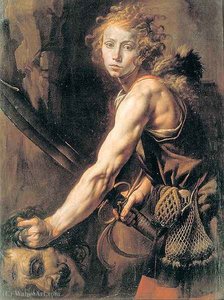
- David and Goliath: A work that exemplifies his penchant for gruesome, high-stakes drama, showcasing the physical tension and the visceral reality of the biblical struggle.
- Religious Iconography: From the poignant Charles Borromeo giving communion to the plague victims to his various depictions of the Madonna, his work consistently bridges the gap between the earthly suffering of the faithful and the divine light of grace.
Întrebări și răspunsuri
Pot să explorez lucrările lui Tanzio da Varallo în funcție de mișcare?
Pagina Toate mișcările grupează operele lui Tanzio da Varallo pe mișcări artistice.
În ce perioade este împărțită cariera lui Tanzio da Varallo?
Cariera lui Tanzio da Varallo se desfășoară perioadă cu perioadă pe pagina Cronica a artistului: o cronologie orizontală a operelor de artă, grupate în capitole reprezentative ale etapelor carierei.
Pot explora operele lui Tanzio da Varallo pe teme?
Operele lui Tanzio da Varallo pot fi explorate pe temă pe pagina Atlas pe subiecte a artistului.