Garanție de rambursare în 100 de zile Livrare gratuită în toată lumea
646.446opere de artă 53.409artişti 5.406muzee 32limbi
Portretul lui Lynd Ward

Cumpără cele 48 de cele mai faimoase picturi ale lui Lynd Ward

Actualizat Octombrie 2026 · clasat în funcție de scorul nostru de popularitate (căutări, vizite și comenzi pentru fiecare operă) · 48 lucrări ale lui Lynd Ward în catalogul nostru

Răspuns rapid

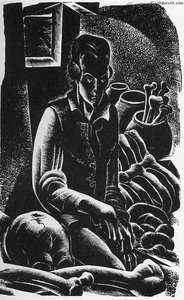
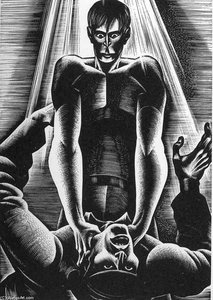
God's Man (1929) este cea mai cunoscută pictură a lui Lynd Ward. Beowulf wrestles with Grendel (1933) ocupă locul doi, Wild Pilgrimage (1932) locul trei. Catalogul nostru conține 48 lucrări ale lui Lynd Ward; iată cele 48 cele mai faimoase, clasificate, împreună cu anul și muzeul fiecăreia, pentru a vă ajuta să alegeți piesa pe care doriți să o comandați.

1905 – 1985, Chicago Expressionism

Lynd Ward: cele 10 cele mai apreciate picturi

Lynd Ward, clasat de la 11 la 48

Picturi de Lynd Ward pe subiecte

Cele patru cele mai frecvente subiecte din acest clasament, cu pictura principală pentru fiecare.

Cele mai importante picturi ale lui Lynd Ward pe deceniu

Lucrări pe deceniu

Selectați o deceniu pentru a vedea cea mai importantă pictură a acesteia.

Ce trebuie să știi despre picturile lui Lynd Ward

Care pictură a lui Lynd Ward ocupă primul loc în clasament?Afișează răspunsul

God's Man (1929) ocupă prima poziție, urmat de Beowulf wrestles with Grendel (1933) și Wild Pilgrimage (1932).

Ce vârstă avea Lynd Ward în anul în care a fost creată God's Man?Afișează răspunsul

Lynd Ward avea 24 ani: God's Man este datată 1929, iar Lynd Ward s-a născut în 1905.

Care sunt cele mai 10 picturi ale lui Lynd Ward?Afișează răspunsul

God's Man, Beowulf wrestles with Grendel, Wild Pilgrimage, Prelude to a Million Years, Prelude to a Million Years, Alec Waugh's ''Most Women...'', Prelude to a Million Years (12), Prelude to a Million Years (10), Alec Waugh's ''Hot Countries'' și Wild Pilgrimage. Anul și muzeul pentru fiecare sunt menționate în clasamentul de mai sus.

Câte lucrări cu Lynd Ward enumeră catalogul dumneavoastră?Afișează răspunsul

În catalogul nostru sunt 48 lucrări ale lui Lynd Ward, datate între 1929 și 1969.

În ce ani a pictat Lynd Ward lucrările de top?Afișează răspunsul

În 1930s: 27 dintre cele 48 picturi clasate aici datează din acea perioadă, inclusiv Beowulf wrestles with Grendel.

Care sunt cele mai vechi și cele mai recente picturi ale lui Lynd Ward?Afișează răspunsul

Cea mai veche de pe această pagină: God's Man (1929). Cea mai recentă: Day of the Hawk (1969).

Care sunt cele mai frecvente subiecte ale lui Lynd Ward?Afișează răspunsul

Printre cele 48 picturi clasificate aici: Symbols (20), Characters (13) și Nudes (12).

Din ce mișcare artistică face parte Lynd Ward?Afișează răspunsul

Expressionism, pe baza picturilor clasificate în această pagină.

Lynd Ward: viață și carieră

Lynd Ward: Pioneer of Wordless Novels & Master Wood Engraver

Lynd Kendall Ward, born in Chicago on June 26, 1905, was an artist whose vision extended far beyond the canvas or sculpture garden. He wasn’t merely a creator of images; he was a visual storyteller, a chronicler of the human condition rendered through the demanding and beautiful medium of wood engraving. His upbringing, steeped in progressive ideals thanks to his father, Harry F. Ward—a Methodist minister and early champion of the American Civil Liberties Union—instilled within him a deep sense of social justice that would permeate every facet of his artistic output. This wasn’t a childhood of privilege, but one enriched by books, particularly those lavishly illustrated, igniting an early passion for narrative through imagery. Summers spent immersed in the Canadian wilderness further nurtured this sensibility, fostering a profound appreciation for nature which frequently found expression in the evocative landscapes and symbolic elements within his art. Ward's formal training at Teachers College, Columbia University, culminated in graduation in 1926 and marriage to May Yonge McNeer—a partnership that would prove creatively fertile, yielding some of the most beloved children’s books of their era. A pivotal journey to Europe followed, where he honed his skills in wood engraving at the National Academy of Graphic Arts in Leipzig, Germany, under the tutelage of Hans Alexander Mueller.

Early Life and Influences

Ward's father, Harry F. Ward, was born in Chiswick, England, in 1873; the elder Ward was a Methodist minister who moved to the United States in 1891 after reading *Social Aspects of Christianity*(1889) by Richard T. Ely—a seminal text exploring the intersection of faith and social reform. He named his son Lyndhurst after the rural town of Lyndhurst, Hampshire, where he had lived for two years as a teenager prior to his emigration. Ward’s mother, Harriet May “Daisy” Kendall Ward, was born in Kansas City, Missouri, in 1873. The couple met at Northwestern University in Chicago, Illinois, and were married in 1899. Their first child, Gordon Hugh Ward, was born in June 1903, and a third, Muriel Ward, was born February 18, 1907. From an early age, Ward demonstrated an exceptional aptitude for drawing and storytelling—a fascination fueled by the richly illustrated books of his youth. These formative experiences instilled within him a lifelong commitment to visual narrative and a profound understanding of how images could convey complex ideas and emotions. The influence of Frans Masereel’s *The Sun*, particularly its innovative use of wordless illustration, proved decisive in shaping Ward's artistic trajectory—inspiring him to embark on the ambitious endeavor of crafting narratives entirely through woodcuts.

The Birth of Wordless Novels: A Revolutionary Approach

Ward’s artistic breakthrough arrived with his pioneering exploration of the “wordless novel,” a genre that would redefine storytelling and establish him as one of its foremost practitioners. Recognizing the limitations of conventional prose in capturing the nuances of human experience, Ward sought to bypass linguistic constraints altogether—embracing imagery's inherent ability to communicate profound truths directly to the viewer’s subconscious. This radical departure from established norms was driven by a deep conviction that visual art possessed unparalleled capacity for conveying emotion and symbolism—a belief solidified during his formative years spent absorbing the artistic legacy of Europe. His decision to pursue wood engraving—a technique demanding meticulous precision and unwavering dedication—reflected this commitment to mastering a craft that prioritized clarity, subtlety, and expressive power. Ward’s initial foray into printmaking at Leipzig was overseen by Hans Alexander Mueller, who instilled in him not only technical expertise but also an appreciation for the artistic traditions of German graphic art.

Notable Achievements: Wordless Narratives & Caldecott Recognition

Ward's magnum opus—the series of wordless novels *God’s Man*, *Madman’s Drum*, *Wild Pilgrimage*, *Prelude to a Million Years*, *Song Without Words*, and *Vertigo*—stands as testament to his artistic vision and unwavering dedication. These groundbreaking works tackled weighty themes—social injustice, spiritual yearning, the anxieties of wartime, humanity's evolutionary journey—with remarkable eloquence and emotional depth—all conveyed solely through meticulously crafted woodcuts. The resulting images resonated powerfully with audiences across generations, establishing Ward as a singular voice in American art and literature—a precursor to the graphic novel format that would gain prominence decades later. Furthermore, Ward’s contribution to children's literature was recognized by the prestigious Caldecott Medal—awarded for *The Biggest Bear* (1953)—a testament to his ability to engage young readers with imaginative storytelling and evocative visual artistry. His collaborations with authors like Oscar Wilde (*The Ballad of Reading Gaol*) cemented his reputation as a versatile illustrator who excelled in capturing the essence of literary narratives through striking imagery.

Legacy and Enduring Influence

Lynd Ward’s artistic legacy extends far beyond his individual creations—he profoundly shaped the trajectory of American graphic art, inspiring subsequent generations of artists to explore the expressive potential of visual storytelling without words. His unwavering commitment to social commentary—evident in his novels and illustrations alike—underscored his belief that art could serve as a catalyst for intellectual and emotional engagement—challenging conventional artistic conventions and advocating for a more nuanced understanding of human experience. Ward’s enduring influence can be seen in the continuing fascination with wordless narratives—a genre he helped pioneer—and in the ongoing appreciation for his masterful wood engravings—recognized for their exceptional technical skill and profound symbolic resonance. He remained an active member of several prominent artistic organizations, including the Society of Illustrators, the Society of American Graphic Arts, and the National Academy of Design—solidifying his place within the artistic landscape of his time. Lynd Ward died peacefully in Reston, Virginia, on June 28, 1985, leaving behind a body of work that continues to inspire artists and writers today—a testament to an artist who dared to tell stories without words—forever etching his name into the annals of American art history.

Toate cele 48 de lucrări ale lui Lynd Ward →