Early Life and Artistic Beginnings
William Samuel Wright, born in 1831, emerged from a period steeped in the romantic ideals of the Victorian era, an age that simultaneously celebrated industrial progress and yearned for the beauty of the past. While detailed biographical information remains elusive—a common fate for many artists working outside the established academic circles—the body of his work speaks volumes about his dedication to capturing the essence of 19th-century life. Wright’s artistic journey began during a time when portraiture was undergoing a transformation, moving away from rigid formality towards a more intimate and psychologically revealing style. He quickly found himself drawn to this evolving aesthetic, establishing a practice centered around portraying individuals with dignity and nuance.
A Master of Portraiture and Genre Scenes
Wright’s reputation rests primarily on his skill as a portrait artist. His canvases are populated by figures rendered with meticulous attention to detail—the subtle play of light across facial features, the texture of fabrics, and the carefully chosen props that offer glimpses into the sitter's character and social standing. However, Wright was not solely confined to the realm of portraiture. He also excelled in genre painting, depicting scenes of everyday life with a keen eye for narrative and atmosphere. Works like “Away Went Gilpin” demonstrate his ability to capture dynamic moments—a thrilling 18th-century hunting scene brought to life with vibrant colors and a sense of movement. This versatility suggests a broad artistic curiosity and a desire to engage with a wide range of subjects.
Influences and Artistic Development
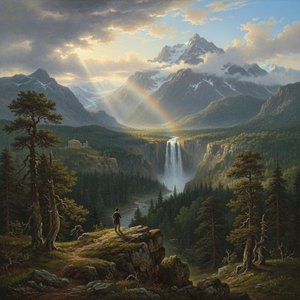
Pinpointing specific influences on Wright’s style is challenging given the limited documentation surrounding his career. However, it's reasonable to assume he was familiar with the work of prominent British portraitists such as Sir Thomas Lawrence and Henry Raeburn, whose emphasis on capturing character and psychological depth likely resonated with his own artistic sensibilities. The influence of Dutch Golden Age masters—particularly their mastery of light and shadow—can also be detected in Wright’s meticulous realism. His landscapes, though less numerous than his portraits, reveal a sensitivity to the natural world that aligns with the traditions of the Barbizon school, suggesting an awareness of continental European trends.
Major Achievements and Artistic Legacy
While Wright may not have achieved widespread fame during his lifetime, his paintings offer a valuable window into 19th-century American society. His portraits provide intimate glimpses into the lives of individuals from various social strata, while his genre scenes capture the spirit of an era undergoing rapid change. The painting “Thomas Wright (1859–1936)” exemplifies his ability to create realistic and dignified portrayals, showcasing intricate details and a masterful use of oil on canvas. His work is characterized by a technical proficiency that speaks to years of dedicated study and practice. Although he didn’t leave behind a vast body of work, the paintings that do survive are testament to his skill and artistic vision.
Historical Significance
William Samuel Wright's significance lies in his contribution to the broader narrative of 19th-century American art. He represents a generation of artists who sought to capture the realities of their time—the social customs, the landscapes, and the individuals who shaped the nation’s identity. His paintings serve as valuable historical documents, offering insights into the material culture, fashion, and societal values of the Victorian era. While further research is needed to fully understand his life and artistic development, Wright's work continues to captivate viewers with its realism, narrative power, and enduring beauty.
Întrebări și răspunsuri
Pot vizita un muzeu virtual al lucrărilor lui William Samuel Wright?
Operele de artă ale lui William Samuel Wright pot fi vizualizate într-o galerie 3D, pe pagina Muzeu 3D a artistului.
Ce stări exprimă operele lui William Samuel Wright?
Operele lui William Samuel Wright pot fi explorate în funcție de starea de spirit pe pagina Spațiu pe stări de spirit a artistului, care organizează lucrările după stările lor de spirit regăsite.
Cum pot găsi toate lucrările lui William Samuel Wright dintr-un anumit tip de tehnică?
Pentru a găsi toate lucrările lui William Samuel Wright dintr-un anumit mediu, utilizați pagina Toate mediile a artistului.