Early Life and Artistic Beginnings
Roland Shakespeare Wakelin (1887-1971) was born on April 17, 1887, in Greytown, New Zealand, the youngest of seven children born to Richard Alfred Wakelin, an English-born timber merchant, and Emily, née Noakes, from Auckland. From a young age, Wakelin demonstrated a passion for sketching and painting—a formative influence that would shape his entire artistic trajectory. He pursued formal education at Wellington Technical School in 1902-03, securing a scholarship that allowed him to continue his studies. Shortly thereafter, while employed with the Land and Income Tax Department, he undertook evening classes in painting under Henri Bastings and H.
Linley Richardson, furthering his technical skills and broadening his artistic horizons. Recognizing the importance of exposure to diverse styles, Wakelin embarked on a significant journey to Sydney in 1908 and 1909, where he visited his brother and immersed himself in the burgeoning art scene. This formative experience solidified his fascination with European
modernism—a movement that would profoundly impact his own distinctive artistic vision.
Education and Influences: The Royal Art Society School
Wakelin’s artistic development gained considerable momentum during his enrollment at the Royal Art Society School in Sydney from 1913 onwards. Under the tutelage of prominent artists Antonio Dattilo-Rubbo and
Norman Carter, he honed his drawing skills and experimented with various painting techniques. Notably, Wakelin benefited from the inspiring presence of
Grace Cossington Smith,
Roy de Maistre, and
Norah Simpson—fellow students who shared a fervent dedication to artistic innovation. Their discussions centered on groundbreaking works by European modernists like Cézanne, Gauguin, Matisse, and Picasso, sparking Wakelin’s intellectual curiosity and fueling his desire to push the boundaries of conventional art practice. The influence of these artists is palpable in Wakelin's subsequent paintings—particularly his bold use of color and
abstract forms.
Notable Works and Artistic Style
Wakelin’s artistic output stands as a testament to his unwavering commitment to experimentation and stylistic exploration. Among his most celebrated pieces is “
Causeway, Tuggerah,” a
landscape painting that exemplifies Wakelin's signature approach—characterized by vibrant hues and dynamic brushstrokes designed to convey the essence of
coastal scenery. Currently housed at the
Art Gallery of New South Wales in Sydney, Australia, this artwork represents a pivotal moment in Wakelin’s artistic evolution. His distinctive style can be attributed to his absorption of Cézanne’s principles of simplification and tonal modulation—techniques that he skillfully integrated into his compositions. Furthermore, Wakelin's exploration of color-music paintings ("synchromies") demonstrated his pioneering spirit and foreshadowed the aesthetic trends of the
early 20th century.
Recognition and Legacy
Roland Wakelin’s artistic achievements garnered considerable acclaim during his lifetime—a recognition reflected in invitations to exhibit at prestigious venues such as Macquarie Galleries and the
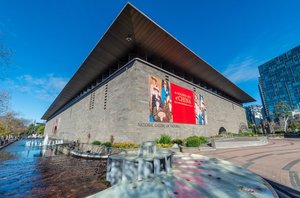
National Art Gallery of New South Wales. He was honored by fellow artists and institutions for his contribution to
Australian art, cementing his place within the history of modernist painting. Wakelin's influence extended beyond his own creations; he served as a catalyst for artistic innovation among younger generations—most notably Godfrey Clive Miller—who embraced Wakelin’s stylistic precepts and pursued similar experimental endeavors. His legacy continues to resonate today, shaping perceptions of
Australian landscape art and inspiring artists to embrace bold visual language.
Concluding Remarks
Roland Shakespeare Wakelin remains a cornerstone figure in the genesis of
modernism within Australia's artistic landscape. Through his meticulous observation of nature combined with innovative techniques—drawing inspiration from European masters—Wakelin established himself as a trailblazer who championed abstraction and
color theory. His enduring impact can be discerned in the works of subsequent artists, underscoring Wakelin’s pivotal role in shaping
Australian art history.