


1


Обновлено Октябрь 2026 · рейтинг на основе нашего показателя популярности (количество поисковых запросов, посещений и заказов для каждой работы) · 10 работ Sydney Long в нашем каталоге
Быстрый ответ
Самая известная картина из коллекции Sydney Long — это Bruges bridge (1923), оригинал которой находится в Галерея Нового Южного Уэльса, Сидней. На втором и третьем местах: The Spirit of the Plains (1914) и Midday (1896). В нашем каталоге представлено 10 работ Sydney Long. В списке ниже приведены 8 самых известных произведений в порядке их значимости, с указанием года создания и музея, где находится оригинал каждого из них.

In the quietude of a rising moon, The Spirit of the Plains unfolds as a breathtaking vision of Australian mythology, where the boundaries between the human form and the natural world dissolve into a rhythmic dance. The painting captures a moment of profound enchantment: a naked figure, silhouetted against the soft lunar glow, plays a flute-like instrument, guiding a synchronized flock of birds through the night sky. This ethereal melody…


3 музеев, в которых находится большинство картин со страницы.
| Музей | Город | Работы Sydney Long | Картины из этого списка |
|---|---|---|---|
 Галерея Нового Южного Уэльса |
Сидней | 5 | Bruges bridge, Midday, Sadder than a Single Star that Sets at ... |
 Национальная галерея Австралии |
Канберра | 2 | The Spirit of the Plains, Flamingoes |
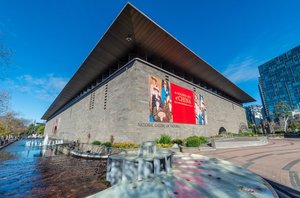 Национальная галерея Виктории |
Мельбурн | 1 | Cricket match on the green |
Выберите десятилетие, чтобы увидеть его главную картину.
In the quietude of a rising moon, The Spirit of the Plains unfolds as a breathtaking vision of Australian mythology, where the boundaries between the human form and the natural world dissolve into a rhythmic dance. The painting captures a moment of profound enchantment: a naked figure, silhouetted against the soft lunar glow, plays a flute-like instrument, guiding a synchronized flock of birds through the night sky. This ethereal melody…
Bruges bridge (1923), Галерея Нового Южного Уэльса, Сидней, занимает первое место, за ним следуют The Spirit of the Plains (1914) и Midday (1896).
Sydney Long было 52 лет: работа Bruges bridge датирована 1923, а Sydney Long родился в 1871.
В нашем каталоге представлено 10 работ Sydney Long, датированных периодом с 1896 по 1937.
В основном в Галерея Нового Южного Уэльса (Сидней), Национальная галерея Австралии (Канберра) и Национальная галерея Виктории (Мельбурн). Полный список см. в таблице музеев выше.
В 1920s: 3 из 8 картин в этом рейтинге относятся к тому времени, включая Bruges bridge.
Самая ранняя работа на этой странице: Midday (1896). Самая поздняя: The morning moon (1937).
В Галерея Нового Южного Уэльса, Сидней хранятся 5 картин из этого списка, включая Bruges bridge, Midday и Sadder than a Single Star that Sets at ....
Да. Каждую картину на этой странице можно заказать как ручную масляную репродукцию, так и печать. Выберите картину, укажите размер и оформите заказ.
Sydney Ure Smith Long stands as a transformative figure in the history of Australian art, a painter whose work bridged the gap between the naturalistic traditions of his homeland and the decorative elegance of international movements. Originally inspired by the Heidelberg School of Australian impressionism, Long did not merely replicate the light and atmosphere of the continent; instead, he sought to infuse the landscape with a profound sense of myth and symbolism. His artistic journey was one of constant evolution, moving from the grounded observations of his early years toward a sophisticated, Art Nouveau aesthetic that would eventually earn him recognition far beyond the shores of Australia.
His early life and development were marked by a unique blend of local roots and global aspirations. While he spent significant portions of his life navigating between Australia and England, his heart remained deeply connected to the spiritual essence of the Australian terrain. This connection is perhaps most vibrantly expressed in his ability to weave together the human form and the natural world into a rhythmic, almost musical composition. Through his mastery of both painting and printmaking, he captured the delicate intricacies of flora and fauna, often imbuing them with an ethereal, dreamlike quality that transcended mere representation.
The true essence of Long’s contribution lies in his development of a Symbolist approach to the landscape. He possessed a rare ability to transform the familiar Australian scenery into a stage for ancient magic and primordial connection. In his most celebrated works, such as The Spirit of the Plains, the boundaries between reality and myth dissolve. One might encounter a nocturnal symphony where a silhouetted figure guides a flock of birds through a lunar glow, creating a sense of profound enchantment. This technique allowed him to strip away the mundane aspects of the landscape, revealing instead a lyrical narrative of harmony.
His stylistic progression is particularly notable for its decorative complexity:
Long’s legacy is defined by his role as an Australian visionary who successfully spoke an international artistic language. By blending the local identity of the Australian bush with the sophisticated decorative styles emerging in Europe, he provided a much-needed comparative measure for Australian art at the turn of the century. His work was not merely seen as a colonial endeavor but as a contribution to a global dialogue on beauty and symbolism. Through his meticulous printmaking and evocative oil paintings, he ensured that the spirit of the Australian landscape would be remembered not just for its ruggedness, but for its capacity for grace, mystery, and eternal dance.